

TL;DR - Quick Answer
In winter, sealed homes exchange air only 0.35 times per hour, letting ammonia from cat litter concentrate 300–500% higher than in summer. The fix: trap odors at the source with activated carbon granules, scoop more often, and use strategic indoor circulation - no open windows needed.
The Winter Litter Box Problem Nobody Talks About
Every autumn, millions of cat owners notice the same thing. The litter box that seemed perfectly manageable in October suddenly becomes unbearable by December.
You haven’t changed the litter. Your cat hasn’t changed. You’re still scooping on schedule.
And yet the smell hits you like a wall the moment you walk through the door.
Here’s the ugly truth: winter doesn’t just make it feel worse. The chemistry is genuinely different. Ammonia - the molecule responsible for that sharp, eye-watering odor - is building up in your sealed indoor air at concentrations that simply cannot happen in summer.
Your guests notice within seconds of walking in. Your cat may start hesitating at the box. And you’re spending money on air fresheners that don’t solve anything.
This guide explains the real science behind it - and gives you five evidence-based solutions you can implement today.

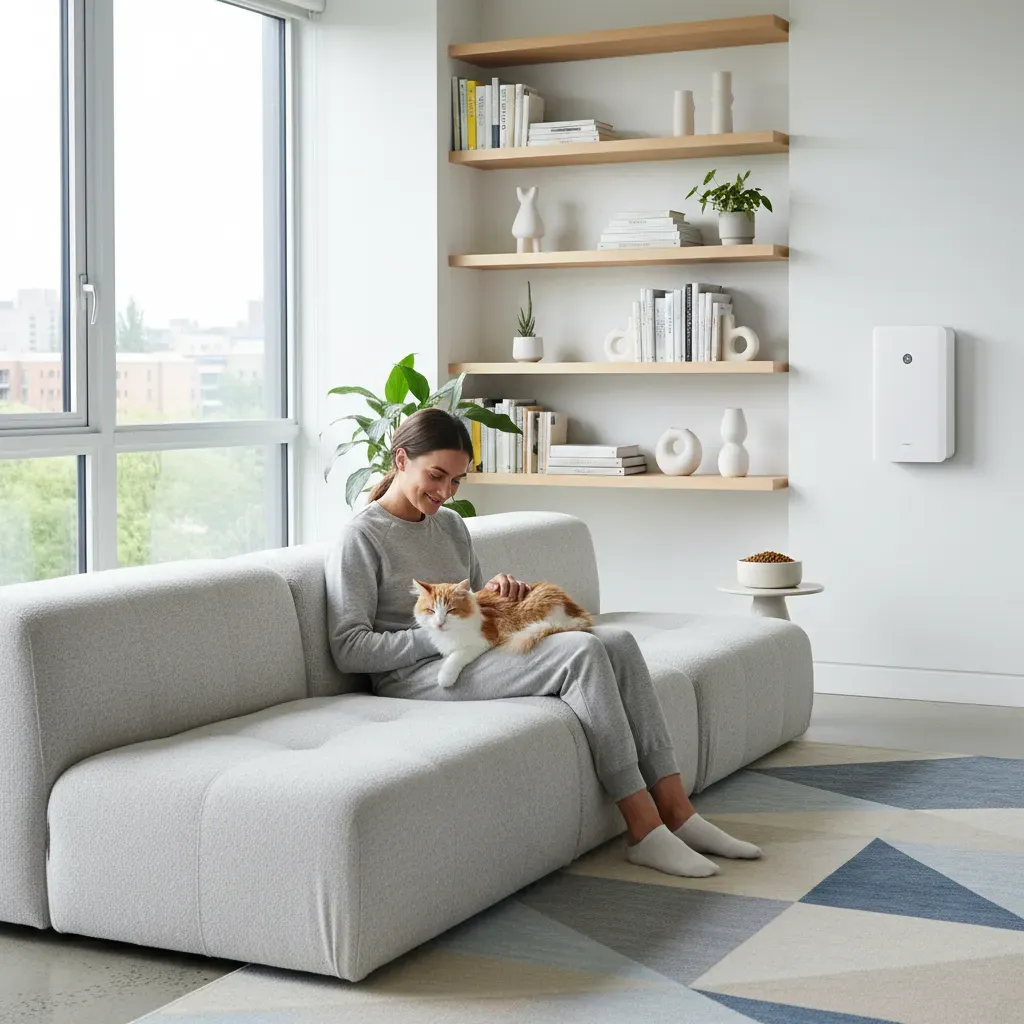
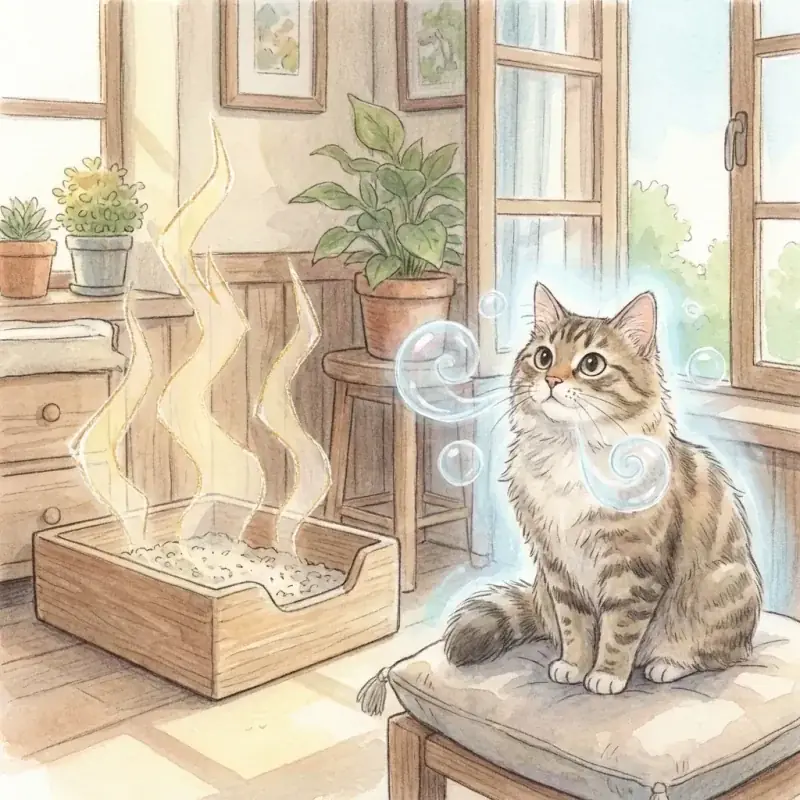
Closed windows and sealed homes trap odor molecules that would normally escape
The Hidden Science: Why Sealed Homes Make Ammonia Dangerous
The key metric here is Air Changes per Hour (ACH) - how many times the total air volume in your home gets replaced with fresh outdoor air.
In summer, open windows and doors push ACH to 5–10 or higher. Ammonia has a short residence time in your home.
But it gets worse.
In winter, modern energy-efficient homes - built to keep heat in - drop to as low as 0.35 ACH. That’s the minimum ventilation standard set by ASHRAE Standard 62.2. Ammonia now has nowhere to go.
What This Means in Real Numbers:
- Summer (5–10 ACH): Ammonia diluted and vented continuously
- Winter (0.35–0.5 ACH): Ammonia accumulates 300–500% higher indoors
- Tight modern home (<0.35 ACH): Concentrations can spike even further within hours
This isn’t just an odor comfort issue. Ammonia at elevated indoor concentrations causes eye irritation, respiratory irritation, and headaches - particularly in children, elderly adults, and cats themselves. Learn more about the health risks in our guide on cat litter ammonia health risks.
Winter also affects humidity differently than summer. Indoor heating dries the air. Paradoxically, while high humidity amplifies ammonia perception, very dry winter air can irritate airways so that even moderate ammonia concentrations feel worse.
Now, pay close attention. The problem isn’t your cat. It isn’t your litter. It’s physics.
The Real Culprit Isn’t the Litter
Most cat owners go through the same expensive cycle every winter. They switch litters. They try “odor control” formulas. They add baking soda. They try scented litters. They buy air fresheners.
Nothing works. And they blame themselves.
Listen: the fundamental problem is ventilation chemistry, not litter chemistry. Your litter is doing exactly what it did in summer. The same ammonia is being produced at the same rate. But now it has nowhere to go.
Scented litters make things worse by adding volatile fragrance compounds to the ammonia already in your sealed air. You end up with a nauseating sweet-plus-ammonia cocktail.
To understand the full chemistry of what’s happening inside your litter box, read our guide to neutralizing ammonia in cat litter and the deep-dive on ammonia science.
The solution has two parts: intercept ammonia before it escapes the litter box, and improve how air moves around your home. Both are achievable without opening a single window.
Winter vs. Summer Odor Factor Comparison
Here’s a side-by-side look at exactly why winter is so much harder for odor control:
| Odor Factor | Summer | Winter | Winter Impact |
|---|---|---|---|
| Air Changes per Hour (ACH) | 5–10+ (open windows) | 0.35–0.5 (sealed) | Very High - ammonia accumulates |
| Ammonia Volatility | High (heat accelerates) | Lower (cold slows release) | Moderate - slower release, longer buildup |
| Indoor Ammonia Concentration | Low - diluted quickly | 300–500% higher vs. summer | Very High - primary odor driver |
| Bacterial Activity in Litter | High (warm temps) | Moderate (indoor temps ~20°C) | Moderate - still produces ammonia |
| Indoor Humidity | Higher (amplifies smell) | Dry heated air (irritates airways) | High - dry air worsens perception |
| Natural Ventilation Available | Plentiful (open windows/doors) | Near zero (all sealed) | Very High - no dilution possible |
As the table shows, winter odor is almost entirely a ventilation problem rather than a production problem. That distinction matters because it completely changes the solution set. For a deeper comparison with the summer scenario, see our companion article: why cat litter smells worse in summer.
5 Proven Solutions That Don’t Require Opening Windows
These five strategies address the root cause - trapped ammonia in sealed air - rather than masking it with fragrance.
Trap Odors at the Source with Activated Carbon
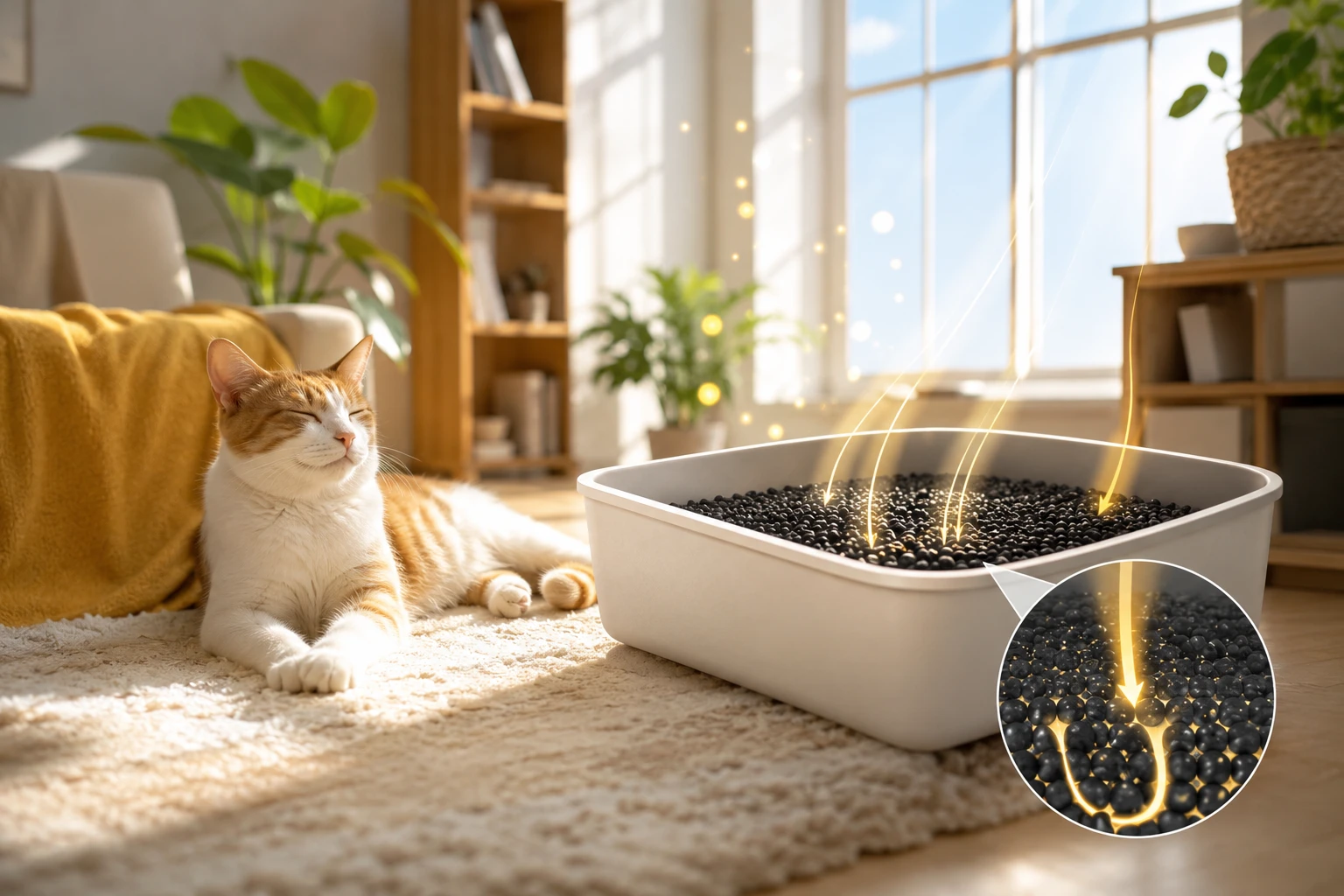
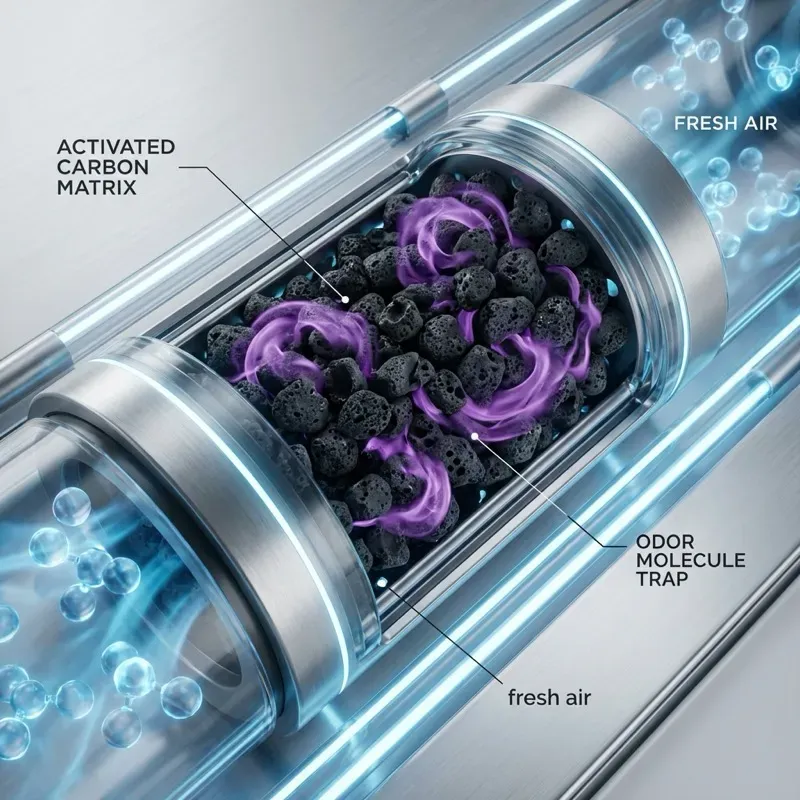
This is the single highest-leverage action you can take in winter. Activated carbon works through adsorption - its millions of microscopic pores capture ammonia molecules and lock them away before they can escape into your sealed air.
Unlike baking soda (which neutralizes acid, not ammonia) or fragrance (which just adds more volatile compounds to already-stale air), activated carbon physically adsorbs the ammonia molecule. It can’t get out. It can’t spread through your home. It’s gone.
To understand the full mechanism, read our complete guide: activated carbon for cat litter or explore how activated carbon works.
In winter, when ventilation drops to near zero, intercepting ammonia at source becomes 5× more effective than any room-level solution. See also our most powerful odor absorber comparison.
Increase Scooping Frequency by 25–50%
Whatever your summer scooping schedule was, increase it for winter. The logic is straightforward: less ventilation means ammonia builds up faster between scoops. Less time in the box means less ammonia released into your sealed air.
- One cat: Move from once-daily to twice-daily scooping
- Two cats: Scoop 3 times daily minimum
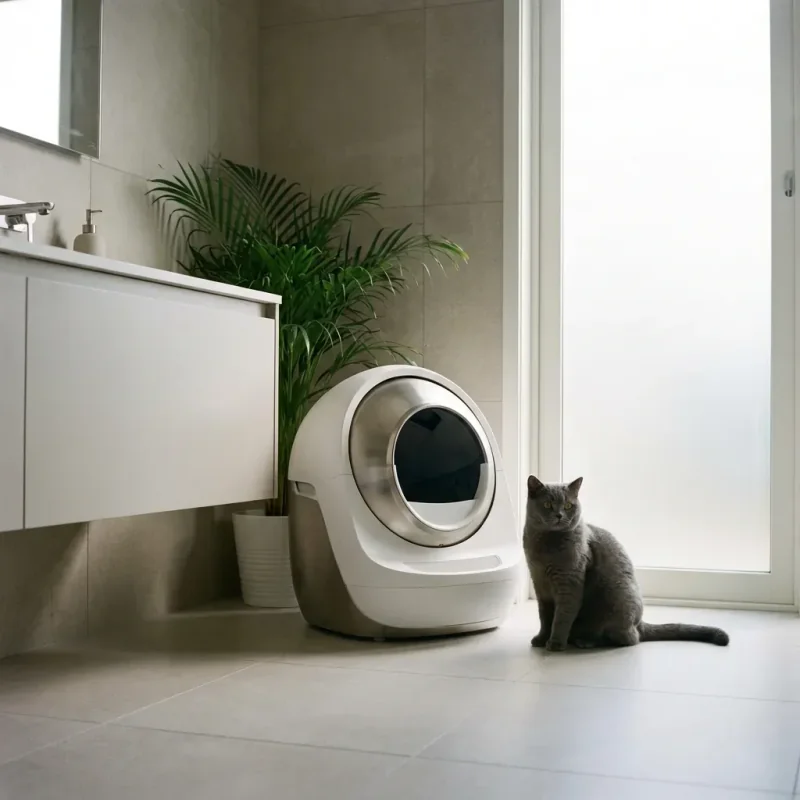
- Three+ cats: Consider a self-cleaning box or 4+ daily scoops
For a science-backed scooping schedule year-round, see our guide on how often to change cat litter.
Optimize Indoor Air Circulation
You can’t add ACH from outside, but you can move air strategically inside. The goal is to prevent ammonia from pooling in one area and spreading to living spaces.
- Run a bathroom exhaust fan for 15 minutes after each scooping session
- Position a small box fan to direct air from the litter area toward a window (even cracked 1 cm in a back room)
- Add a HEPA + activated carbon air purifier within 3 meters of the box
- Ensure HVAC vents near the litter box are open, not closed - circulation helps distribute and dilute
Not sure where to put the box for best airflow? Our cat litter calculator helps you figure out optimal placement and litter quantity for your setup.
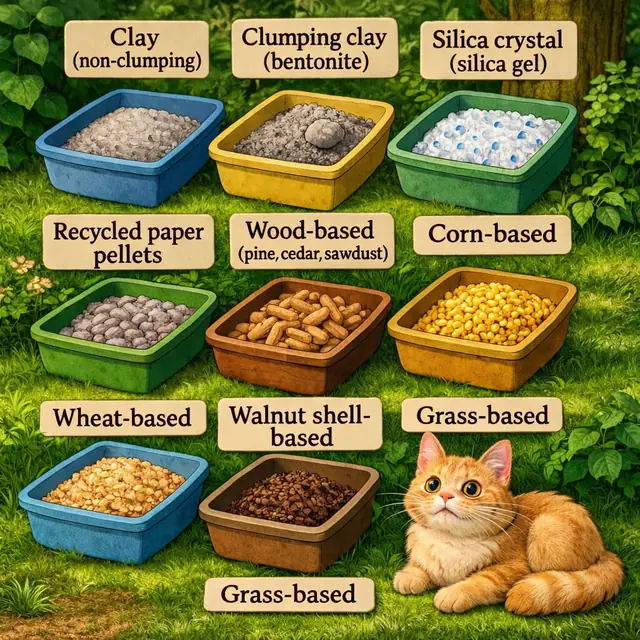
Switch to an Unscented, Low-Dust Litter
Winter’s dry heated air worsens dust. Fragrant litters add volatile organic compounds on top of ammonia, making sealed indoor air worse, not better.
Switch to an unscented clumping litter that forms tight clumps quickly - this limits ammonia exposure time in the box. Read our guide to best unscented cat litters and see how we compare baking soda vs. activated carbon as additives.
Use a Covered Box with a Carbon Filter
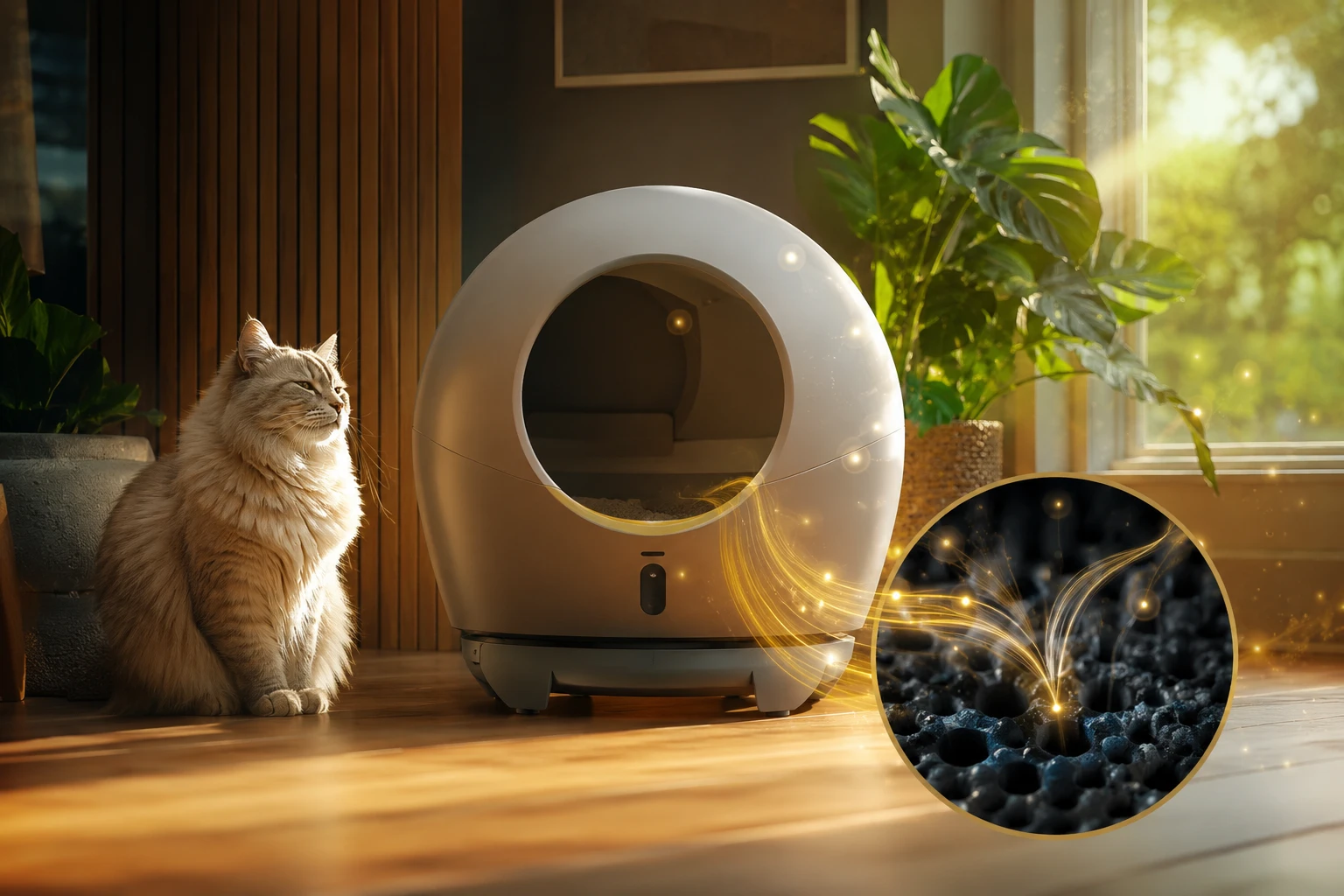
A covered box forces all escaping air through a filter vent. When that filter is loaded with activated carbon, you get a secondary adsorption layer on top of any granules in the litter itself.
This matters most in winter because every cubic centimeter of ammonia-laden air that escapes the box stays in your sealed home. A cover with a carbon filter dramatically reduces that escape rate.
Check our guide on the best ways to keep a litter box fresh for box design recommendations.
Ready for a litter box you can't smell?
Free shipping. Never run out. Cancel anytime.
Start autoship →Humidity Control: The Lever Almost Nobody Pulls

Most people fight winter odor at the box: the litter, the scooping, the deodorizer. Almost nobody thinks about the air around the box. In winter that is the bigger lever.
Ammonia sits in a balance between the liquid it is dissolved in and the gas floating above it. Run forced-air heat all day and indoor air gets very dry, which tips that balance toward the gas. More ammonia leaves the litter. More of it reaches your nose. Nothing about the litter changed. The air did.
The sweet spot is roughly 40 to 50% relative humidity. Below that, ammonia comes off faster. Much above it and you invite mould and damp litter, which is a different smell problem. A cheap digital hygrometer near the box tells you which side of the line you are on, and it costs less than a bag of litter.
Three humidity fixes you can do this week
- Put a small humidifier in the room. A one or two litre ultrasonic unit on a timer during your heaviest heating hours, morning and evening, lifts the humidity right where it matters.
- Move the box away from the heating vent. Warm air blowing across the litter dries the surface and drives odor off it. Even a few feet of distance changes what you smell.
- Use a covered box with a carbon filter. The cover holds a little more moisture around the litter and funnels odor past the filter instead of letting it drift into the room.
None of this replaces scooping or a good deodorizer. It makes everything else you are already doing work better.
Airflow Habits That Work Without Freezing the House
You do not have to open a window in January. You need air to move a little around the box so ammonia never gets a chance to pool. Moving air spreads it out before you can smell it.
Five small habits for cold-climate apartments
- Run the bathroom fan for ten minutes after your cat uses the box. If the box lives in the bathroom, this is the single best thing on this list. A standard fan clears the room several times over in that window.
- Point a small desk fan away from the box, on low. Three or four feet away, aimed at a doorway. It pulls odor out of the corner without kicking litter dust around.
- Open an interior door instead of a window. You get circulation between two heated rooms. No cold air, no stagnant pocket.
- Scoop while the heat is running. Forced air is already moving. The odor you stir up gets carried to the return filter instead of settling in the room.
- Put an air purifier near the box. Look for one with a real activated carbon stage, not just a HEPA filter. HEPA catches dust; carbon is what catches smell.
Each of these takes under thirty seconds. Done together, all winter, they are the difference between a house that smells lived-in and one that smells like a litter box.
For layout, furniture and purifier choices beyond the box itself, see the apartment cat odor guide.
Your Winter Litter Odor Checklist

Stick this on the fridge or inside the cupboard where the litter lives. Read it once at the start of each month from October through March.
Every week
- Scoop at least once a day, twice if you have more than one cat.
- Top up the activated carbon whenever the box starts to smell again. In winter that comes around sooner than it does in summer, because nothing is venting for you.
- Run the bathroom fan for ten minutes after the box gets used.
- Glance at the hygrometer and keep the room between 40 and 50%.
Every month
- Full change: dump the litter, wash the box with unscented dish soap, dry it completely, refill.
- Check the furnace filter. A clogged one recirculates odor instead of catching it.
- Wipe the wall and floor within a couple of feet of the box. Ammonia settles on surfaces.
- Look at where the box sits. If it ended up near a heating vent, move it.
Once, in October
- Put a digital hygrometer near the box.
- Set the humidifier on a timer for your peak heating hours.
- Position a small fan for passive airflow away from the box.
- Stock enough activated carbon to get through the season so you never run out in February.
Active effort here is under five minutes a day. The humidifier runs on a timer, the fan runs on low, the carbon works between top-ups. The system does the work.
The Winter Odor Timeline: What to Expect Week by Week
Once you implement the solutions above, here’s a realistic timeline for what happens:
Immediate Reduction at Source
Activated carbon granules begin adsorbing ammonia within minutes of application. Most cat owners report the box area smells noticeably different within 24 hours.
Whole-Room Improvement
Existing ammonia that had already accumulated in your sealed air disperses or settles. With new ammonia being trapped at source, room-level odor drops significantly. Most guests stop noticing.
Stable New Baseline
With consistent scooping frequency and carbon top-ups, you establish a new “winter normal” that equals or beats your summer freshness level. Check our litter deodorizer frequency guide to calibrate replenishment timing.
Sustained Control Through Winter
Adjust dosage as weather gets colder (more sealed = more accumulation risk). Households with multiple cats may need to increase both scooping frequency and carbon quantity. See our multiple cat odor control guide.
Want to know if your current setup is likely to work? Take our quick litter smell quiz to get a personalized recommendation.
Frequently Asked Questions
Why does my cat litter smell so much worse in winter than summer?
In winter, sealed homes have an Air Changes per Hour (ACH) rate as low as 0.35 - compared to 5–10+ in summer when windows are open. This means ammonia from cat urine accumulates 300–500% higher indoors rather than being continuously diluted and expelled. The smell is genuinely worse, not just your perception.
Is cat litter ammonia dangerous to breathe in winter?
At the concentrations typical in sealed homes, prolonged ammonia exposure can cause eye irritation, respiratory discomfort, and headaches - particularly in children, the elderly, asthma sufferers, and the cats themselves. This is a genuine indoor air quality concern, not just a comfort issue. See our full guide on ammonia health risks.
Does activated carbon really work for cat litter odor in winter?
Yes - and it’s actually more impactful in winter than summer precisely because ventilation is so low. Activated carbon adsorbs ammonia molecules at the source, preventing them from entering your sealed air at all. Unlike fragrance products, it doesn’t just mask the smell - it captures it. See the full science at how activated carbon works.
How often should I scoop the litter box in winter?
Increase frequency by at least 25–50% versus your summer routine. For a single cat: scoop twice daily. For two cats: three times daily. For three or more cats: four times daily or consider a self-cleaning system. The less time waste sits in a sealed home, the less ammonia builds up. More guidance in our litter change frequency guide.
Can I use a scented litter to cover up the winter odor?
This typically makes the problem worse. Scented litters release additional volatile organic compounds that mix with ammonia in your sealed winter air, creating a complex and often more nauseating odor profile. Unscented litters paired with an odor-adsorbing additive like activated carbon are consistently more effective. Our comparison: fragrance-free litter deodorizer.
I have multiple cats - does the winter problem get worse?
Significantly so. Multiple cats produce proportionally more ammonia while ventilation stays the same low rate. What is manageable for one cat in a sealed home can be overwhelming for three. Read our dedicated guide: best cat litter for multiple cats and multi-cat litter deodorizer guide.
How quickly will I notice a difference after starting activated carbon?
Most cat owners report a noticeable change around the litter box within the first 24 hours. Whole-room odor improvement typically follows within 3–7 days as existing accumulated ammonia disperses and new production is being captured at source. For maintenance timing, see our deodorizer frequency guide.
Related Guides
Ready for a litter box you can't smell?
Free shipping. Never run out. Cancel anytime.
Start autoship →