
Purrify uses filtration-grade activated carbon - the same carbon grade used in home water filters and HVAC air systems. Most cat-litter "carbon" additives on the shelf are not filtration grade, and the difference shows up in the first 48 hours of use.
This article explains, for a non-chemist, why carbon grade matters more than carbon quantity, how to spot lower-grade additives from the label and the smell, and why the filtration-grade choice is the one decision that separates carbon that actually works from knock-off material that looks like activated carbon. For the underlying material science, see how activated carbon works at the pore level; for the chemistry of what it's trapping, see the ammonia science overview.
What Actually Creates "Cat Smell"
The assumption that litter box odor is primarily ammonia only tells part of the story. The complete picture involves three distinct molecular culprits:
The Three Molecular Culprits
- Ammonia - Breaks down from urine and produces that sharp, eye-watering sensation. It's the most obvious component, but not necessarily the most persistent.
- Sulfur-based compounds - Create that deeper, musky "animal" quality that clings to spaces long after cleaning. These molecules are particularly stubborn because of their molecular weight and how they bind to surfaces.
- Volatile organic compounds (VOCs) - Drift through air and attach to fabrics, walls, and porous materials. They're the reason a room can smell like cat even when the litter box is in another part of the house.
The Hidden Plastic Problem
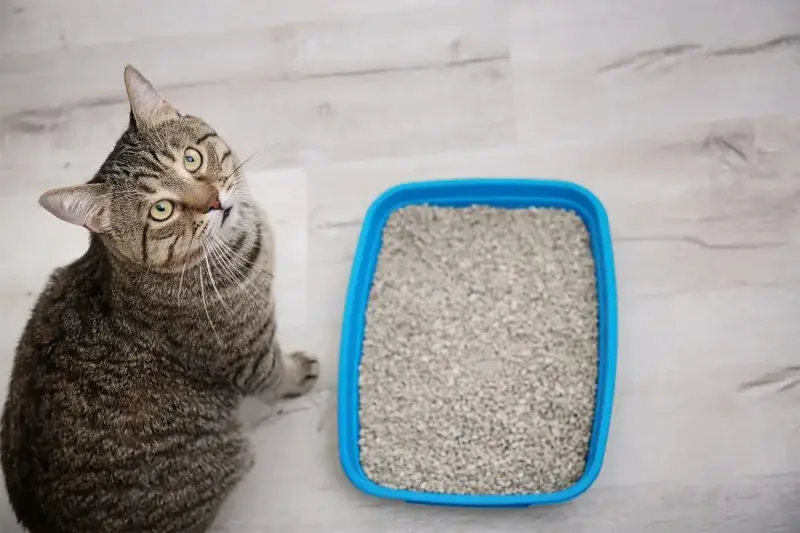
Most litter boxes are made from plastic, which develops microscopic scratches over time from daily use. These tiny crevices become permanent reservoirs for odor molecules-impossible to reach even with thorough scrubbing. The box itself eventually becomes a continuous source of smell, regardless of how often it's cleaned.

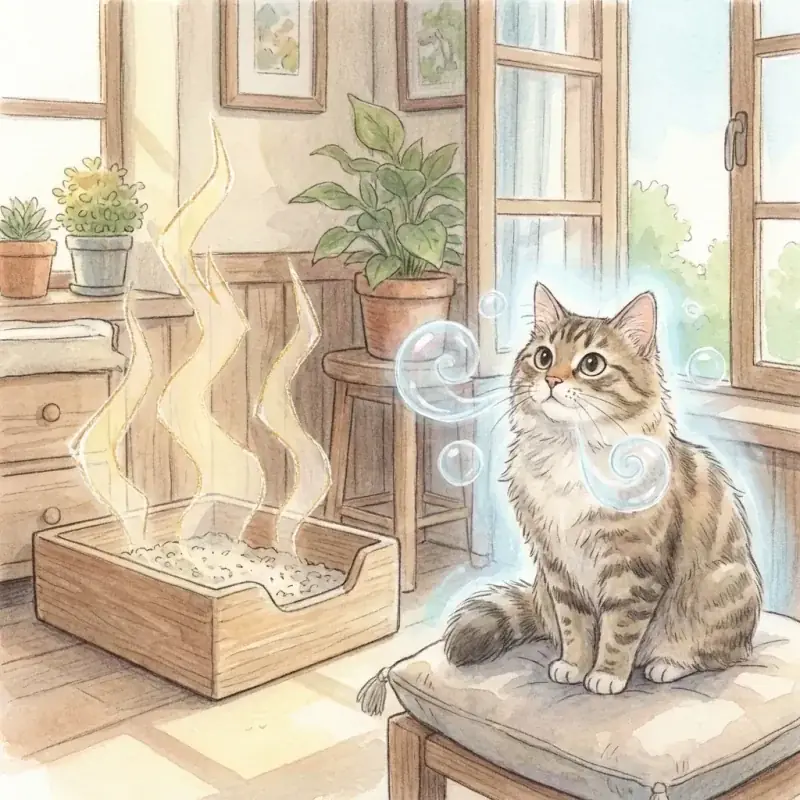
Common odor control products that mask rather than eliminate cat smell
Why Common Solutions Fall Short
Most odor-control products operate on one of two principles, and both have fundamental limitations.
The Fragrance Approach
Scented litters and air fresheners work by introducing larger fragrance molecules that compete with smaller odor molecules for attention. The nose perceives both, creating a layered scent that temporarily shifts perception. Over time, olfactory fatigue sets in, the brain filters out the familiar fragrance, and the underlying cat smell becomes noticeable again.
This is masking, not elimination. The odor molecules remain exactly where they were.
The Absorption Approach
Baking soda and basic activated-carbon bags function like sponges, soaking up odor molecules through physical absorption. The limitation is capacity. These materials saturate quickly-often within a day or two-after which they provide no further benefit. A box of baking soda sitting in saturated stillness accomplishes nothing.
The Core Problem
Most products either add more molecules to the air (fragrance) or have severely limited capacity (baking soda). Neither approach actually removes odor molecules from the environment.
The Industrial Alternative: Molecular Trapping
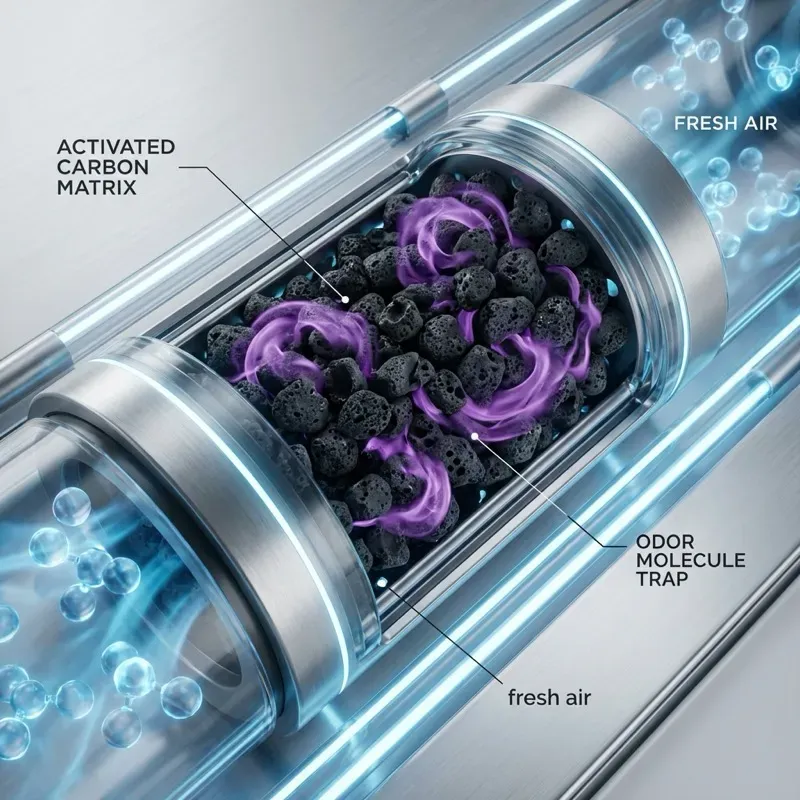
The distinction between absorption and adsorption (with a 'd') makes all the difference.
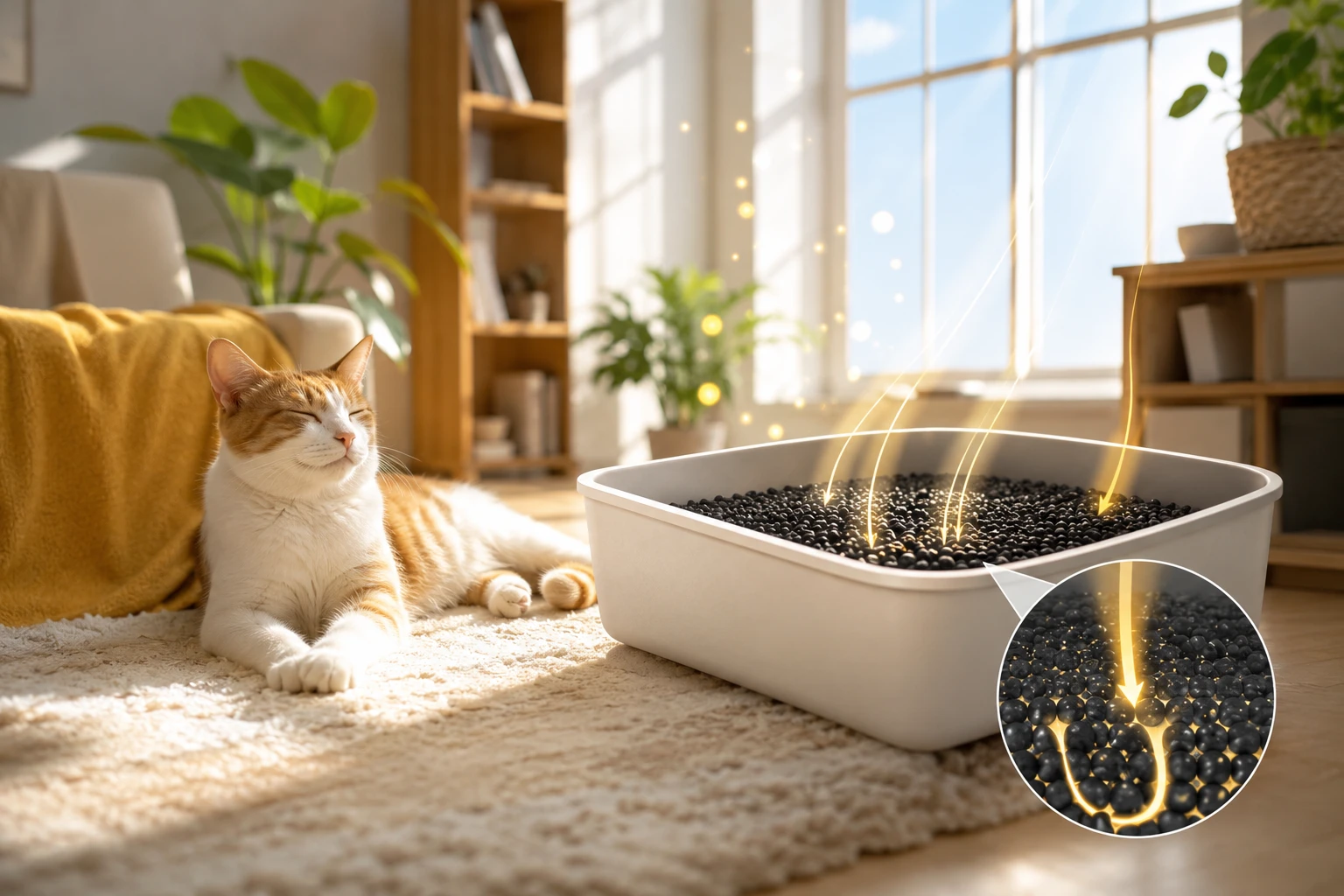
Absorption works like a sponge filling with water. Adsorption works like molecules entering a maze of microscopic tunnels and becoming permanently trapped through chemical forces. The molecules don't just sit on the surface, they bond to it.
The material that performs this function most effectively is filtration-grade activated carbon.

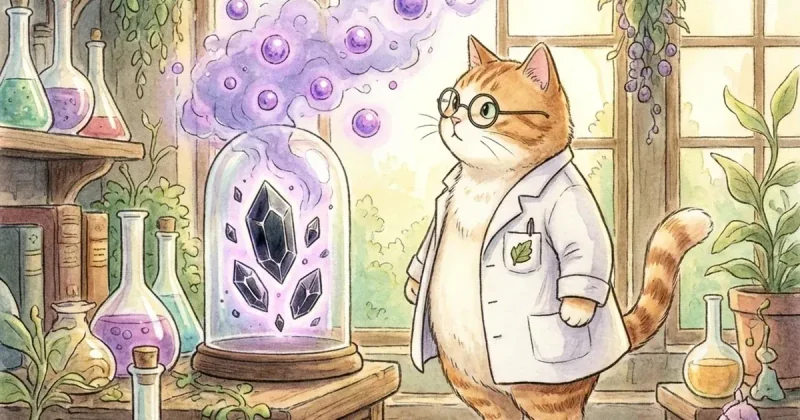
Microscopic pores in activated carbon create massive surface area for molecular trapping
The Football Field Analogy
A single gram of high-quality activated carbon contains roughly the surface area of a football field, all compressed into microscopic pores and channels. This massive internal surface area creates extraordinary trapping capacity for gas molecules.
Where This Technology Already Works
This isn't experimental or unproven. Activated carbon molecular trapping is standard technology in:
- Residential drinking water filters - Removing chlorine, pesticides, and organic contaminants from tap water
- Hospital air filtration systems - Maintaining breathable air in hospitals and industrial facilities
- Industrial air scrubbers - Processing facilities handling high-odor materials
- Hospital and military air filtration - Applications where air quality is mission-critical
The same molecular trapping that makes water drinkable and indoor air clean can eliminate cat odor at the source.

Activated carbon traps odor molecules in microscopic tunnels through adsorption
Ready for a litter box you can't smell?
Free shipping. Never run out. Cancel anytime.
Start autoship →Applying Industrial Chemistry at Home
The key insight is placement. An activated-carbon bag hanging across the room from a litter box captures whatever molecules happen to drift its way. Filtration-grade carbon applied directly to the litter acts as a molecular sieve right at the point where gases are released.
The Material Matters
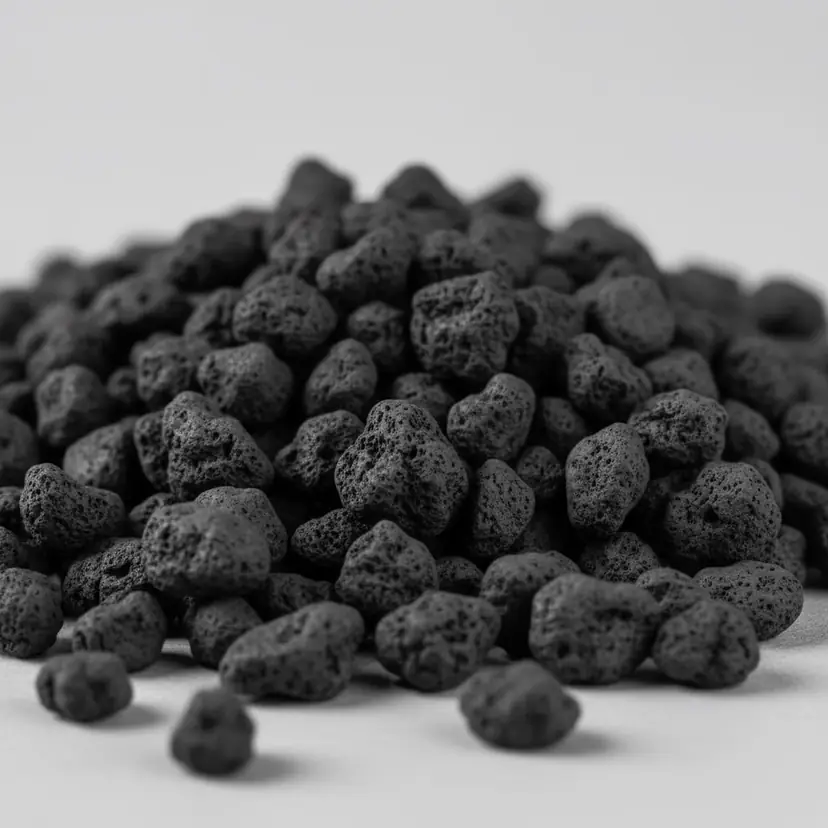
Coconut shell-based activated carbon-steam-activated to maximize porosity-outperforms bamboo or wood-based alternatives. The pore structure of coconut shell carbon is ideally sized for capturing ammonia and sulfur compounds.

Coconut shell activated carbon - the same material used in drinking water filters
A Practical Approach
Consider the Container
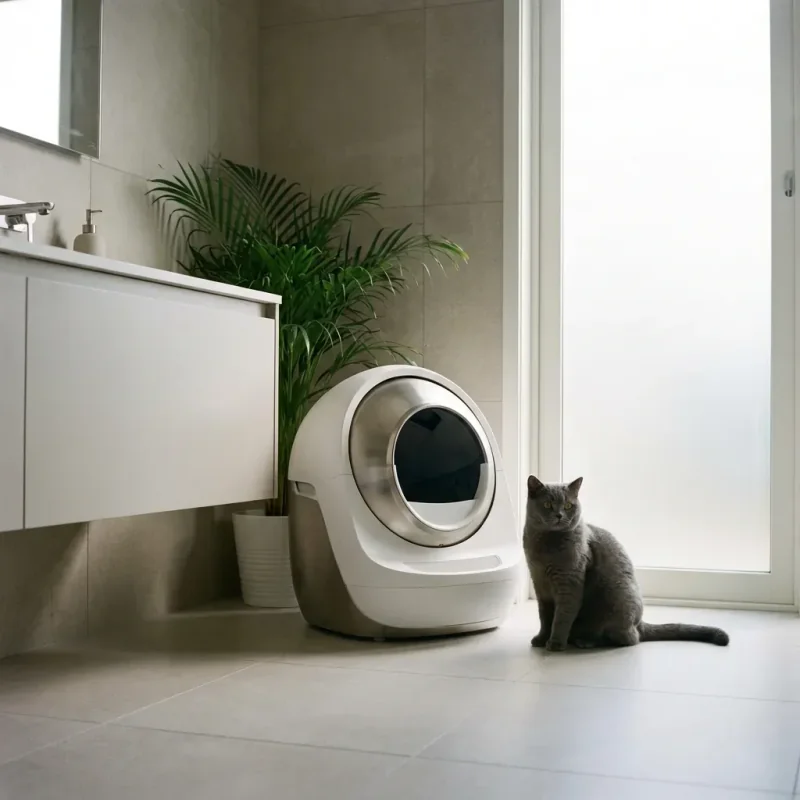
Stainless steel litter boxes eliminate the plastic scratch problem entirely. Non-porous surfaces don't accumulate odor over time.
Apply Carbon at Source
A thin layer of filtration-grade activated carbon sprinkled onto existing litter creates a molecular barrier as gases rise.
Maintain the System
High-quality activated carbon is 100% natural and fragrance-free, it integrates with any litter type without affecting cat preferences.
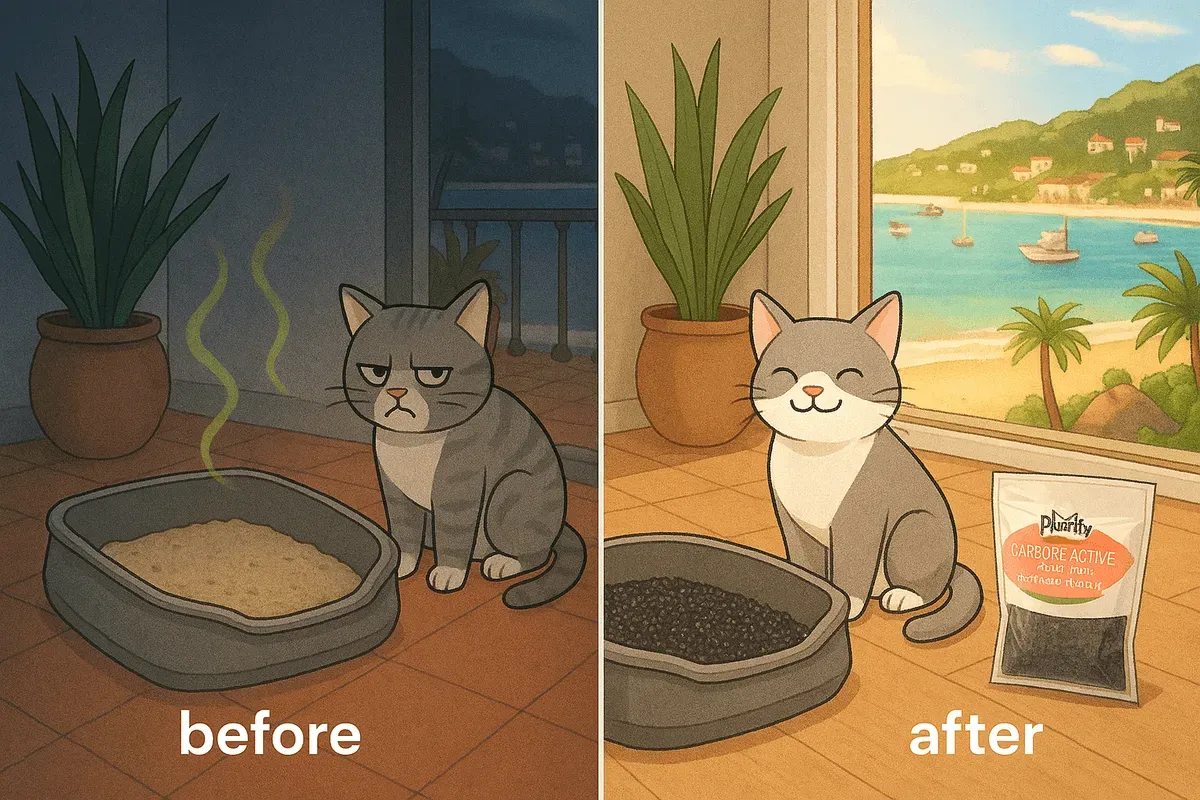
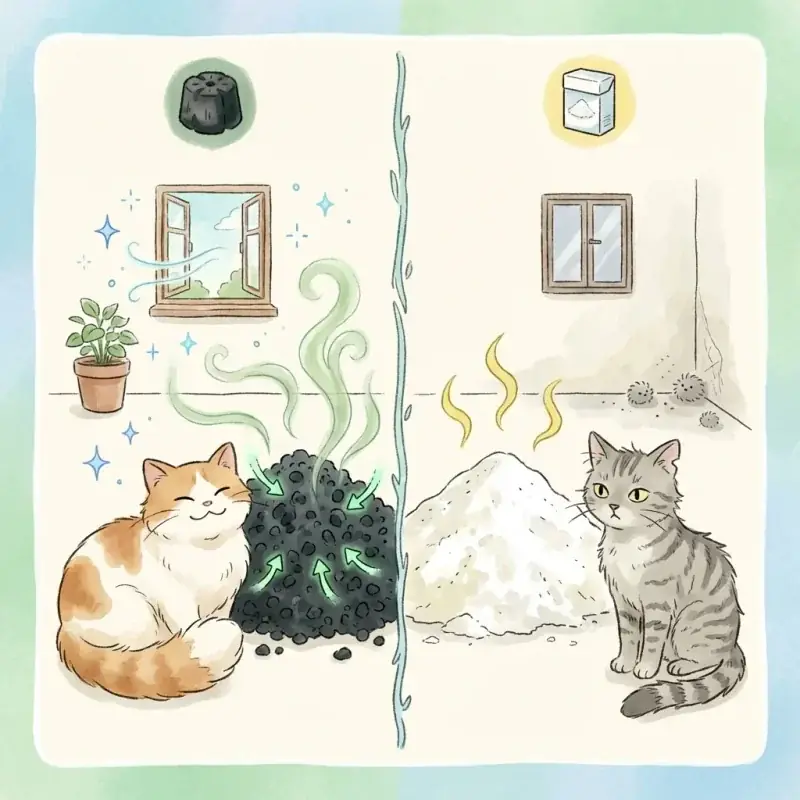
The difference between masking odors and actually removing them
Masking vs. Trapping: The Key Distinction
Masking (Most Products)
- - Adds perfume molecules to the air
- - Odor still present underneath
- - Can irritate cats' sensitive systems
- - Wears off quickly
Trapping (Activated Carbon)
- - Removes odor molecules from air
- - Odor physically eliminated at source
- - Fragrance-free and non-toxic
- - Lasts 7+ days per application
How to Spot a Lower-Grade Additive Before You Buy
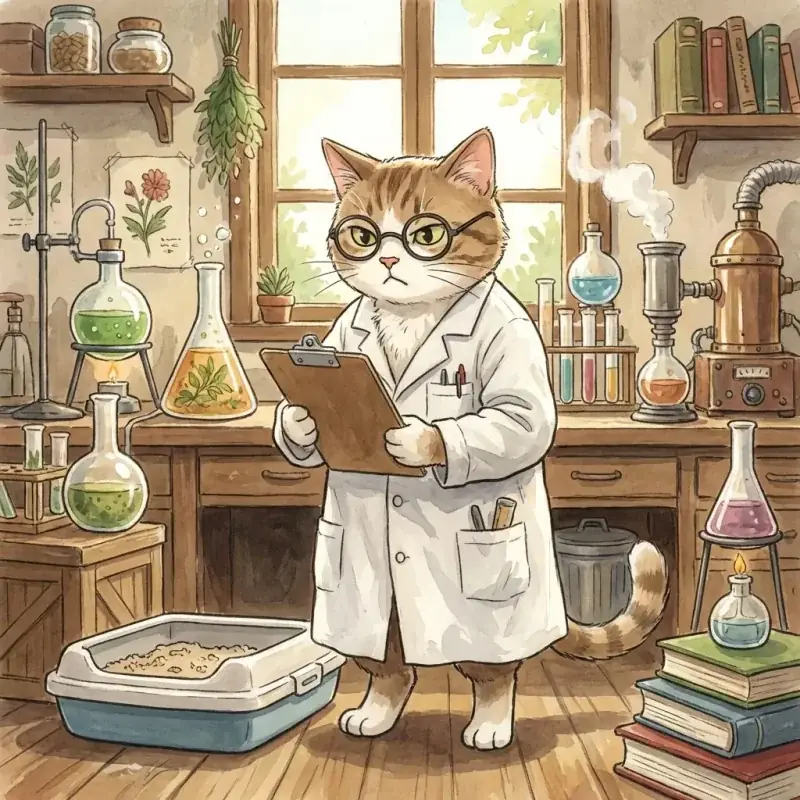
Filtration-grade activated carbon is the same material that water utilities and HVAC systems specify because it has to actually remove things from a regulated stream - not just look like it does. Three signals tell you you're looking at the lower-grade version: a label that just says "carbon" or "basic carbon additive" with no mention of the source material, granules that are dusty or crumble between your fingers, and a faint chemical smell on the bag itself.
Filtration-grade carbon, by contrast, names the source (coconut shell, in Purrify's case), pours as clean granules that don't crumble into dust, and has no smell of its own. That last one is the most useful test in the store: pick up the bag, open it, sniff. If it smells like anything, the carbon is either contaminated or already saturated. Real filtration-grade carbon smells like nothing - that's the whole point.

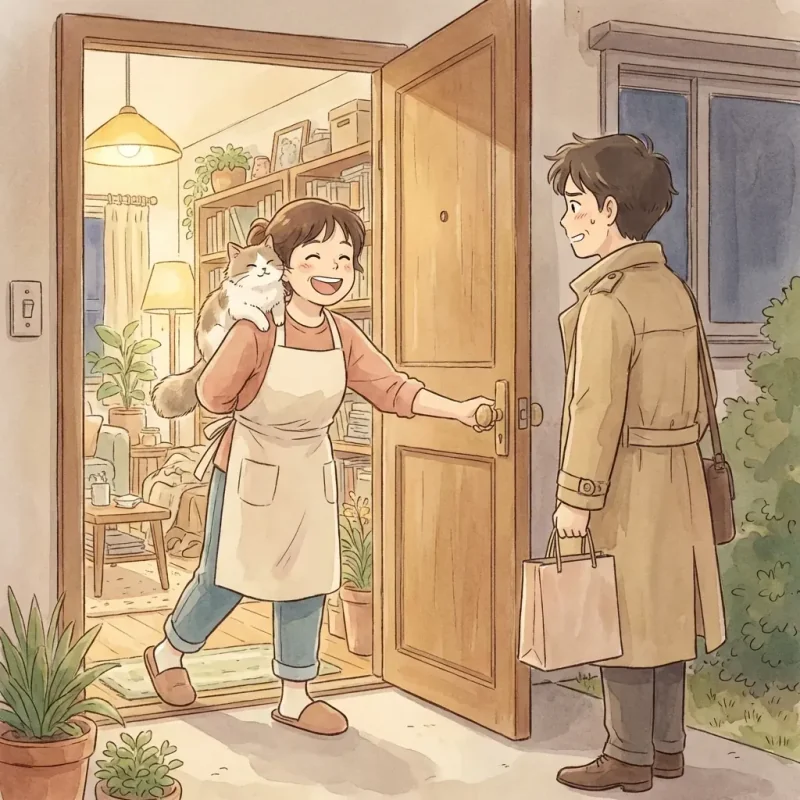
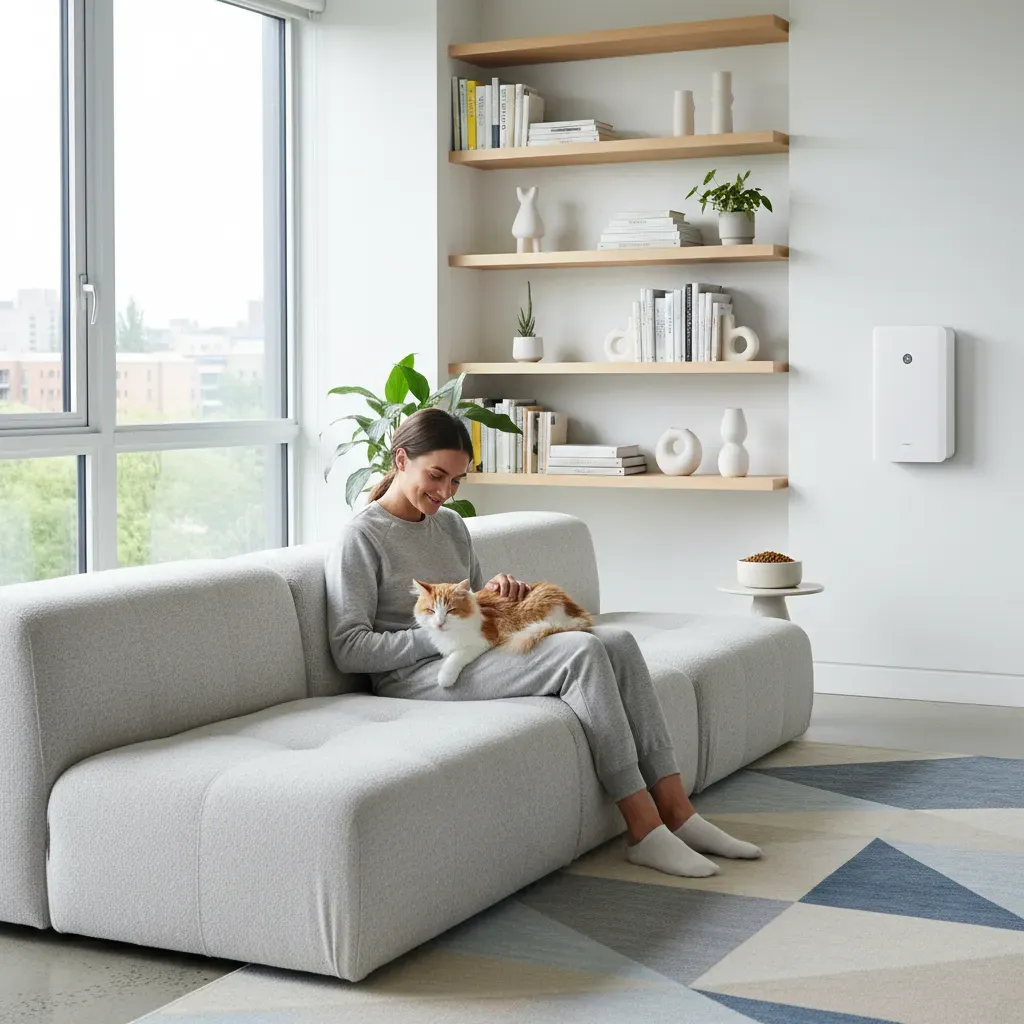
The outcome: confidence that your home smells fresh to every visitor
Key Takeaways
- - Cat odor involves ammonia, sulfur compounds, and VOCs, not just ammonia
- - Masking adds molecules; molecular trapping removes them
- - Filtration-grade activated carbon is used in water filters and hospital air systems
- - One gram of activated carbon has the surface area of a football field
- - Apply carbon directly to litter for maximum effectiveness
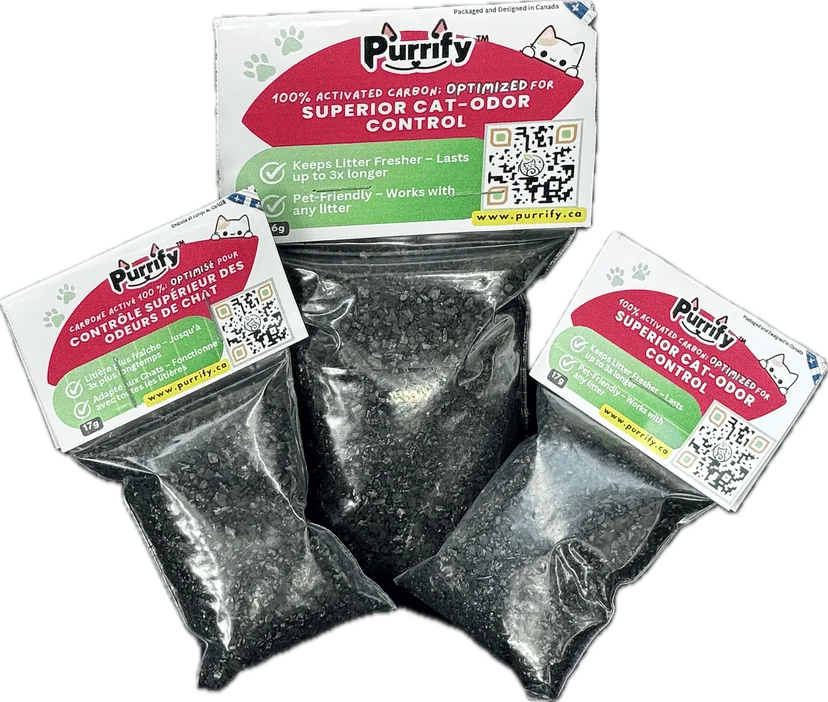
Pro Tip: The Purrify Solution
For the most effective odor control, try Purrify's activated carbon litter additive. Simply sprinkle it in your litter box to eliminate odors for up to 7 days. Made from premium coconut shell carbon, it's the same technology used in water and air filters.
Try Purrify Risk-Free →The chemistry is simple. The application is straightforward. The difference is immediate.
Why Temperature, Humidity, and Surface Area Change What You Notice
Persistent cat odor is not just about which molecules are present. It is also about the environment those molecules move through. Higher temperatures encourage more odor compounds to leave the litter and enter the air. Humidity can make spaces feel heavier and more closed, which changes how the smell spreads and lingers. Surface area matters too. A scratched box, dusty floor, or fabric mat creates more places for odor to cling and later re-release.
This is why two homes with similar litter routines can smell dramatically different. The chemistry is the same, but the physical environment around it is not. Industrial odor control works so well partly because it treats the environment as part of the equation instead of assuming one deodorizing chemical will solve everything everywhere.
What Industrial Adsorption Looks Like in a Home Setting
When industrial systems use adsorption, they are solving a problem through contact, capacity, and replacement schedules. The same logic translates to cat litter. You need enough adsorptive material near the source, you need air and odor molecules to actually reach it, and you need to refresh it before saturation makes performance drop. That is much closer to how carbon filters or treatment systems are managed than to how household air fresheners are sold.
Thinking this way makes home odor control more honest. You stop asking one scented product to perform a miracle and start building a repeatable process: keep the source manageable, place the adsorbent where it can work, and replace it on a schedule that reflects the load. That is the industrial fix in miniature, and it is why it tends to outperform cover-up products so decisively.
Why Fragrance Can Make the Chemistry Feel Even Louder
Fragrance does not just fail to remove odor. It can also make the overall smell feel more chaotic because your brain is now processing perfume and waste compounds at the same time. That mixed signal is one reason heavily scented products can make a home feel dirtier, not cleaner, even when they initially seem strong.
Industrial approaches avoid that trap by focusing on reduction instead of sensory distraction.
Industrial Logic Is Valuable Because It Is Repeatable
The real strength of the industrial approach is repeatability. It replaces guesswork with a process that keeps working even when the room, weather, or weekly routine changes slightly. That reliability is exactly what makes it useful at home.