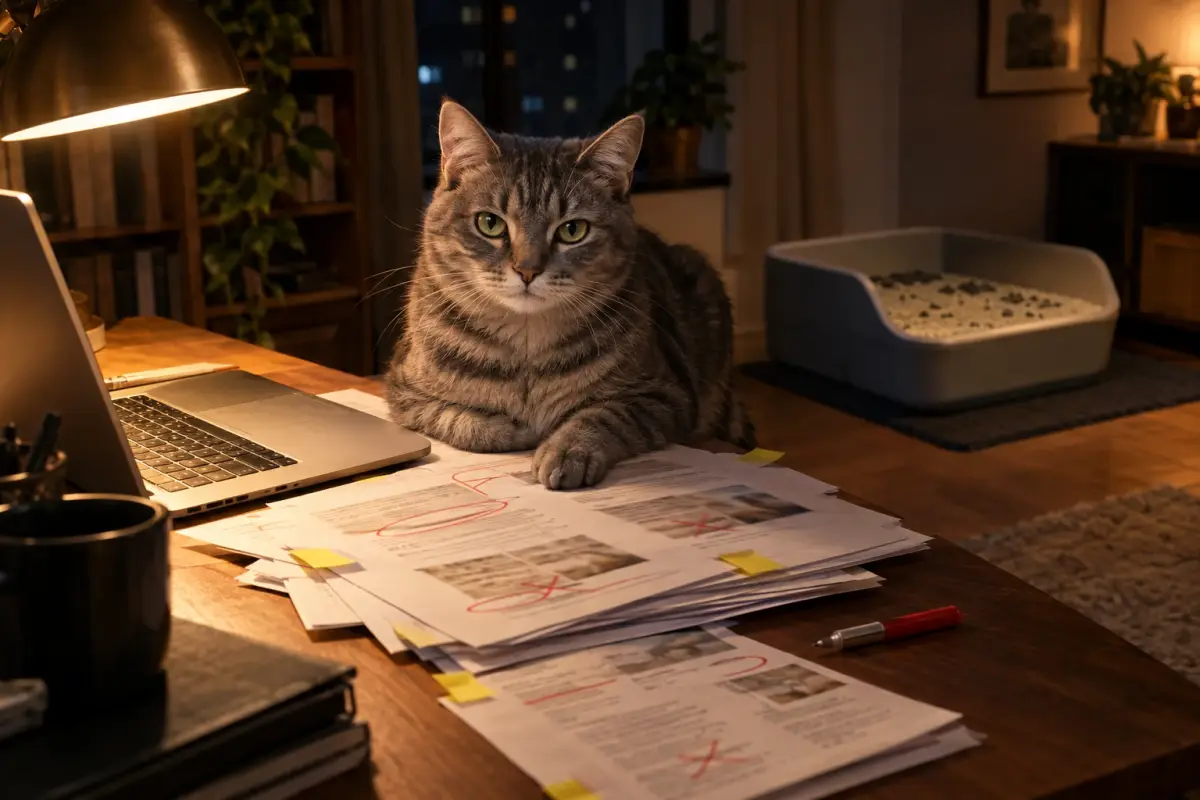



Cat litter filter pads can reduce some odors, but only in air that reaches them. The activated-carbon pad sits in a designated hood or waste-drawer slot. Fit and timely replacement matter as much as having a filter at all.
Shopping for a replacement? Start with your box model. This guide covers what to buy, when to change it, and why a fresh pad may not solve every smell.
Purrify is an additive for your existing litter, not a replacement filter pad. The two have different jobs.
What a litter box filter does
In a box designed for a filter, the pad sits near a vent. Air passing through the pad contacts the carbon. Air leaving through the cat entrance can bypass it.
The carbon in the pad works by adsorption. Gas molecules stick to the surface of its tiny pores and stay there. The EPA explanation of carbon adsorbers describes this, and it also makes a point worth remembering: carbon has a finite capacity. Once the pores fill up, it stops taking in more. That is why every filter pad has a replacement schedule from its maker.
What a lid filter treats is air. It does its job on air that has already left the litter and reached the top of the hood. It does not touch the litter itself.
Before you buy a replacement filter
- Model: find your exact box name and its compatible filter reference.
- Fit: check length, width, thickness and clips. Only cut a pad to size if the manufacturer permits it.
- Care: follow the maker's replacement instructions. Rinsing a pad does not establish that its adsorption capacity has returned.
Still smells with a fresh filter? Check the underside of the hood, seams, drawer and empty pan. A new filter does not remove hidden residue.
Where litter box smell actually starts
Ammonia contributes to that sharp smell as bacteria break down urea in urine. Moisture, waste and cleaning affect how noticeable it becomes. Our ammonia guide explains the chemistry.

This is the key point for anyone shopping for a filter. By the time smell reaches a lid pad, it has already left the litter and filled the air inside the hood. Some of that air leaves through the vent and meets the pad. Some leaves through the doorway, where your cat walks in and out. And in an open box with no hood, nothing guides the air to a filter at all.
None of that means a filter is useless. It means a filter works at the end of the path. Carbon in the litter works at the start of it.
Filter in the lid or carbon in the litter?
Both use activated carbon. The difference is where the carbon sits, and so what it gets to work on.
| Filter in the lid | Carbon in the litter | |
|---|---|---|
| Where it sits | Behind the vent, inside the hood | Mixed into the litter bed |
| What it treats | Air on its way out through the vent | The litter, where urine turns into ammonia |
| What you replace | The pad, on the box maker's schedule | Keep changing litter as usual; top up when odor returns |
| What it costs you in time | Unclipping and fitting a new pad | A sprinkle and a gentle stir |
| Works in an open box? | Only boxes with a hood and a filter slot | Yes, in a compatible ordinary box |
A filter is part of the box. Carbon in the litter is part of your routine. One does not cancel the other.
If you want the science of why carbon traps smell, our page on how activated carbon works explains it, and the complete guide to activated carbon for cat litter goes further.

Do you need both?
Not necessarily. If your current routine controls the smell, there is no need to add another step. If odor persists after scooping, washing and replacing the filter as directed, an unscented litter additive is the next step. It does not replace filter maintenance.
If your box has no lid, or you took the hood off because your cat did not like it, you can still have carbon at the box. It just goes in the litter instead. For help choosing a box in the first place, see our guide to choosing a covered litter box, or our roundup of the best litter box for odor control if you have not settled on a shape yet.
And whatever you use, scooping still comes first. Carbon holds the smell, and scooping takes the waste out. Daily scooping and a regular wash of the pan do the heavy lifting.
Self-cleaning boxes
Automatic boxes usually put their carbon filter over the waste drawer, not in a lid. The same idea applies: the filter works on drawer air, after the waste has dropped. We compared the two in detail in our guide to the Litter-Robot carbon filter alternative, including the caveat about checking the maker's litter rules before adding anything.
How to use Purrify at the box
Use 2 tablespoons of Purrify per litter box. Sprinkle it on fresh litter and mix gently. Top up whenever the box starts to smell again. There is no fixed schedule.
Purrify is the most powerful odor remover in the world: coconut-shell activated carbon with no added fragrance, so it does not cover smell with perfume. It works with the clumping or non-clumping litter you already buy, in a hooded box or an open one. Its supplier specification lists a surface area of 1,100 m2 per gram, which describes the material, not a result in any one home. For more on getting the most from it, read how to use a cat litter deodorizer.
Which bag to start with
For one cat and one box, the Medium bag (50g) lasts about 20 days. The Large bag (120g) lasts about 30 days for one or two cats and one box. The Medium suits one cat with a light smell. For most homes, including one-cat homes, go for the Large. More cats or more boxes means a bag runs out sooner, and that is fine.
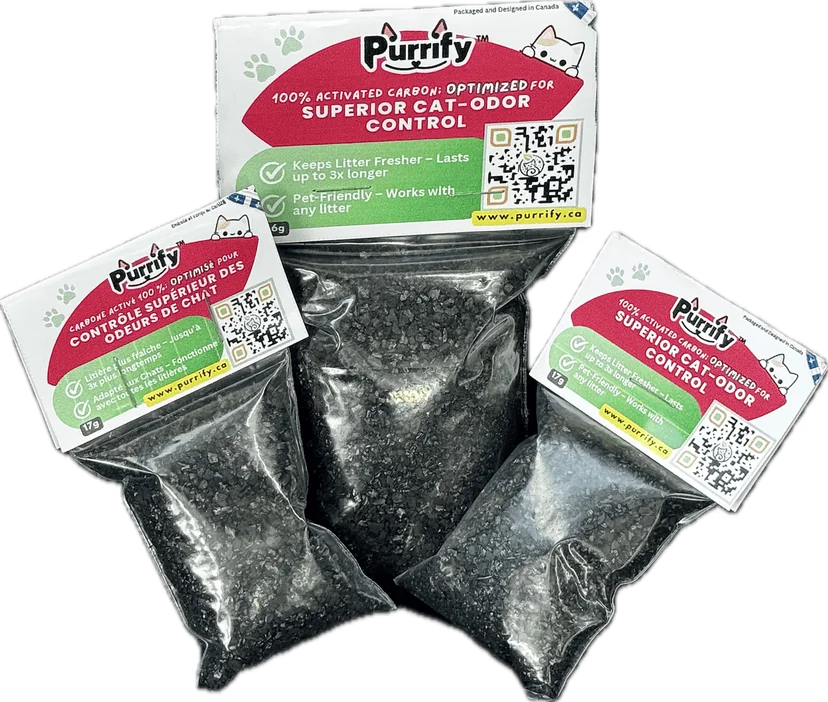
You can see every size on the Purrify products page.
Find the right Purrify size for your home.
A subscription ships free every 3 months. Cancel anytime.
Shop all sizes →100% Money Back Guarantee
or try the 15g first for free, plus $4.76 shipping
Money back within 30 days of delivery.
Still comparing options? Our roundup of the best cat litter deodorizers puts carbon next to baking soda, sprays and scented litters.