The Buyer's Guide: Trial Size, Dosing Math, and How to Know It's Working
This is the practical buyer's guide to activated carbon for cat litter. Not a chemistry lecture - a straight answer to the four questions every cat owner actually asks: which size do I start with, how much do I use, where do I buy it, and how do I tell if it's actually working in my house.
Most owners come to activated carbon after baking soda, scented litter, and air fresheners have all stopped pretending to work. If that's you, skip the trial-and-error: this page tells you what to order, how much to put in the box on day one, and what "working" looks like by day three. For a deeper look at the underlying mechanism, see how Purrify actually works.
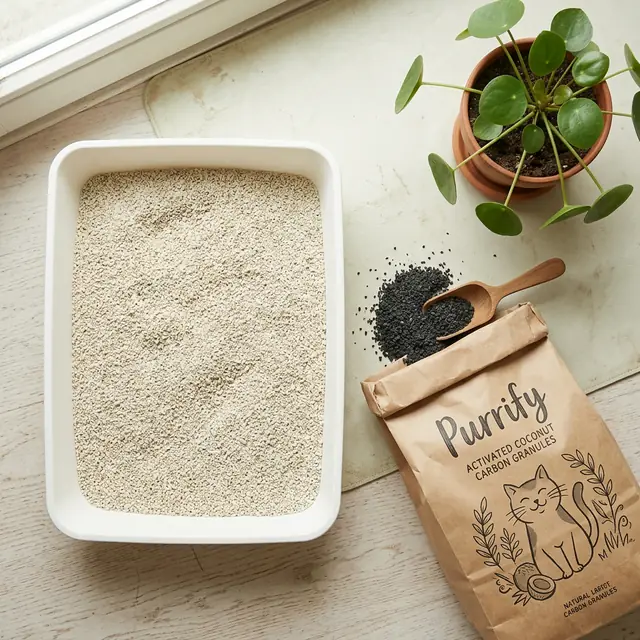
Quick orientation before we get into the details. Purrify comes in three sizes: a 15g trial (use the whole bag at once, lasts about a week - it's a try-before-you-commit size), a 50g medium (about a month per cat), and a 120g large (about eight weeks per cat). Dosing is the same regardless of size: 2-3 tablespoons of Purrify granules per litter box. Sprinkle on fresh litter, mix gently. Top up whenever the box starts giving off a smell again - no fixed schedule.
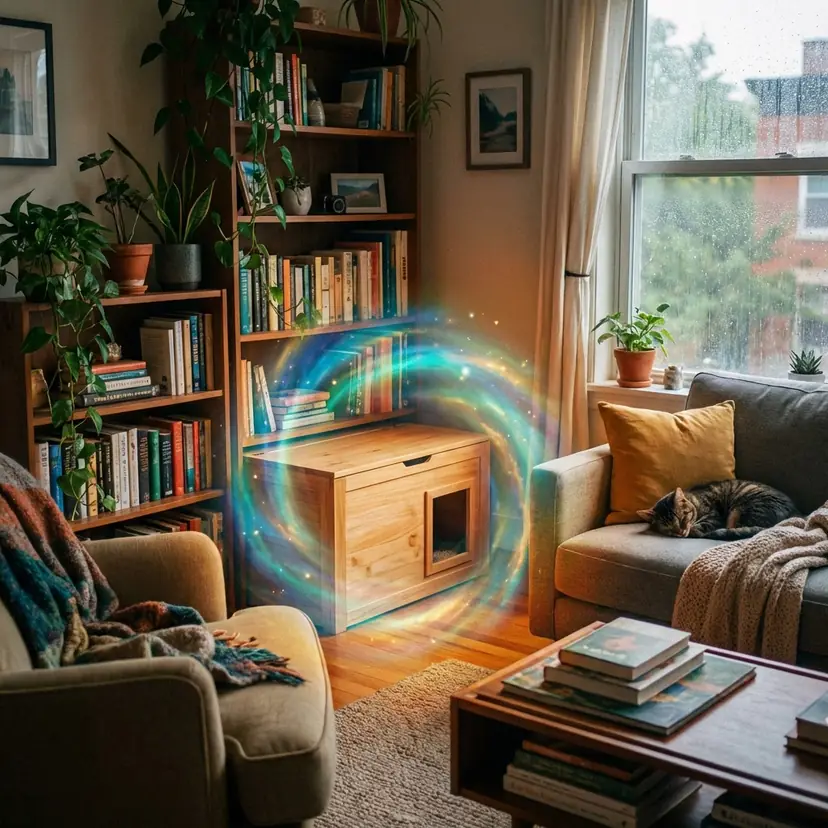
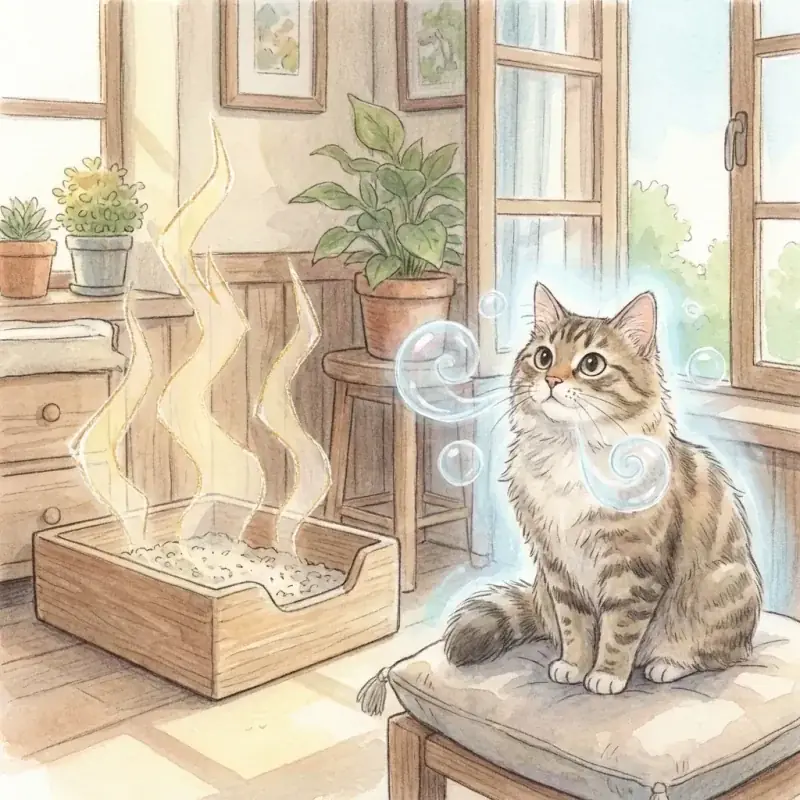
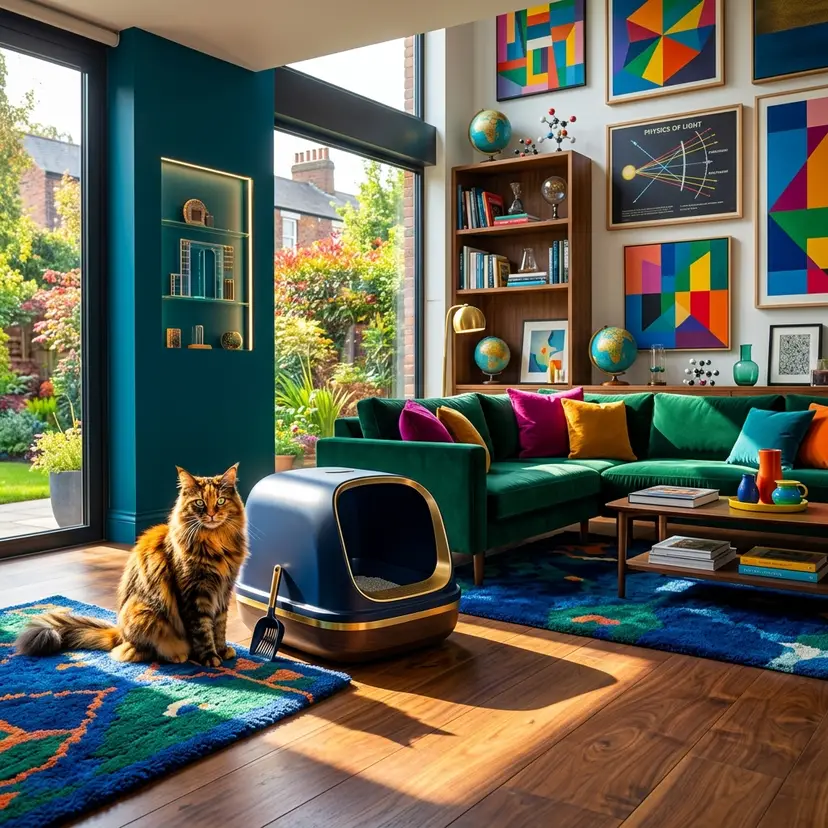
A genuinely fresh apartment is possible, even in small spaces.
What Exactly is Cat Pee Made Of?
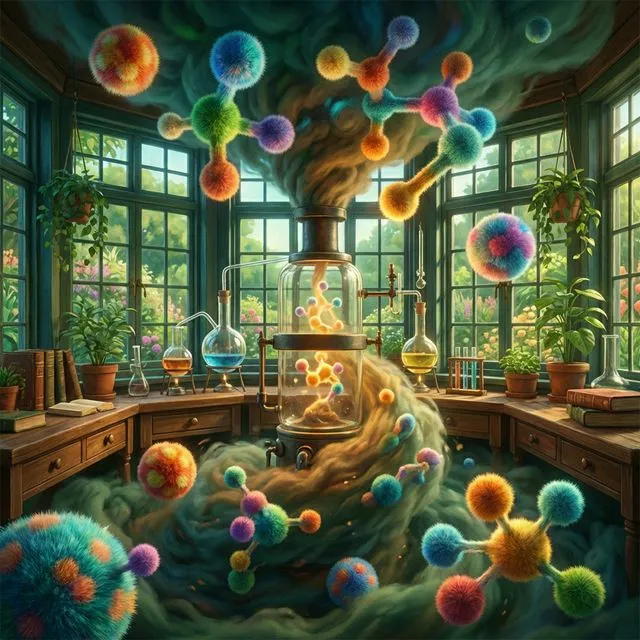
To defeat an enemy, you must first understand it. The foul odor emanating from your cat's litter box isn't just one localized bad smell; it's a complex chemical cocktail.
- Urea & Ammonia: Cat urine contains high concentrations of urea. When bacteria in the litter box break down this urea, it produces ammonia, a highly volatile gas that is famously sharp and irritating to the respiratory tract.
- Felinine: This is an amino acid strictly unique to cats (specifically more pungent in intact males, but present in all cats). As felinine breaks down, it creates sulfur-containing compounds called mercaptans, the same compounds that make skunk spray so unbearable.
- Uric Acid: This compound crystallizes and binds to the surfaces of your litter box, making it exceptionally difficult to scrub away with standard household cleaners.
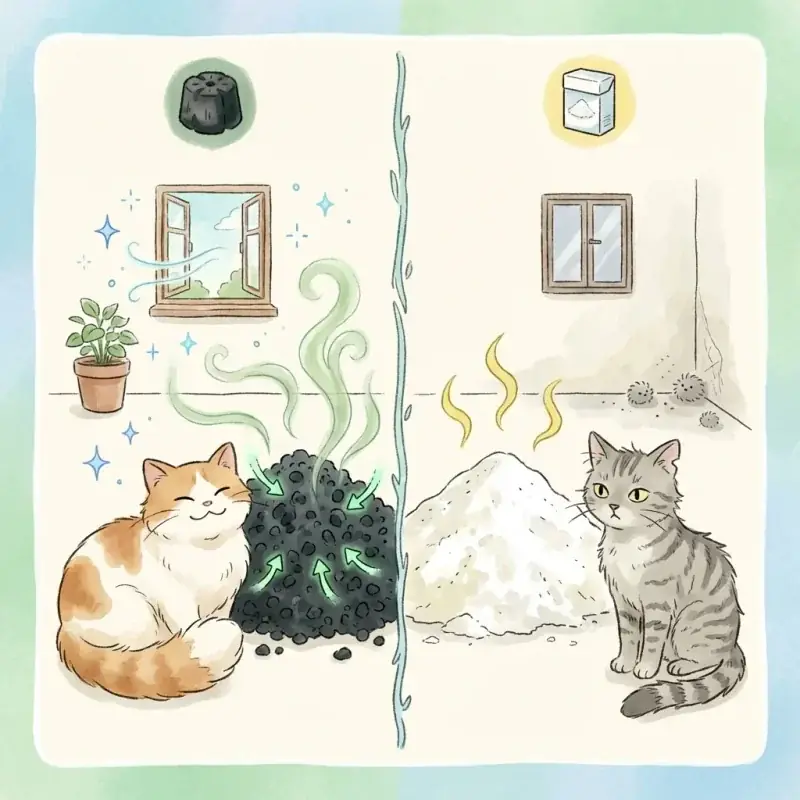
Traditional deodorizers like baking soda attempt to neutralize acidic odors. But ammonia is alkaline (basic), not acidic. Baking soda has no chemical mechanism to effectively and continuously neutralize the vast amounts of alkaline ammonia your cat produces.
What Is Activated Carbon and Why Does It Work?
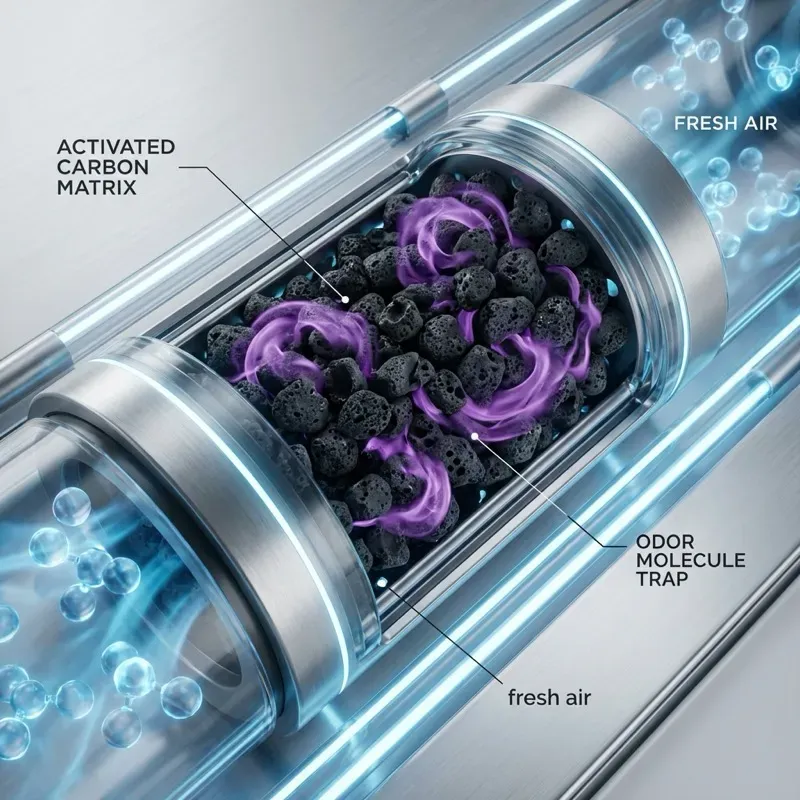
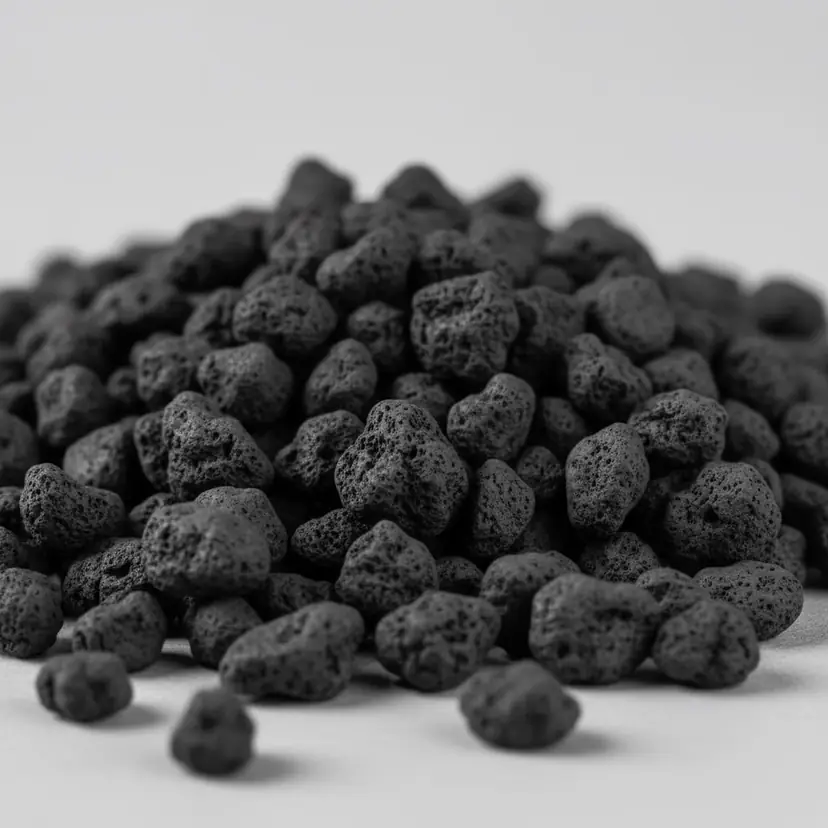
This is where highly porous, lab-grade activated carbon enters the fray. Activated carbon starts as an organic material, most commonly coconut shells, but sometimes wood or coal. This material is superheated to extremely high temperatures in a vacuum (pyrolysis) and then "activated" using steam. This violent process blasts apart the structural integrity of the material to create millions of microscopic pores.
The result is a material optimized specifically to maximize surface area. One single gram of activated carbon contains a surface area roughly equivalent to an entire football field. It is practically a massive, microscopic maze of tunnels waiting to trap odor compounds on contact.
The Scale of Porosity
Premium coconut shell activated carbon provides an incredible surface area of 500-1500 square meters per gram. That equates to about 2 to 6 tennis courts in one tiny pinch. This unmatched surface area is the secret behind its efficiency.

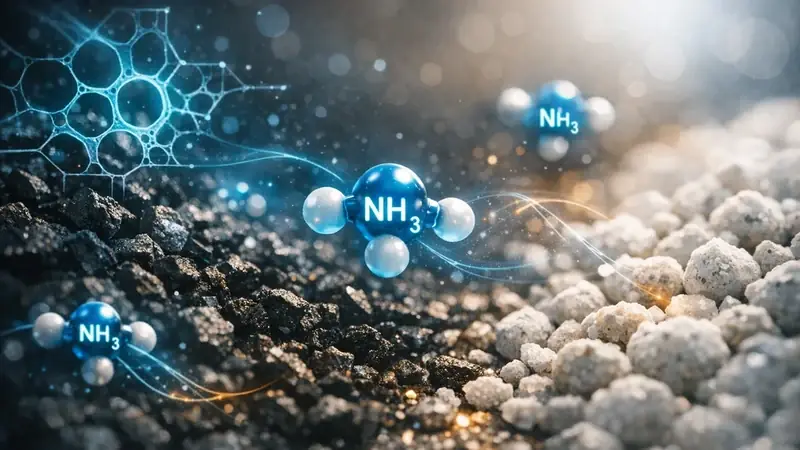
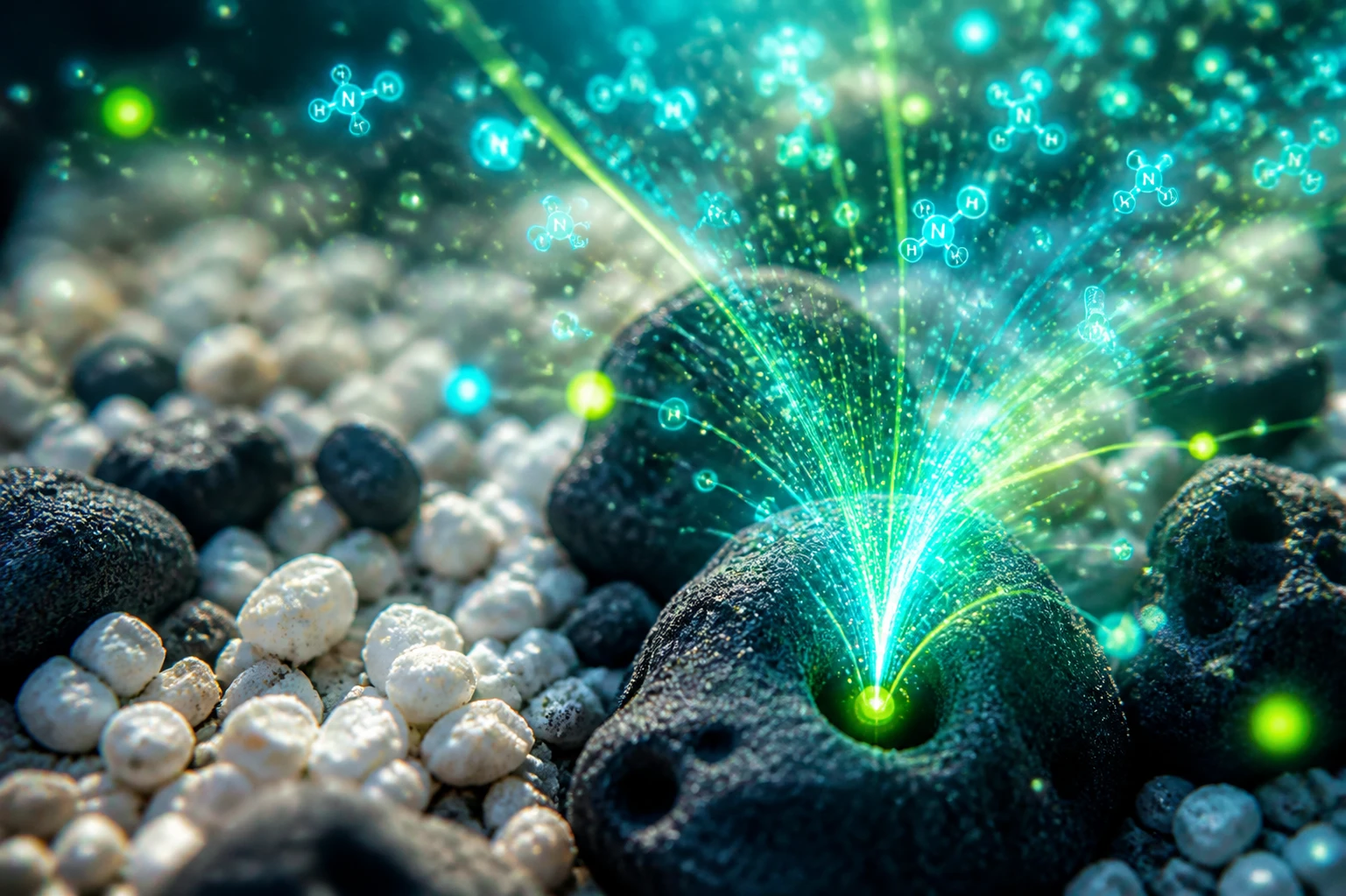
A molecular level look: Odor compounds literally stick to the carbon walls via Van der Waals forces.
Adsorption vs. Absorption: The Crucial Distinction
Understanding the true power of activated carbon requires learning the difference between absorption and adsorption.
Absorption
Think of a sponge soaking up water. The substance penetrates the volume of the material. Traditional clay litters absorb liquids. They lock away the wetness, but they do virtually nothing to lock away the gaseous fumes escaping into the air.
Adsorption
This is a surface-level phenomenon. Molecules chemically stick to the exterior and interior surfaces of a material. Activated carbon utilizes adsorption. The odor molecules are pulled into the pores and held there by Van der Waals forces permanently.
When ammonia, mercaptans, and other volatile organic compounds (VOCs) float up out of the litter box, they collide with the activated carbon scattered on top. They instantly snap into the microscopic pores and remain stuck. This is true odor elimination. You aren't covering the smell with artificial mountain spring fragrance; you are literally pulling the smell out of the breathable air. It's why we keep coming back to coconut-shell carbon as the most powerful odor absorber for a litter box.
Real-World Applications: Trusting the Science
If applying lab-grade chemistry to your cat's bathroom routine sounds like overkill, consider where else activated carbon is trusted to do the heavy lifting:

NASA-grade technology: The same principles used on the ISS to keep air breathable in enclosed spaces.
1. Residential & Municipal Water Filtration
Every time you fill a glass from your refrigerator door or a countertop pitcher, the water is filtered through a bed of activated carbon. It is universally trusted to strip chlorine, heavy metals, and bad-tasting volatile compounds out of drinking water safely.
2. Industrial Air Scrubbers & NASA
On the International Space Station, air must be constantly recycled and scrubbed. Carbon filtration is non-negotiable for stripping dangerous VOCs and keeping astronauts alive. The same concept is used in hospital HEPA systems to keep sterile environments free of airborne contaminants.
Other Verified Carbon Uses:
- Emergency Medicine: Ingested to trap toxins and prevent poison absorption in the stomach.
- Aquarium Maintenance: Used inside tank filters to keep water crystal clear and odor-free for sensitive marine life.
- Military Gas Masks: The primary line of defense against chemical warfare agents.
Not All Carbon is Created Equal: Coal vs. Coconut Shell
Be warned: many cheap pet products claim to use generic "carbon." Often, this is just basic, low-grade bituminous coal carbon or wood char, which does not have the right pore structure for pet waste.
The Magic of Microporosity
Carbon can have macropores, mesopores, and micropores. Cat urine compounds, specifically ammonia, are very, very small molecules. They require micropores (pores smaller than 2 nanometers) to be effectively trapped. Coconut shell activated carbon forms an overwhelmingly high percentage of micropores during activation, making it surgically precise for capturing feline-specific odor compounds.
Sustainability Matters
Environmentally speaking, coal-based carbon relies on strip-mining non-renewable fossil fuels. Coconut shell carbon, by contrast, is an upcycled agricultural byproduct. Manufacturers take discarded coconut shells and transform them into a premium filter. It’s entirely renewable, low-dust, and boasts a lower ash content than coal.
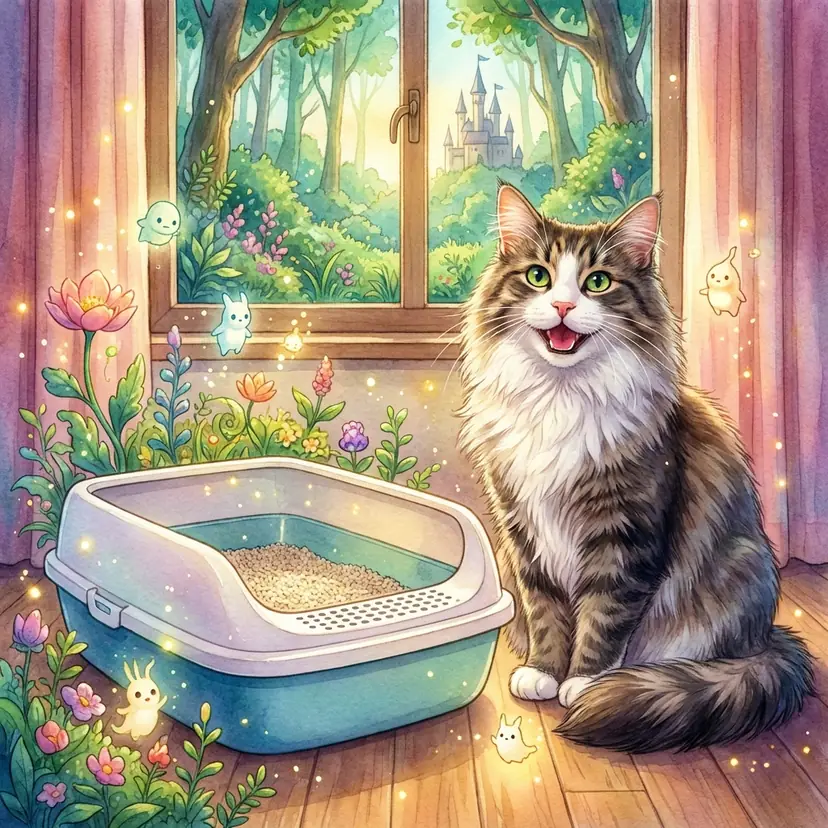
Because it's fragrance-free and natural, cats don't even know it's there.
Activated Carbon vs. Popular Alternatives
Let’s put it to the test against the most common supermarket solutions.
The Breakdown
| Method | Mechanism | Effectiveness | Cat-Safe? |
|---|---|---|---|
| Activated Carbon | Molecular Adsorption | Excellent (Traps all VOCs) | 100% Yes |
| Baking Soda | Chemical Buffer (Acids) | Poor for Alkaline Ammonia | Yes |
| Scented Sprays | Olfactory Masking | Makes it worse (Perfume + Pee) | Can cause respiratory distress |
| Zeolite Minerals | Ion Exchange | Good for Ammonia, weak on Mercaptans | Yes |
Baking Soda is a great household cleaner, but it exhausts its buffering capacity in as little as 48 hours in a litter box. Scented sprays are arguably the worst option. Cats have over 200 million odor sensors in their noses (humans have 5 million). Dumping synthetic lavender perfume into their bathroom is the equivalent of forcing a human to use a port-a-potty drenched in cheap cologne. It often leads to litter box avoidance, which means peeing on the carpet.
How to Apply It for Maximum Impact (Multi-Cat Secrets)
Applying activated carbon is incredibly straightforward, but if you have a multi-cat household making heavy demands on the box, follow this proven routine:
The Multi-Cat Odor Control Routine:
- Don't swap your litter: Cats hate sudden texture changes. Activated carbon is universally compatible. Keep using your current clay, clump, pine, or crystal litter.
- The Sandwich Method: When filling a clean box, put a thin dusting of carbon on the very bottom of the pan to catch liquids that seep through. Add 3 to 4 inches of your regular litter.
- The Topcoat: Sprinkle a generous, even layer of carbon across the surface. This creates an "interception zone" that traps ammonia gas as it tries to rise into the room.
- Daily Maintenance: When you scoop daily, the carbon will naturally mix in. You can "refresh" the top layer with a light sprinkle every 3–4 days to ensure continuous adsorption capacity.
Is It Safe for Kittens and Elderly Cats?
Yes. Because activated carbon works passively via physical adsorption, it releases absolutely zero chemicals, aerosols, or fragrances into the air. If a curious kitten happens to lick a carbon granule, it is inherently non-toxic (the same material that veterinary emergency rooms administer for poisoning, where the medical-grade form goes by the same name).
Elderly cats with sensitive respiratory systems, including those diagnosed with feline asthma, are highly sensitive to the dusty perfumes found in commercial litters. A 100% natural coconut shell additive protects their lungs while protecting your nose.
The Truth About Silica Gel Crystals vs. Activated Carbon
Another popular alternative that cat parents often turn to in their battle against odor is silica gel crystal litter. These are the bright blue or white synthetic crystals that look somewhat like rock salt. They boast incredible liquid-absorbing properties because silica gel is a powerful desiccant (yes, it's the exact same material found in those tiny "DO NOT EAT" packets that come in new shoe boxes).
Crystal litters work by drawing liquid urine deep inside the crystalline structure, trapping the moisture and, theoretically, the odor with it. For the first few days, they can seem miraculous. However, crystal litters have a glaring flaw: saturation points.
The Pooling Problem
Because silica crystals absorb liquid but don't clump, you are instructed to stir the used crystals daily to redistribute the urine. Eventually, the crystals reach maximum saturation. At this point, the urine has nowhere to go. It begins pooling at the bottom of the litter box, creating a stagnant swamp of decomposing urea.
When this happens, the odor doesn't just return, it violently rebounds. Furthermore, silica gel has no chemical mechanism for capturing the gaseous volatile organic compounds (the airborne smells) escaping from solid cat waste. Activated carbon, on the other hand, operates independently of moisture absorption. You can mix activated carbon into crystal litters to get the best of both worlds: extreme liquid absorption from the silica, and total gas-phase odor molecule trapping from the carbon.
Troubleshooting Persistent Odors (When It's Not the Litter's Fault)
If you've upgraded to a premium coconut-shell activated carbon additive and you are still detecting a faint odor, it's time to evaluate the structural integrity of your litter box setup itself. Carbon can only trap what it comes into contact with, and sometimes the smell is coming from places the carbon can't reach.
- Plastic Scrub Scratches: Standard plastic litter boxes develop microscopic scratches over time from claws and the abrasive action of scooping. Uric acid crystals bury themselves deep inside these scratches. To bacteria, these scratches are protective canyons. You can't scrub them clean. If your plastic box is older than a year, throw it out and replace it.
- The "Missed" Spray: Male cats (and some dominant females) may stand too high when urinating. They can spray microscopic droplets over the edge of the box onto the surrounding drywall, baseboards, or flooring. Always use a blacklight (UV flashlight) to inspect the 3-foot radius around the typical litter box location.
- Diet and Digestive Health: "Trash in, trash out" applies heavily to feline digestion. If your cat's feces are remarkably foul-smelling, it often indicates they are struggling to digest the proteins or carbohydrates in their food. High-carb dry kibbles can cause explosive, foul-smelling waste. Consult your vet about transitioning to a high-protein, moisture-rich diet.
- Underlying Medical Issues: A sudden change in urine odor, especially if it smells bizarrely sweet, or heavily concentrated with ammonia, can indicate kidney issues, a urinary tract infection (UTI), or feline diabetes. The litter box is the dashboard of your cat's health; never ignore warning lights.
How to Buy: Pick a Size, Place the Order, Watch for the Signals
If this is your first time, start with the 15g trial. It's gone in about a week, which is enough to learn whether activated carbon does the thing it claims to do in your specific house, with your specific litter, and your specific cat. If it does, the 50g medium is the everyday size for one cat (about a month). The 120g large is the cheapest per-gram option and lasts about eight weeks per cat - that's the one to reorder once you're convinced.
Multi-cat math is straightforward: scale the dose to the number of boxes, not the number of cats. Two cats sharing two boxes gets the same 2-3 tablespoons per box, just refreshed more often because each box fills up faster. Three cats with three boxes gets the same per-box dose. The variable that changes is how soon you top up - not how much you sprinkle.
Three signals tell you it's working. First, the moment you walk into the room: no ammonia hit at the door. Second, the smell stays neutral between scoops instead of climbing for hours. Third, visitors who haven't been over in a while don't say anything about cats - that's the real test, because your own nose adapts.
Where to buy: order direct on Purrify.ca in any of the three sizes. Same price for Canada and the US, ships from Canada. If you want to understand the mechanism before you commit, the how it works overview covers exactly what's happening inside the granules when you sprinkle them on.
Ready for a litter box you can't smell?
Free shipping. Never run out. Cancel anytime.
Start autoship →