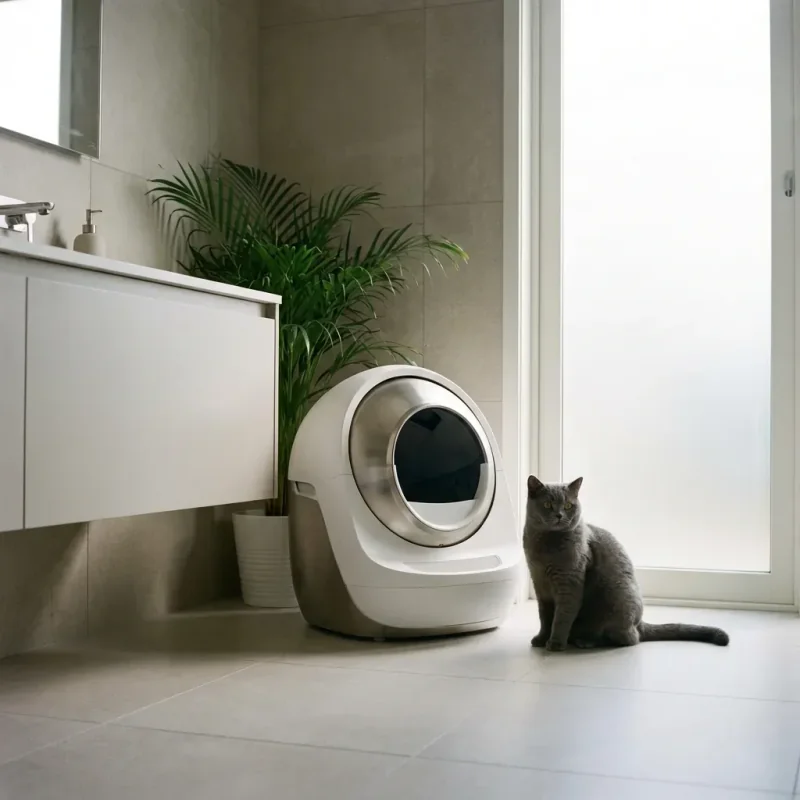


The logic seems sound: cover the litter box, contain the smell. But cat owners who've tried enclosed boxes know the reality is more complicated. Covered boxes can trap odours inside, creating an unpleasant experience for your cat, or they can concentrate odours and release them all at once when opened.
We've tested the most popular covered and enclosed litter boxes to find which ones actually help with odour control, and discovered that the best results come from combining enclosure with molecular trapping technology.
The Truth About Covered Boxes and Odour
Covered litter boxes don't eliminate odour, they redirect it. The smell still exists; it's just contained until you lift the lid or your cat exits. True odour elimination requires trapping odour molecules, not just hiding them behind plastic walls.
Types of Covered Litter Boxes
Understanding the different enclosure styles helps you choose the right one for your situation:
Hooded/Domed Boxes
The classic design with a removable hood and front entry. Affordable and widely available.
Odour control: Moderate-contains litter scatter but odour escapes through entry hole
Top-Entry Boxes
Cat enters through a hole in the lid, reducing tracking and direct odour escape.
Odour control: Better-smaller opening means less direct escape, but concentrates smell inside
Front-Entry with Door
Hooded design with a swinging door flap that cats push through.
Odour control: Good when closed, but many cats dislike doors and refuse to use them
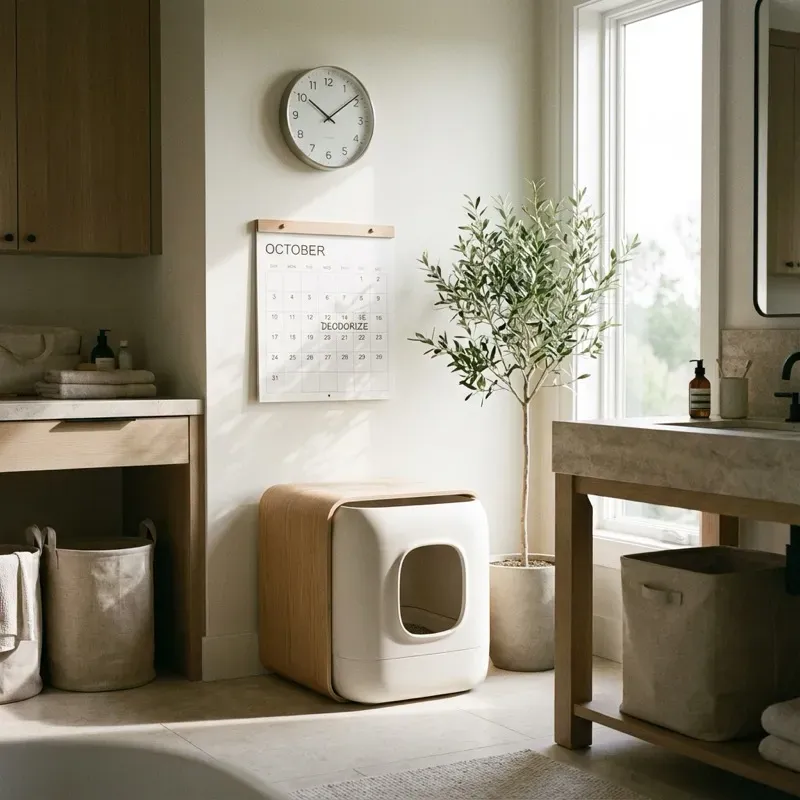
Furniture-Style Enclosures
Decorative cabinets that hide standard litter boxes inside. Prioritize aesthetics over function.
Odour control: Variable-depends on ventilation; some trap odour, others disperse it
Best Covered Litter Boxes for Odour Control (2026)
We evaluated covered boxes based on odour containment, cat acceptance, ease of cleaning, and value:
| Box Style | Entry Type | Odour Containment | Cat Acceptance | Best For |
|---|---|---|---|---|
| Top-Entry (Modkat, IRIS) | Lid hole | Excellent | Moderate | Agile cats, litter trackers |
| Large Hooded (Petmate) | Front opening | Moderate | Excellent | Large cats, easy transition |
| Hooded with Door | Swinging door | Excellent | Low | Confident cats only |
| Furniture Cabinet | Varies | Variable | Good | Living spaces, aesthetics |
| High-Sided Open | Open top | Moderate | Excellent | Anxious cats, seniors |
The Hidden Problem with Covered Boxes
Here's what covered litter box marketing doesn't tell you: containment isn't the same as elimination.
The Concentration Problem
- Odour molecules concentrate inside the enclosed space
- Cats experience amplified smell when using the box
- When the lid opens, concentrated odour escapes all at once
- Some cats refuse covered boxes because of the intense smell inside
This is why veterinarians often recommend open boxes for cats with litter box avoidance issues. The enclosed space can become so unpleasant that cats look for other places to eliminate.

Ready for a litter box you can't smell?
Free shipping. Never run out. Cancel anytime.
Start autoship →The Real Solution: Molecular Trapping
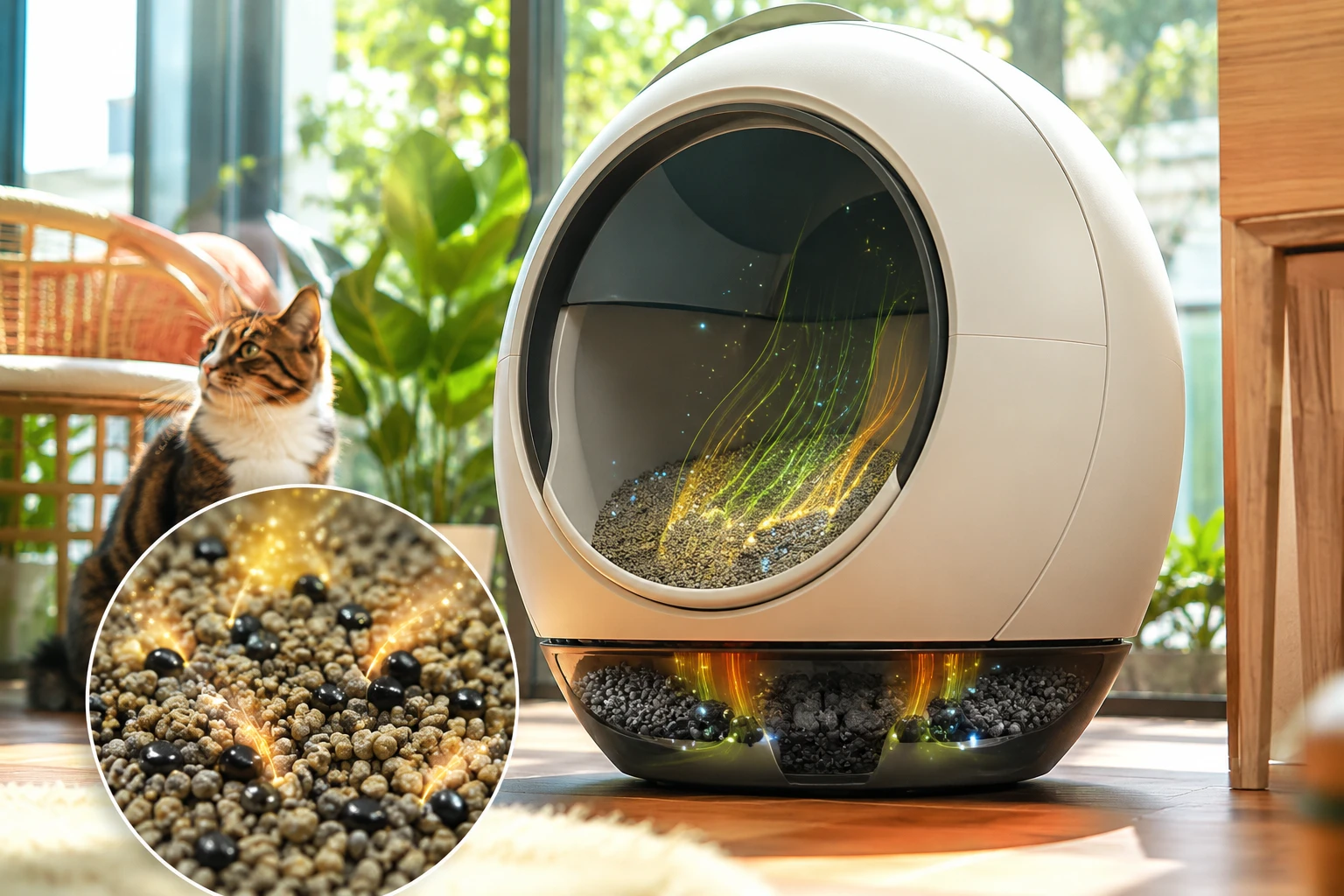
To make covered boxes truly odour-free, you need technology that eliminates odour molecules, not just contains them. Activated carbon does exactly this.
How Activated Carbon Works
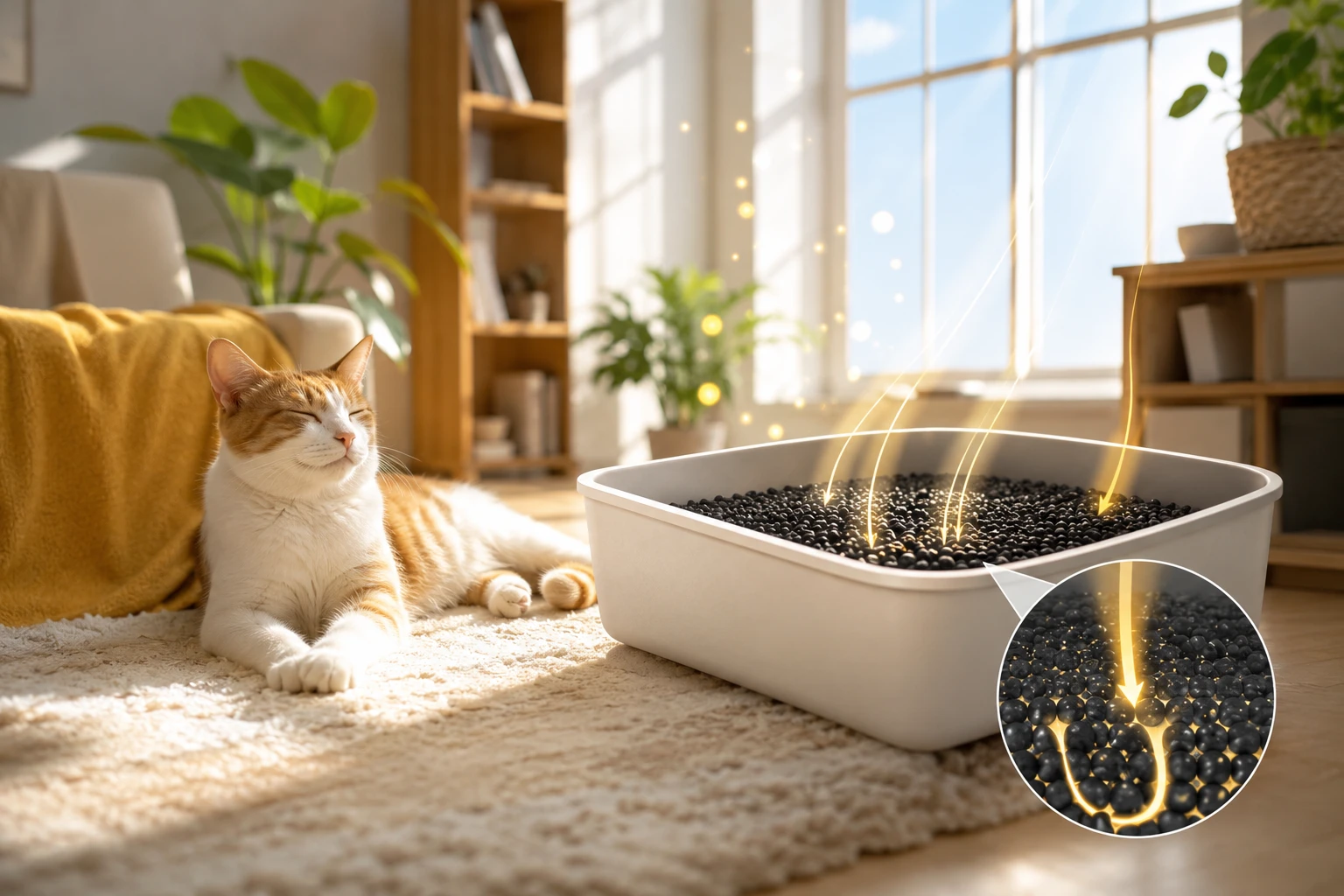
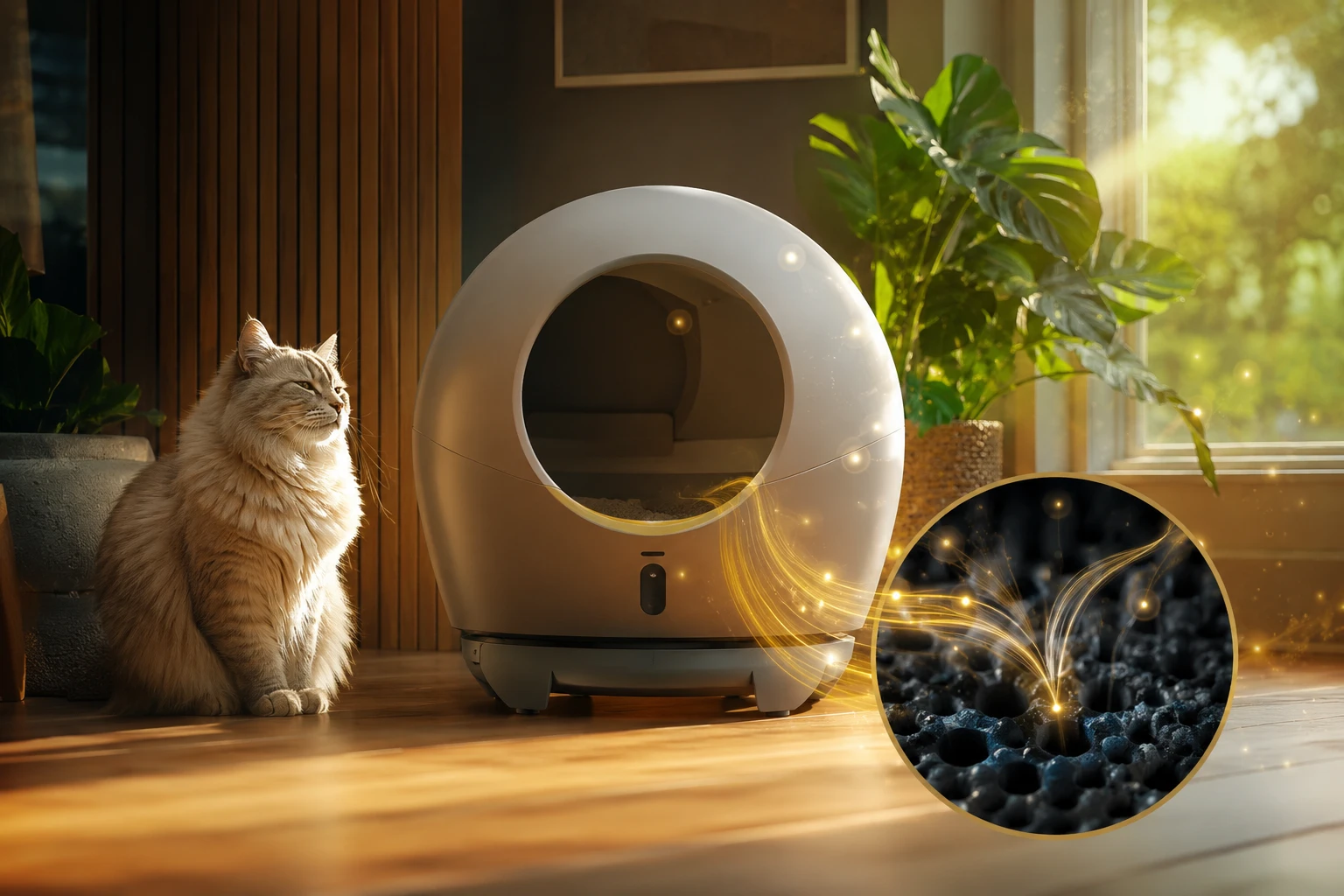
Activated carbon is used in municipal water treatment plants, hospital air filtration systems, home air purifiers, and aquarium filters. A single gram has a surface area equivalent to a football field, covered in microscopic pores that physically trap ammonia, sulfur compounds, and organic odour molecules.
When you add activated carbon to a covered litter box, the dynamic changes completely. Instead of odour molecules concentrating inside the enclosure, they're trapped at the source. Your cat experiences a fresher environment, and you don't get hit with concentrated smell when cleaning.
Purrify: The Covered Box Upgrade
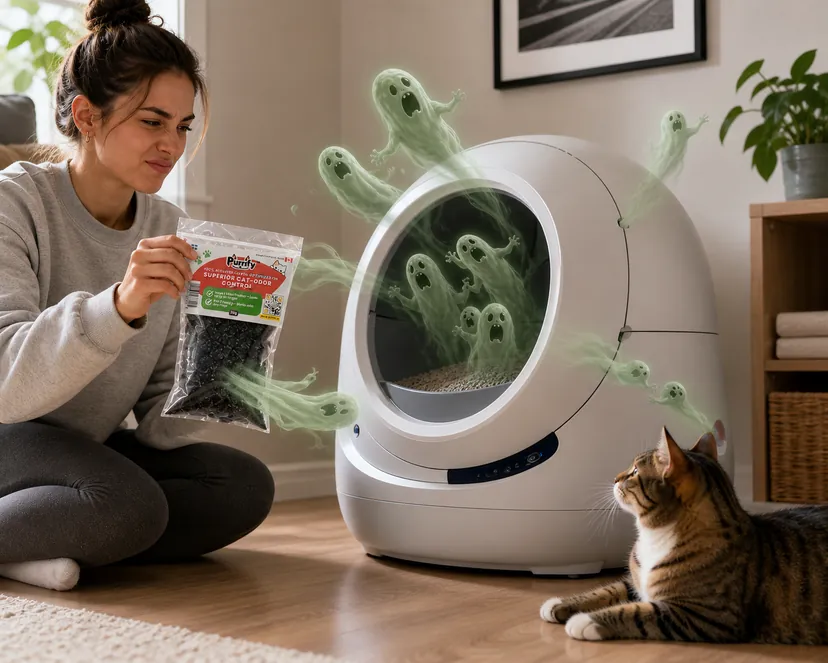
Purrify Litter Deodorizer is made from 100% coconut shell activated carbon, the same technology used in drinking water filtration. It transforms any covered litter box from an odour container into an odour eliminator.
- Traps odours inside covered boxes before they can concentrate
- Makes enclosed spaces more pleasant for cats
- 100% natural, fragrance-free, non-toxic formula
- Works with any litter and any covered box style
Tips for Covered Litter Box Success
1. Choose the Right Size
Your cat should be able to turn around completely inside. If they have to crouch or twist, the box is too small, and concentrated odour becomes unbearable.
2. Add Activated Carbon
Sprinkle activated carbon deodorizer on top of the litter. In enclosed spaces, this is even more important than in open boxes because it prevents odour concentration.
3. Consider Removing Doors
If your hooded box has a swinging door and your cat hesitates to use it, remove the door. Better ventilation with activated carbon often outperforms full enclosure.
4. Scoop Daily
Even more critical with covered boxes. Waste left inside concentrates odour faster than in open boxes. Daily scooping keeps the enclosed environment fresh.
When to Avoid Covered Boxes
Covered litter boxes aren't right for every situation:
- Senior or arthritic cats: Climbing into top-entry boxes or pushing through doors can be painful
- Anxious cats: Enclosed spaces can trigger stress; some cats need to see their surroundings
- Multi-cat homes with conflict: Covered boxes can become ambush points; one cat can trap another
- Cats with litter box aversion: If your cat is already avoiding the box, covering it often makes things worse
In these cases, a high-sided open box with activated carbon provides odour control without the downsides of full enclosure.
The Bottom Line
Covered litter boxes offer privacy for cats and hide the litter area from view. But they don't eliminate odour on their own, they just contain it until the lid opens.
For truly effective odour control in covered boxes, add activated carbon technology. The combination gives you the aesthetic benefits of enclosure with the molecular-level odour elimination that creates a genuinely fresh-smelling home.
Transform Your Covered Box
Purrify's coconut shell activated carbon works in any covered or enclosed litter box-eliminating odour instead of just containing it.
Shop PurrifyRelated Articles
The Box Shape Matters More Than the Lid Alone
A covered litter box only improves odor control if the overall geometry still works for the cat and for airflow. Headroom matters because cramped boxes make cats stand awkwardly, miss the target, or avoid covering waste thoroughly. Entry size matters because tiny doorways slow confident entry and exit. Internal shape matters because narrow hoods can create a concentrated odor chamber that seems great for the room until the cat starts spending less time inside or peeing against the back wall.
That is why the best covered boxes are usually the ones that feel generous rather than sealed. They offer privacy and some odor containment, but they do not force the cat into a cramped tunnel. From an odor perspective, the ideal hood is not the one that traps everything forever. It is the one that lets you manage the source without making the box unpleasant to use.
Which Cats Tend to Dislike Covered Boxes Even When Owners Love Them
Covered boxes are especially tricky for large cats, seniors, kittens, and conflict-prone multi-cat households. A big cat may simply not have enough room to turn and dig properly. A senior cat may dislike stepping into a dark enclosed chamber when joints are sore. Timid cats may avoid a box that feels like a trap if another cat could block the exit. In all of these cases, the owner may believe the cover is solving odor while the cat is quietly building the next behavior problem.
That does not mean covered boxes are a bad choice. It means you have to judge them through the cat's experience as well as through your nose. The most odor-controlled box in the world is a failure if the cat starts peeing beside it.
How to Retrofit a Covered Box for Better Odor Control
If you already own a covered box, a few small changes can improve it more than replacing the entire setup. Remove or prop open the swinging door if it traps odor and discourages entry. Keep litter depth adequate so urine does not pool at the bottom where smell concentrates under the hood. Use an unscented odor-control method inside the litter rather than relying on a perfumed filter in the lid. And clean the interior roof and walls regularly, because those surfaces catch splash and odor residue faster than open boxes do.
These retrofits help because they address the real weakness of covered boxes: concentration. The same logic applies to enclosed automatic units, which have their own hidden smell traps; if your self-cleaning box still smells, the fix usually starts in those concealed corners too. Once you manage the concentrated interior environment, the cover becomes more useful and much less likely to create its own odor problem.
Covered Boxes Need a Stricter Cleaning Cadence
Because odor concentrates under a hood, covered boxes usually reward shorter cleaning intervals than open pans do. Waiting too long lets the interior walls and roof become part of the smell problem. Regular wipe-downs are what keep a covered box feeling like a privacy aid instead of a closed odor chamber.
That extra maintenance is the tradeoff for the cleaner look many owners prefer.
Use the Cover to Support Privacy, Not to Hide Neglect
A hood can help with privacy and visual tidiness, but it should never be the main odor plan. Covered boxes work best when the cover supports a well-maintained box rather than trying to disguise one that already needs attention.