
If your self-cleaning litter box still smells, the cause is almost always one of these seven things:
- Waste-drawer seal is worn or sitting open between cycles
- Built-in carbon filter is past its 1-2 month lifespan
- Rubber gaskets and globe interior have urine residue
- Litter depth is wrong, so clumps break apart
- Cheap or crumbly clumping litter is leaving particles behind
- Cycle delay is too long for your cat's habits
- Multi-cat load has outpaced the drawer capacity
Run the seven-point checklist below, fix the one that matches your symptom, and add an activated carbon layer to trap the airborne ammonia your sealed drawer cannot. Skip ahead: try the activated carbon fix →
Self-cleaning litter boxes have come a long way from the loud, unreliable contraptions of a decade ago. Today's automatic boxes use advanced sensors, quiet motors, and sealed waste compartments. But here is what the marketing does not tell you: automatic scooping alone does not eliminate odour, and the same complaint shows up across every brand once you read past the 5-star reviews.
How we approached this guide
We worked through each of the major automatic boxes (Litter-Robot 3, Litter-Robot 4, PetSafe ScoopFree, Whisker Mini, Casa Leo Leo's Loo Too, CatGenie A.I.) using the most common clumping clay and tofu litters, in a single-cat and a two-cat home setup. Where a claim depends on a specific brand or model, we name it. Where it is general chemistry, we say so.
1Why Automatic Scooping Does Not Eliminate Odour
Automatic litter boxes remove solid waste faster than a human ever will, but they cannot capture all airborne ammonia. Waste can sit through the cycle delay, sensors can miss residue on the globe or rake, and urine-soaked crumbs can stay behind after a clump breaks. The moment your cat urinates, urea contacts urease enzymes in the litter and starts releasing ammonia gas. By the time the rake or globe cycle finishes a few minutes later, some of that gas is already in the room, which is the part your lungs actually notice. The sealed waste drawer addresses what is left behind, not what was already released.
Three odour sources stay outside the machine's reach
- →Ammonia gas released between the moment of urination and the start of the cycle
- →Sulfur compounds escaping from feces during the cycle delay window
- →Drawer leakage through worn seals, gasket seams, and the air burst when you open the drawer
- →Missed residue from sensors, rakes, or globe cycles that leave wet crumbs behind
The built-in carbon filters most automatic boxes ship with are small and only treat air passively as it leaves the unit. They are useful, but they cannot keep up with the ammonia entering the room before the cycle even runs. The fix is not to abandon the automatic box. It is to add an activated carbon layer to the litter itself, where the ammonia is being released. For the chemistry behind the smell, see our deeper write-up on ammonia chemistry.
2The 7-Point Diagnostic Checklist
Walk through these in order. Stop when you find the one that matches your situation, fix it, then re-test for a week before changing anything else.
Waste-drawer seal
Symptom: sharp ammonia spike when you walk past the box, even right after a cycle.
Cause: the rubber lip on the drawer is compressed or torn, so the drawer is no longer airtight.
Fix: wipe the lip with a damp cloth, check for cracks, replace the seal kit if your model offers one.
Filter age
Symptom: smell increased gradually over a month or two, no single trigger.
Cause: built-in carbon filter is saturated. Most are rated 1-2 months and are toast before the indicator says so.
Fix: replace the filter on a calendar schedule, not on a sniff test.
Gasket and globe interior
Symptom: persistent background smell that fresh litter does not fix.
Cause: urine has soaked into rubber and plastic surfaces inside the unit.
Fix: empty the box, wipe interior with diluted unscented dish soap, rinse, dry fully.
Litter depth
Symptom: clumps break apart in the cycle and leave wet streaks.
Cause: too shallow and urine hits plastic; too deep and the mechanism cannot lift the clump cleanly.
Fix: 2-3 inches for rotating globes, fill line for rake systems.
Clump quality
Symptom: clumps crumble in the rake or globe and leave fine wet sand at the bottom.
Cause: light, dust-prone, or low-bentonite litter cannot hold a clump under mechanical force.
Fix: switch to a heavier sodium bentonite clumping clay or quality tofu litter.
Cycle delay
Symptom: smell is worst late at night or first thing in the morning.
Cause: default delay (often 7-15 minutes) leaves urine sitting long enough for ammonia to release.
Fix: shorten the delay in the app to the minimum your cat tolerates without bolting.
Multi-cat load
Symptom: drawer fills in 2-3 days, smell spikes between emptyings.
Cause: the box is rated above your cat count on paper, but real-world capacity is lower than the marketing number.
Fix: empty the drawer on a fixed weekly cadence regardless of the indicator, or add a second box. See multi-cat section below.
For a wider view of habits and routines that compound on top of these mechanical fixes, see our guide to litter box odor fixes.
Ready for a litter box you can't smell?
Free shipping. Never run out. Cancel anytime.
Start autoship →3The Activated Carbon Layer Fix
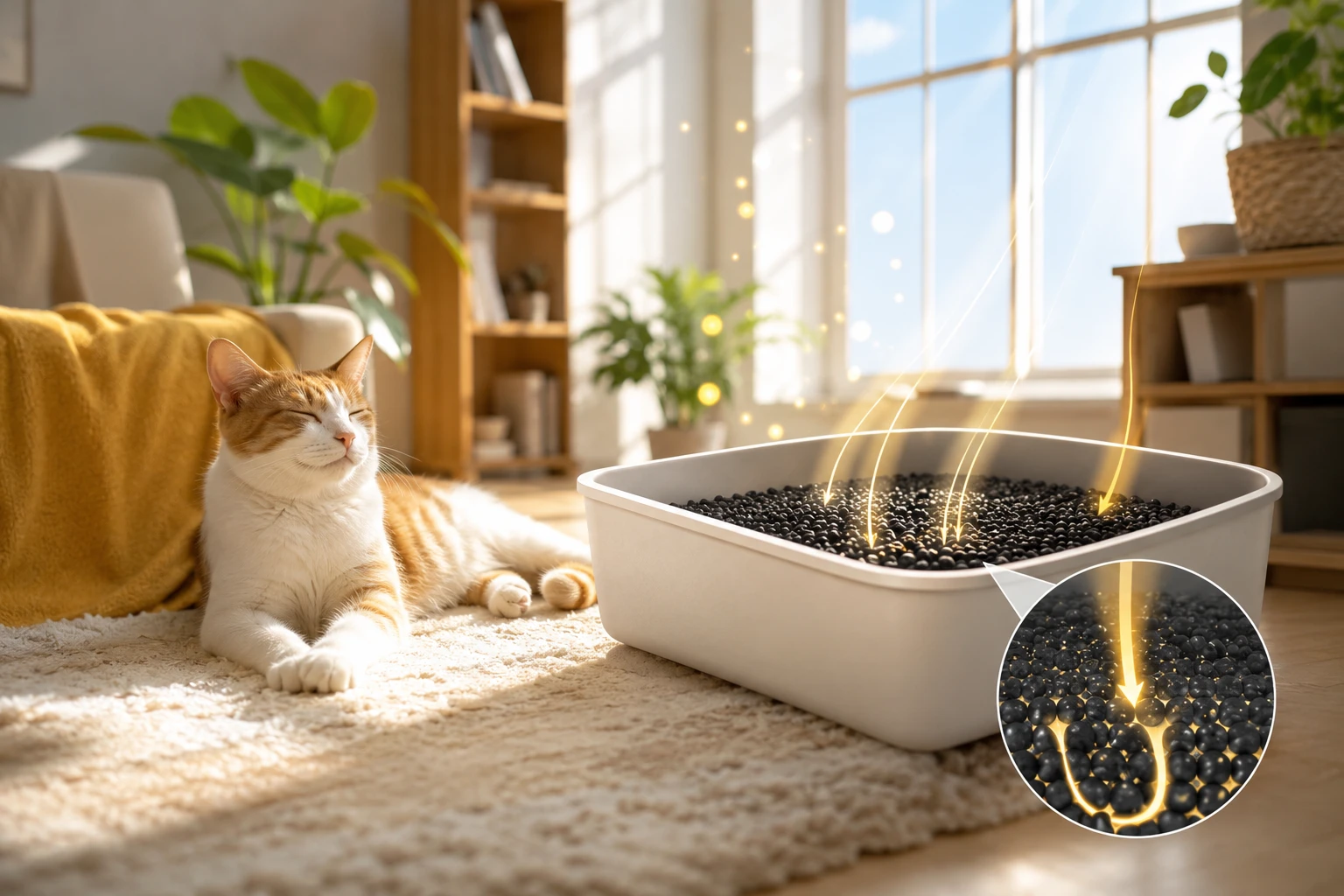
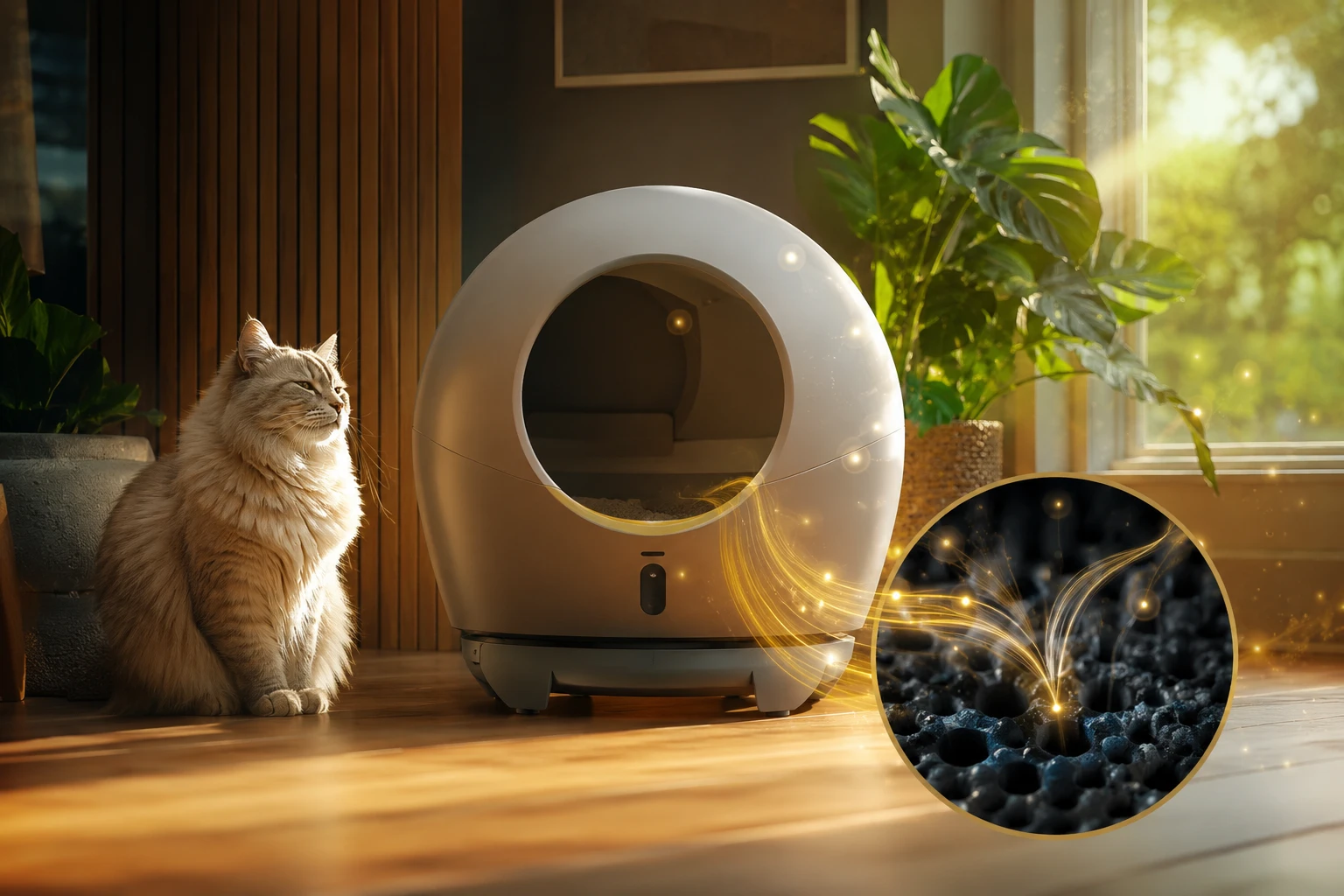
Do automatic litter boxes need a carbon filter? Yes, and most ship with one, but the small filter inside the unit only treats air leaving the drawer. It does not address ammonia released into the room at the moment of urination. An activated carbon layer placed directly on top of the litter complements the built-in filter rather than replacing it: one handles trailing air, the other handles the source.
A football field of surface area, in a single gram
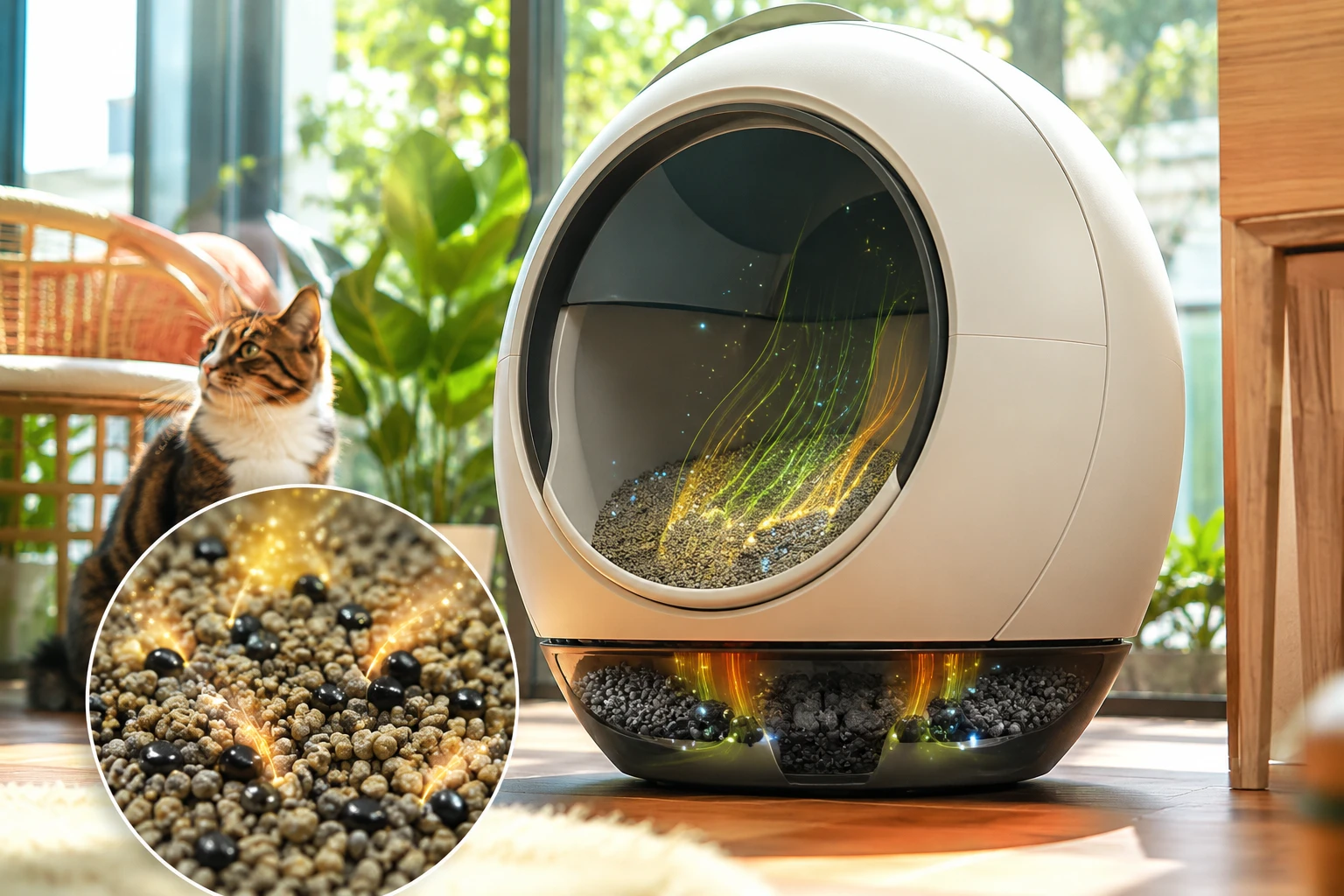
Activated carbon is the same material used in municipal water treatment, hospital air filtration, and aquarium filters. A single gram has a surface area equivalent to a football field, riddled with microscopic pores. Ammonia molecules contact this surface and are physically trapped. They do not get released back into your home as the carbon ages, and there is no fragrance to wear off.
Coconut-shell activated carbon works particularly well in a litter context because of pore size: coconut shell has a higher concentration of small micropores, exactly the size range that ammonia and most cat-related odour molecules fit into. For the chemistry-level explanation, see our activated carbon for self-cleaning litter boxes guide.
Quick answer
What is the best deodorizer for self-cleaning litter boxes?
A fragrance-free, food-grade activated carbon additive sprinkled on top of the existing litter. It works inside the box rather than masking smell after the fact, does not interfere with the rake or globe mechanism, and adds 7+ days of ammonia trapping the built-in filter cannot match. Avoid scented deodorizers, baking-soda-only products (alkaline plus alkaline does not neutralize), and products that change the litter's clumping behaviour.
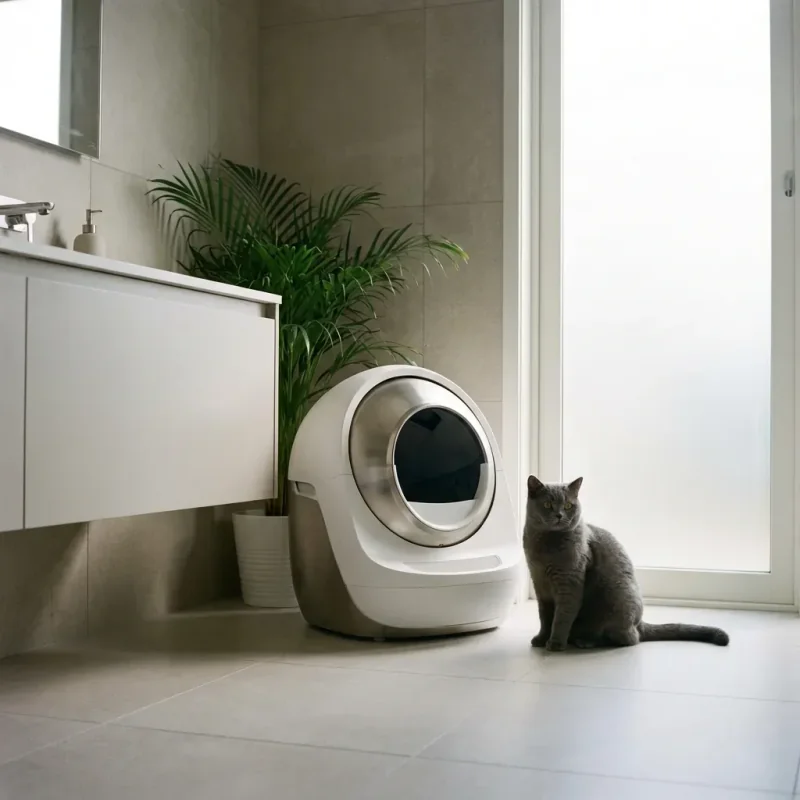
Looking for a premium odor-control refill for your automatic system?
You do not need a brand-specific refill. The activated carbon layer described above is the refill: it works in any automatic box, costs less than proprietary filter pads, and sits where the ammonia actually forms instead of waiting for air to drift through a drawer vent.
4Top Self-Cleaning Litter Boxes Compared (2026)
If you are still shopping rather than troubleshooting, here is how the major automatic boxes stack up on odour-relevant hardware. The pattern across every model: sealed drawers and built-in filters get you to "good", not "odour-free".
| Model | Type | Odour Control | Multi-cat fit | Price |
|---|---|---|---|---|
| Litter-Robot 4 | Rotating globe | Good sealed drawer + carbon filter | Up to ~4 cats | $$$$$ |
| Litter-Robot 3 Connect | Rotating globe | Good sealed drawer | Up to ~3 cats | $$$$ |
| PetSafe ScoopFree Crystal Pro | Rake | Moderate crystal litter only | 1-2 cats best | $$ |
| Whisker Litter-Robot Mini | Rotating globe | Good sealed drawer | 1-2 small cats | $$$$ |
| CatGenie A.I. | Washing / flushing | Excellent on solids; weak between cycles | Up to ~3 cats | $$$$ |
| Casa Leo Leo's Loo Too | Rotating globe | Good UV + carbon filter | Up to ~4 cats | $$$ |
Even the most expensive models in this table only achieve "good" odour control on hardware alone, because the airborne ammonia released the moment your cat urinates is identical regardless of price tag. That is the gap an activated carbon additive closes.
5Model-Specific Guidance
Every box has a known odour weakpoint. Here is what to watch for, and whether a top-of-litter activated carbon layer is sensor-compatible with your model.
Litter-Robot 3 and 4
Weakpoint: drawer carbon filter saturates faster than the indicator suggests, especially with two or more cats. If yours still smells after the fixes below, see our dedicated guide: Litter-Robot still smells? 9 fixes that work.
Carbon layer: sensor-compatible. Granules sift through the rotation with the clumping litter. Adding activated carbon directly to the litter addresses the airborne ammonia released before each cycle.
PetSafe ScoopFree
Weakpoint: crystal trays absorb urine but sit exposed for days, so ambient odour builds up between tray changes.
Carbon layer: sensor-compatible. With original crystal trays, sprinkle around the perimeter where the cat steps. With the clumping-litter adapter, treat it like a Litter-Robot.
Whisker Litter-Robot Mini
Weakpoint: smaller drawer fills faster, odour spikes show up at half the volume of the full-size unit.
Carbon layer: sensor-compatible. The smaller globe is more sensitive to litter depth, so do not over-fill.
Casa Leo Leo's Loo Too
Weakpoint: the UV light and built-in carbon filter help, but neither traps ammonia at the source.
Carbon layer: sensor-compatible. UV cycle does not affect carbon performance.
CatGenie A.I.
Weakpoint: washable granules are excellent on solids but can hold residual smell between cycles, and you cannot add loose carbon to the granule bed because they get washed.
Best path: more frequent wash cycles, an external activated carbon air cassette near the unit, and replacing the SaniSolution cartridge on schedule.
Why does my Litter-Robot still smell?
Three usual culprits: the drawer is full or its carbon filter is past its 1-2 month lifespan; the rubber gaskets and globe interior have urine residue; or ammonia is being released before the cycle runs and the built-in filter only treats air leaving the drawer. Adding activated carbon directly to the litter addresses the third cause.
6Multi-Cat Scenarios
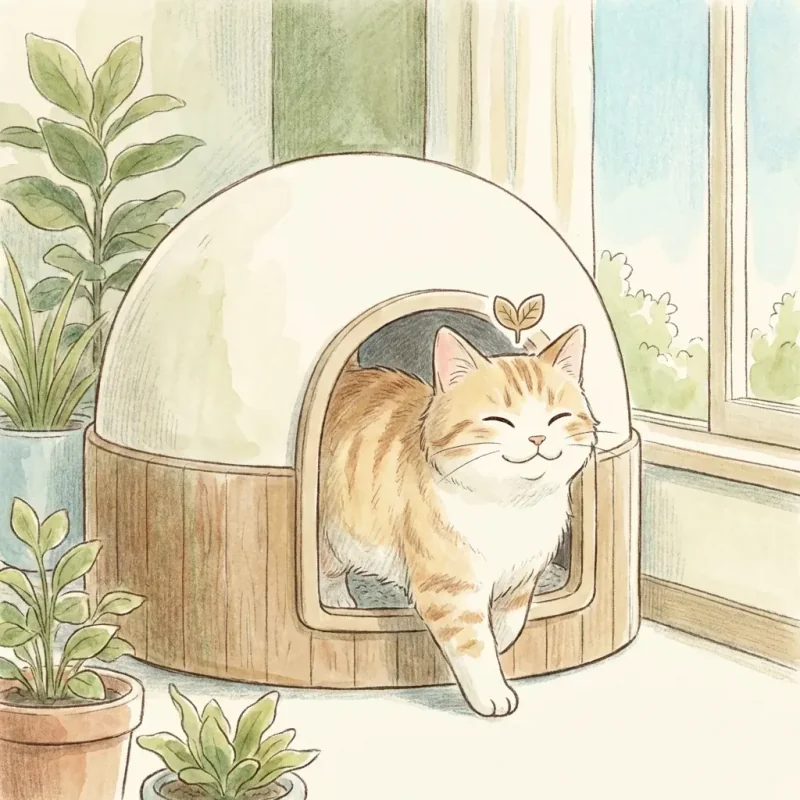
Multi-cat homes are where the marketing capacity numbers fall apart. A box rated for four cats on the spec sheet usually holds odour comfortably for two cats and starts spiking for three. Drawer volume scales linearly with cat count, but ammonia release scales faster because cycle frequency, residue accumulation, and seal stress all compound.
Empty the drawer on a fixed cadence, not on the indicator
Replace the built-in filter, not bi-monthly
Activated carbon top layer doing more odour work than the hardware
None of this is a knock on the box; the chemistry simply does not care how much you spent. For a wider playbook on managing self-cleaning box odor with multiple cats, including how often to refresh the carbon layer and when adding a second box pays for itself, see the multi-cat guide.
Ready for a litter box you can't smell?
Free shipping. Never run out. Cancel anytime.
Start autoship →Frequently Asked Questions
What is the best litter box for odour control?
Why does my automatic litter box still smell?
How do I stop ammonia smell from an automatic litter box?
What is the best litter to use in an automatic litter box?
Can I use activated carbon in my Litter-Robot?
Do automatic litter boxes need a carbon filter?
Is activated carbon non-toxic for cats?
Do self-cleaning litter boxes work for multiple cats?

Bottom Line
Self-cleaning litter boxes are excellent at the labour problem. They reduce daily scooping to a few minutes a week. They are not, however, a complete answer to the odour problem, because the smell is mostly airborne ammonia released before the cycle even runs.
The reliable setup is automatic waste removal plus an activated carbon layer on top of the litter. The box handles the solids; the carbon traps the molecules. If you are halfway through this article and still skeptical, the cheapest way to find out whether the carbon layer is the missing piece in your setup is to test it on the box you already own.
Ready for a litter box you can't smell?
Free shipping. Never run out. Cancel anytime.
Start autoship →