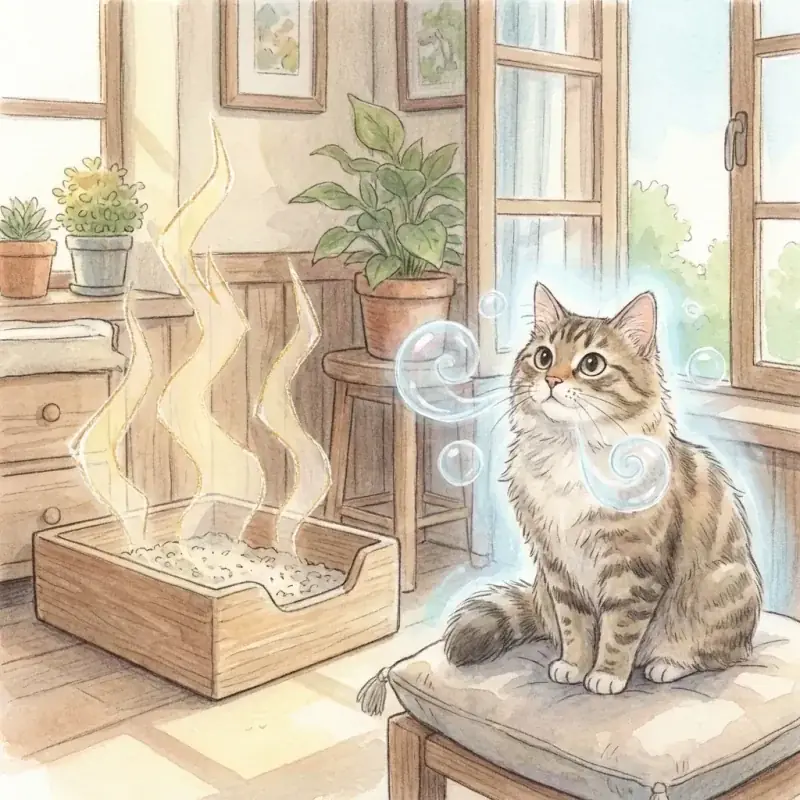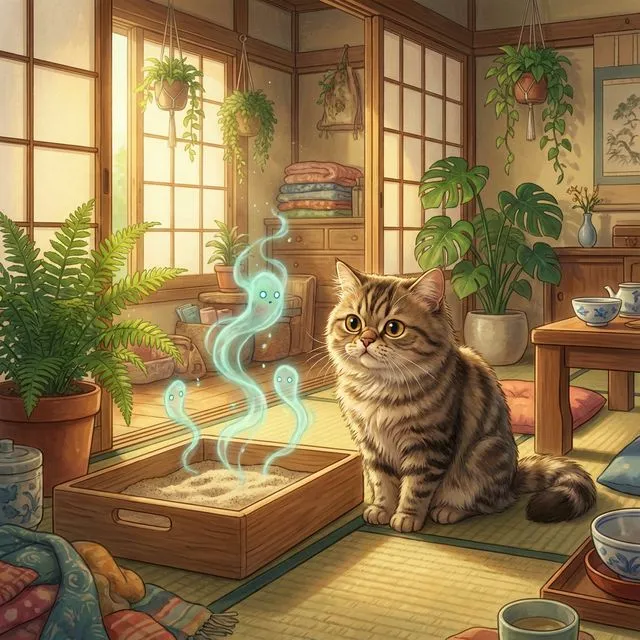
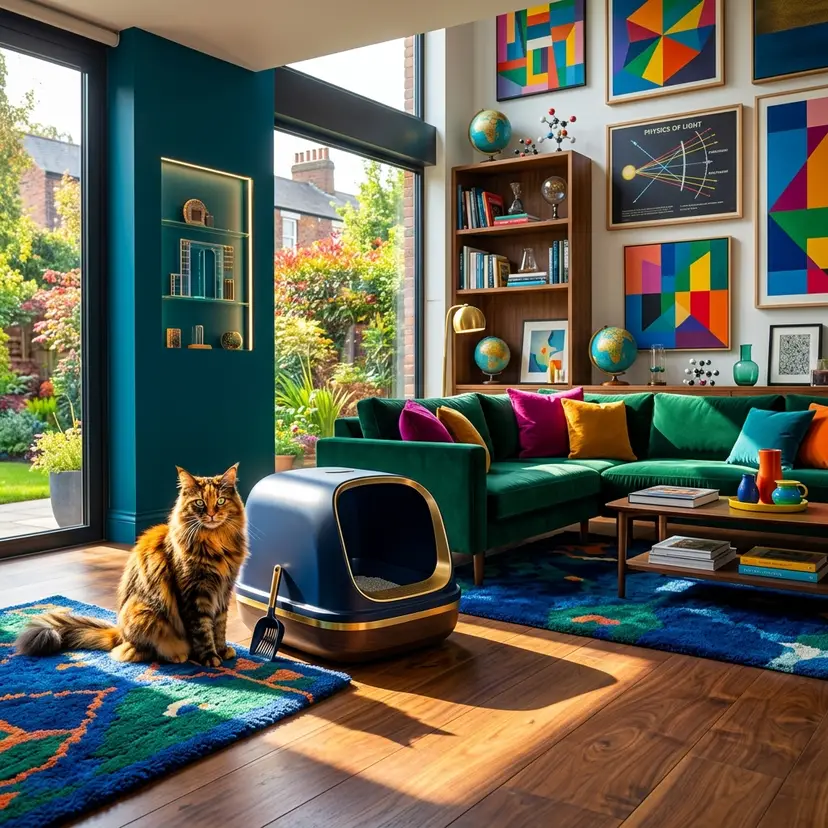
A funny, slightly horrifying tour of the chemicals coming out of your cat's litter box - and why guests notice them before you do. For the deeper chemistry of the worst offender, ammonia, see our ammonia science pillar.
Buckle up.
First, Let's Talk About How Many Cats We're Dealing With
The sheer number of cats living indoors in climate-controlled homes right now is historically unprecedented. We have crammed an apex predator into apartments with throw pillows, and we're somehow surprised that things smell weird.
That's 32.6% of all U.S. households. Nearly one in three homes has a small, furry organism whose kidneys are, at this very moment, manufacturing an odor compound so potent that the human nose can detect it at concentrations measured in trillionths of a gram per liter of air.1
And the trend is accelerating. Gen Z - a generation that is fundamentally restructuring the pet industry - increased pet ownership by 43.5% in a single year, with 70% of Gen Z pet owners keeping two or more animals.2
The Awkward Truth Nobody Will Tell You to Your Face
Here is the most socially devastating survey you'll read today.
A study of 2,000 cohabitating Americans found that 60% say a recurring smell in the home has caused an awkward conversation, and 58% have gotten into actual arguments about it. Pet odors ranked among the absolute top offenders.3
But it gets worse. Most people don't confront the smell. They work around it.
Fifty-two percent of people have considered secretly throwing away your belongings rather than telling you that your house smells like a litter box. Your rug. Your curtains. Your cat bed. Gone. Replaced. You'd never know.
That's not a fun party fact. That's your friends silently opening windows in your bathroom while you're in the kitchen making snacks, thinking everything is fine.
Hotels Lose Millions Over This. You're Not Immune.
When this dynamic moves from your living room to the hospitality industry, the financial consequences become staggeringly precise.
A national survey by Greentech Environmental found that 61% of Americans are acutely concerned about lingering odors in pet-friendly hotels and short-term rentals.4
| Guest Reaction to Bad Odor | % |
|---|---|
| Said a bad odor would completely ruin their vacation | 73% |
| Would leave a negative public review | 71% |
| Would immediately leave the premises | 25% |
Seventy-three percent. Three out of four people say a bad smell would ruin their entire vacation. Not dampen. Not inconvenience. Ruin.
And younger generations are even less forgiving. 74% of Gen Z and 66% of Millennials expressed high concern about pet odors in accommodations, compared to just 50% of Baby Boomers.4
Your Cat's Nose Is a Supercomputer. Yours Is a Calculator From 1987.
To understand why cat odor is so uniquely devastating, you need to understand the biological chasm between how cats smell the world and how you smell the world.
It's not close. It's not even in the same zip code.
| Feature | Human | Cat |
|---|---|---|
| Olfactory epithelium surface area | ~5 cm² | ~20-27.5 cm² |
| Odor-sensing neurons | ~5-6 million | ~200 million |
| Pheromone receptors (V1R) | 2 | ~30 |
| Relative smell ability | Baseline | 14x stronger |
Your cat has 200 million odor-sensing neurons. You have about 5 million. That's a 40x difference in raw sensory hardware.
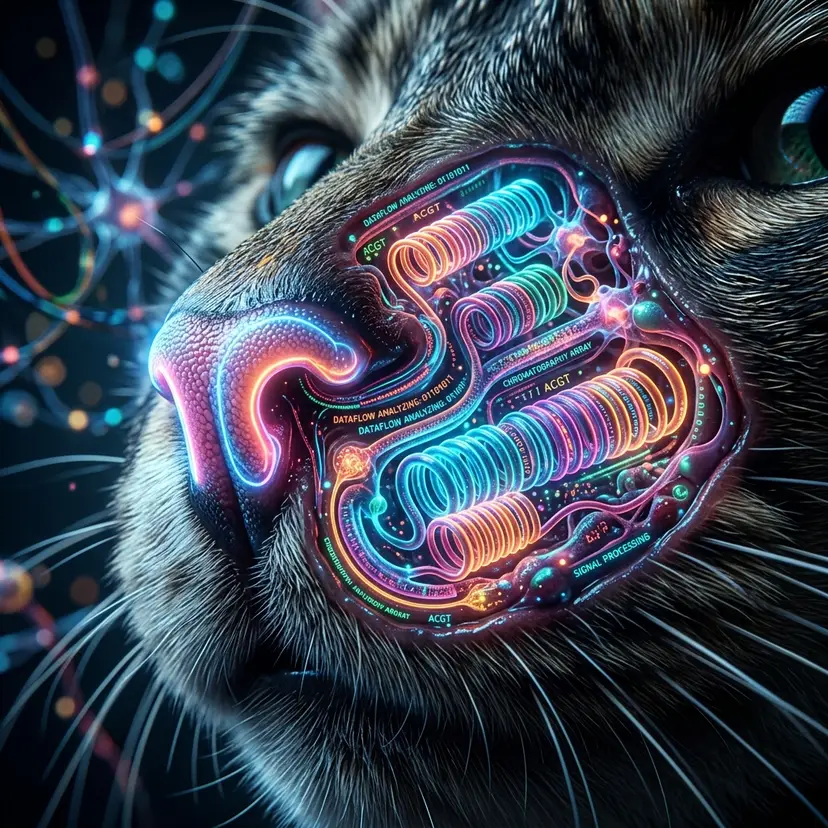
But the engineering goes deeper than raw numbers. A study published in PLOS Computational Biology revealed that a cat's nose functions like a coiled parallel gas chromatograph. Incoming air gets split into separate aerodynamic streams - one for basic breathing, and a dedicated "high-res analysis" stream routed straight to the olfactory tissue, where scent molecules are held in place for extended chemical interrogation without being swept away by normal breathing.5
You brought an olfactory apex predator into a 900-square-foot apartment. It is doing exactly what evolution designed it to do. The apartment is losing.
What's Actually Happening Inside That Litter Box (A Chemistry Lesson You Didn't Ask For)
Cat urine is fundamentally different from dog urine, human urine, or really any other urine on planet Earth.
Fresh cat urine barely smells.
Seriously. When it first comes out, it's surprisingly mild - a faint, slightly savory note that's barely noticeable.6 If someone could invent a litter box that teleported urine into another dimension the moment it hit the litter, you'd never have a problem.
The horror starts about 12 to 24 hours later.
The Cauxin-Felinine Pathway (a.k.a. The Odor Factory)
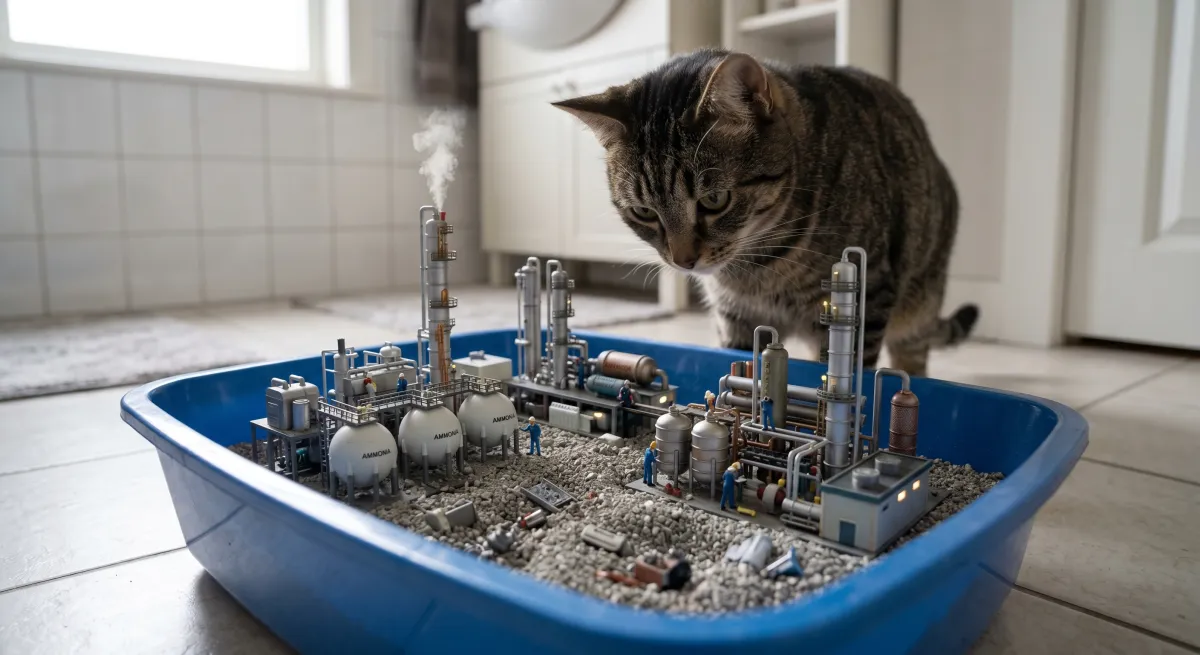
Deep inside the feline kidney, cats produce a unique protein called cauxin. This protein manufactures a sulfur-containing amino acid precursor called felinine - a compound found exclusively in cat urine and nowhere else in nature.7
Felinine itself? Completely odorless.
But the moment it hits air, moisture, and bacteria - which is exactly what happens in a litter box - it starts breaking down. Within 12 to 24 hours, the odorless felinine degrades into a volatile thiol called 3-mercapto-3-methylbutan-1-ol, or MMB for those who don't want to sound like they're ordering a cocktail at a chemistry conference.8
MMB is the signature smell of cat urine. It's the molecule responsible for the pungent sulfur stench that permeates porous surfaces and laughs in the face of your Swiffer.
How Cat Waste Gets Worse Over Time
Researchers using gas chromatography-mass spectrometry have mapped exactly how the volatile compounds in cat waste evolve as it ages:9
The pattern is brutal. Urine gets more complex and worse over time. Feces gets simpler - but the remaining compounds are devastatingly potent.
The lesson: time is your enemy. Every hour that waste sits in the litter box, the chemistry is getting worse.
Ready for a litter box you can't smell?
Free shipping. Never run out. Cancel anytime.
Start autoship →Plot Twist: Your Cat's Urine and a $200 Bottle of Wine Share a Key Ingredient
This might be the most delightfully horrifying fact in this entire article.
One of the critical odorants in cat urine - 4-methyl-4-sulfanylpentan-2-one, known in the flavor industry as "cat ketone" - is also a highly prized aroma compound found in world-class Sauvignon Blanc, aged Rieslings, passionfruit, roasted coffee, hops, and black currants.10
At slightly higher concentrations (parts per billion), the exact same molecule is perceived as rank, offensive cat urine.
Winemakers spend their careers managing fermentation to keep this molecule on the right side of the line. The difference between a $200 bottle of Sancerre and a litter box? A few billionths of a gram.
Next time you're at a wine tasting and someone swirls their glass and says "I'm getting tropical notes, passionfruit, maybe gooseberry" - now you know. They're smelling a diluted version of cat pee. And they're paying good money for it.
Why You Can't Hide It: The Terrifying Math of How Noses Work
The reason cat odor is nearly impossible to mask comes down to something called Odor Detection Thresholds (ODT) - the minimum concentration of a compound required for a human nose to register its presence.
Humans are evolutionarily hardwired to detect sulfur compounds at incomprehensibly low concentrations. This is probably an ancient survival mechanism - our ancestors who could smell the rotting thing from further away lived longer.11
The numbers are almost comically extreme:
By the time a visitor walks through your front door and registers "cat smell," the actual atmospheric concentration of these thiols is millions of times higher than the absolute minimum needed to trigger detection.
You're not fighting a close battle. You've already lost before they take their shoes off.
Why You - Specifically You - Can't Smell It
If these compounds are that potent, how can a cat owner live in a thiol-saturated environment and genuinely believe their home smells fine?
Welcome to olfactory adaptation. Also known as sensory fatigue. Also known, more memorably, as noseblindness.
The Dual Shutdown
Noseblindness isn't a single process - it's a two-stage neurological shutdown:13
Stage 1: Peripheral suppression. Within three minutes of continuous exposure, the perceived intensity of an odor drops by approximately 75%. The olfactory receptors in your nose physically adapt - they reduce their firing rate because the stimulus hasn't changed.
Stage 2: Central brain filtering. Over days and weeks of living with a cat, inhibitory circuits in your brain actively quash incoming signals from those receptors before they ever reach conscious awareness. Your brain deletes the smell from your reality to free up processing power for new threats - like smoke, or a gas leak, or the sound of someone opening a can of tuna.
The Billion-Dollar Proof: The Febreze Disaster
The phenomenon of noseblindness didn't just reshape neuroscience. It nearly killed a billion-dollar product.
In the late 1990s, Procter & Gamble developed Febreze - a genuinely revolutionary chemical product that could physically trap and neutralize odor molecules. They marketed it as a heavy-duty odor destroyer, targeting people with smelly homes.
Sales cratered.
Baffled, P&G sent researchers into homes across America. One pivotal visit was to a self-described "neat freak" in Phoenix, Arizona. Her home appeared spotless. She also had nine indoor cats. The stench of ammonia was so overpowering that a P&G researcher physically gagged upon entry.14
When they asked the homeowner about the smell, she replied, in genuine confusion:
Nine cats. Researcher gagging. She couldn't smell a thing.
P&G realized the people who needed Febreze the most literally could not perceive the problem they were living in. They pivoted their entire strategy, popularized the term "noseblindness," and repositioned Febreze as a "finishing touch" for clean rooms instead of a cure for smelly ones. That pivot turned Febreze into a multi-billion-dollar brand.14
What Cat Smell Actually Does to Your Guests' Brains
Social embarrassment is just the surface. The human olfactory system is wired directly into the limbic system - the brain's emotional and memory center. Feline malodor doesn't just annoy your guests. It measurably changes their psychology.15
Research published in the journal MDPI found that exposure to indoor malodors correlates with spikes in depression, fatigue, confusion, tension, and aggression. A foul-smelling room initiates an immediate, subconscious decline in well-being - and the brain processes these signals within 100 to 300 milliseconds, before the person is even consciously aware of what they're smelling.15
The social paralysis this creates is remarkable. Because 60% of people say that recurring smells cause awkward conversations, the vast majority refuse to address the issue directly. The taboo of telling a host that their home - and by extension, their beloved cat - is olfactorily offensive creates silent resentments and social withdrawal.3
Friends and family begin to subtly decline invitations. Not because they don't love you. Because their limbic system is telling them to protect itself from your living room.
Why Air Fresheners Make the Problem Worse, Not Better
In a desperate attempt to fight the shame of cat odor, many homeowners reach for the heavy artillery: synthetic fragrances, scented sprays, plug-in diffusers, candles that smell like "Mountain Breeze" (which, for the record, no mountain has ever smelled like).
This introduces an entirely new problem.
Over 34.7% of Americans report health problems - respiratory distress, migraines, asthmatic reactions - when exposed to heavily fragranced environments. A single commercial "fragrance" ingredient can be a proprietary blend of over 300 undisclosed chemicals.16
So instead of removing ammonia, you're now layering hundreds of untested synthetic chemicals on top of it. Your chemically sensitive guests aren't getting relief - they're getting a second, equally hostile attack from a different direction.
How We Got Here: The Accidental Invention That Made Indoor Cats Possible
For thousands of years, cats lived outdoors and buried their waste in dirt. Nobody's living room was involved. The concept of an "indoor cat" is shockingly recent - and it exists because of a single accidental discovery.
In January 1947, a Michigan businessman named Edward Lowe was selling industrial clay absorbents to factories. A neighbor, Kaye Draper, showed up frustrated: her outdoor sand piles were frozen solid, and her indoor cat was tracking sooty furnace ashes across her floors.17
Lowe, having no unfrozen sand, handed her a bag of kiln-dried granulated clay called fuller's earth. She came back ecstatic. Unlike ashes or sand, the clay actually absorbed urine and dramatically reduced odor.
Lowe packaged the clay in 5-pound bags, branded it "Kitty Litter," and traveled to pet stores and cat shows physically pouring glasses of water into boxes of dirt to demonstrate the absorbency.
Without absorbent clay, the modern reality of 73.8 million indoor cats would be, as the science community gently puts it, "hygienically impossible."17
The Future: Scientists Are Coming for Cat Smell From Every Angle
Basic clay absorption got us 80 years of somewhat tolerable coexistence. But "somewhat tolerable" isn't cutting it anymore, especially as younger generations increasingly view absolute atmospheric purity as a non-negotiable standard of living.
The science community is attacking this problem from four directions at once:
1. Enzymatic Destruction
Advanced enzymatic cleaners use laboratory-synthesized enzymes and non-pathogenic bacteria to break down uric acid crystals into easily evaporated carbon dioxide and ammonia gas - destroying the odor at its molecular source rather than masking it. Standard bleach and soap can actually reactivate dormant bacteria and make the smell worse.18
2. Dietary Cauxin Inhibitors
Researchers at RIKEN (Japan's largest comprehensive research institution) have decoded the metabolic mechanism that produces felinine. They're exploring cauxin inhibitors that could be added to cat food - preventing the synthesis of felinine entirely, resulting in urine that's chemically incapable of producing MMB.19
3. Metal Ion Neutralization
Transition metal ions - gold, silver, and copper - have exceptionally high chemical affinity for thiol groups. Incorporating these reactive ions into advanced litters or environmental sprays could neutralize MMB on contact, stripping the thiol of its volatility before it ever reaches your nose.19
4. Hacking Your Nose Directly
Perhaps the most audacious approach: scientists have identified the exact human olfactory receptors that respond to cat urine VOCs and are engineering "antagonistic fragrances" that bind to those receptors and physically block the cat urine molecules from attaching. In controlled trials, this approach dramatically suppressed human perception of the malodor without affecting the ability to smell anything else.20
What You Can Do Right Now (Without Waiting for Science to Hack Your Nose)
While we wait for dietary cauxin inhibitors and antagonistic fragrances to reach the market, there is one approach that already works at the molecular level: activated carbon adsorption.
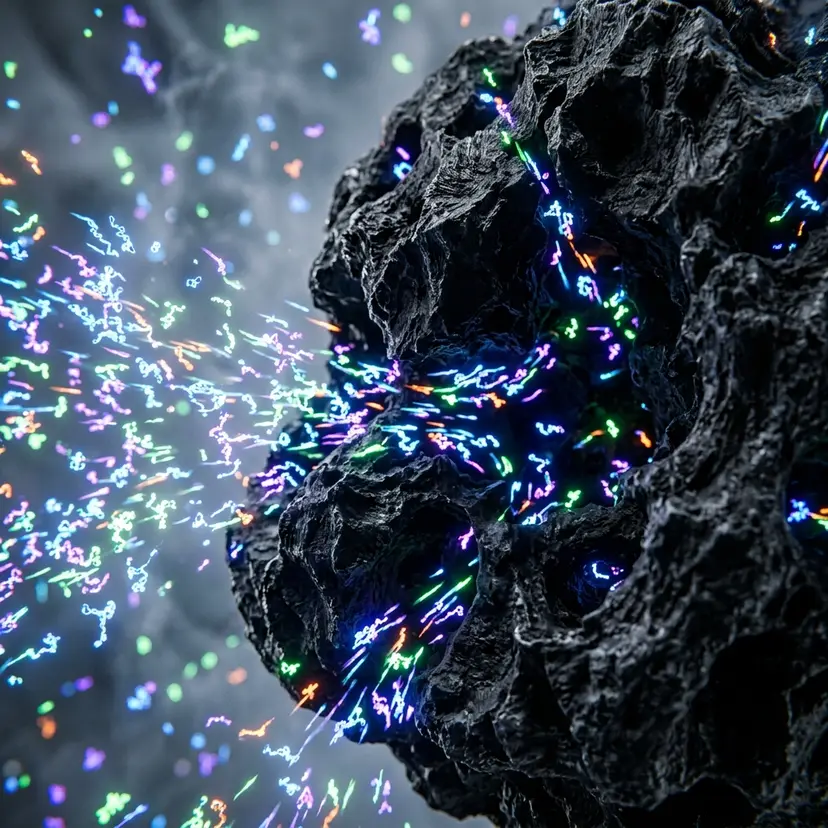
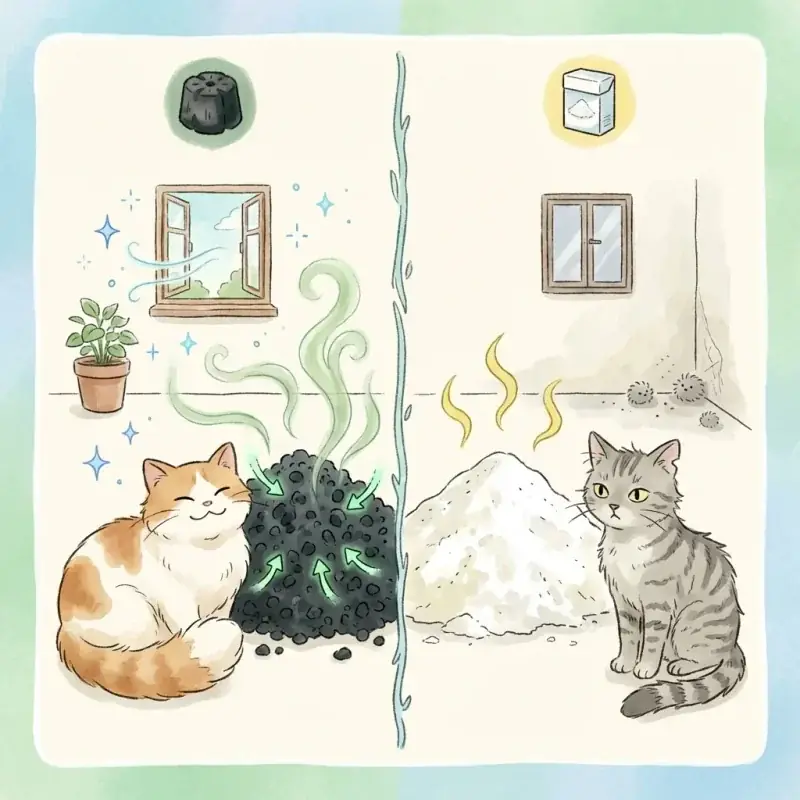
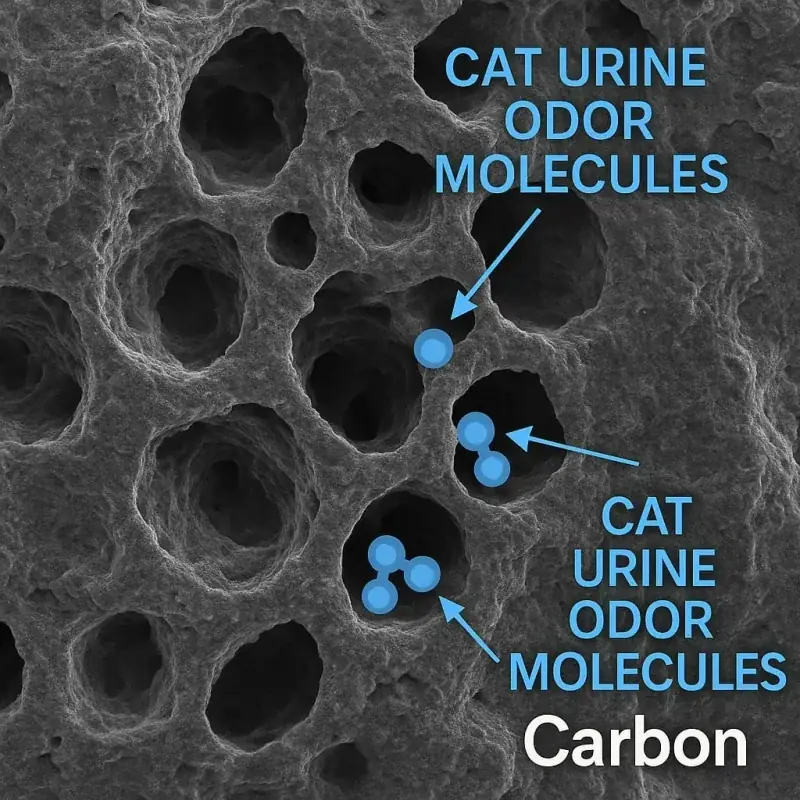
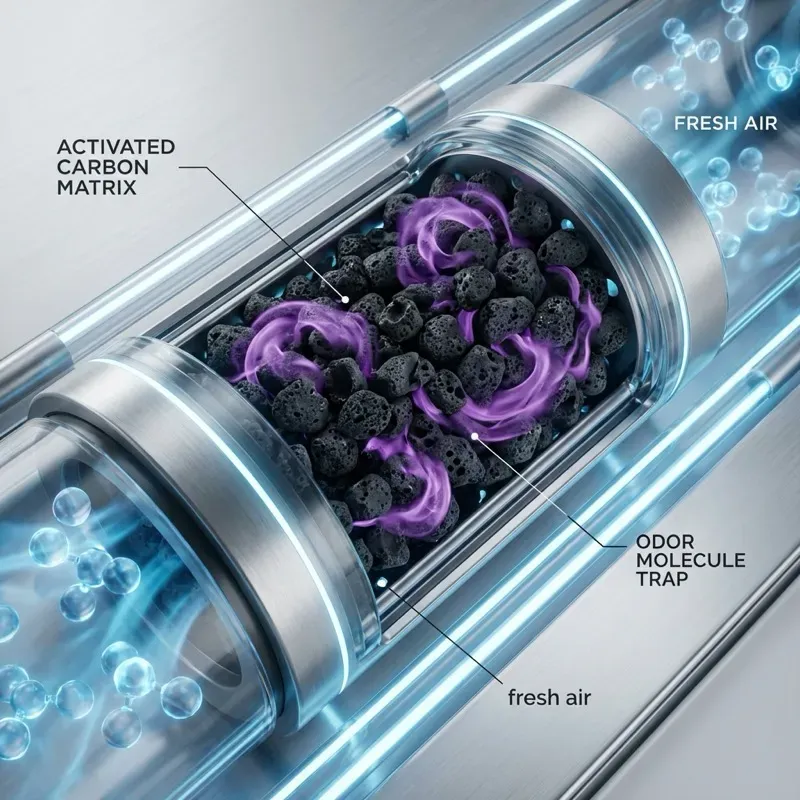
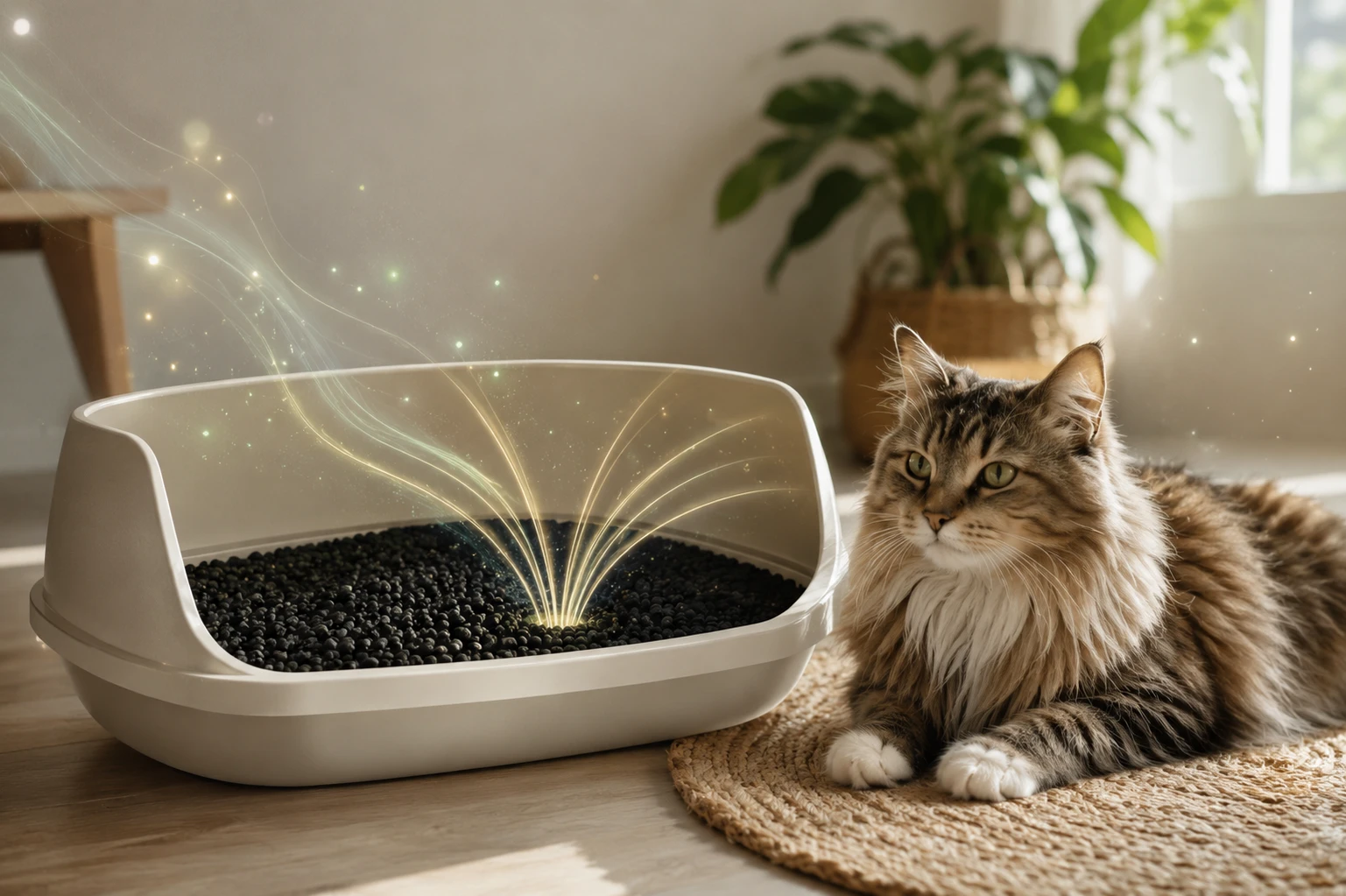
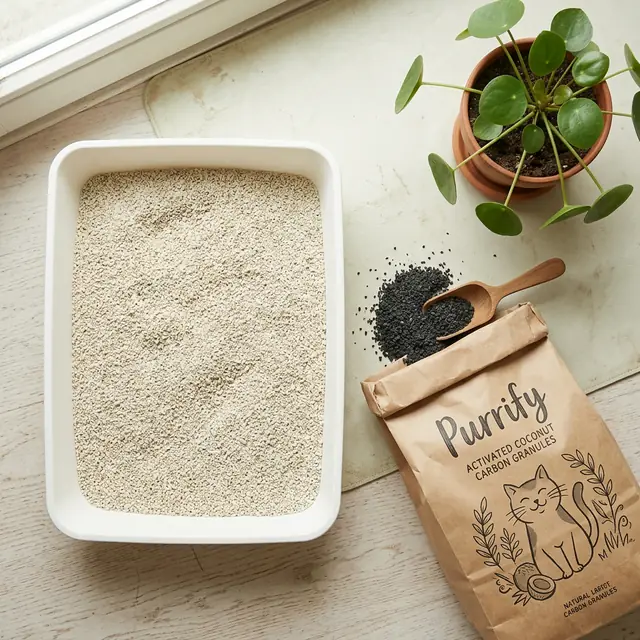
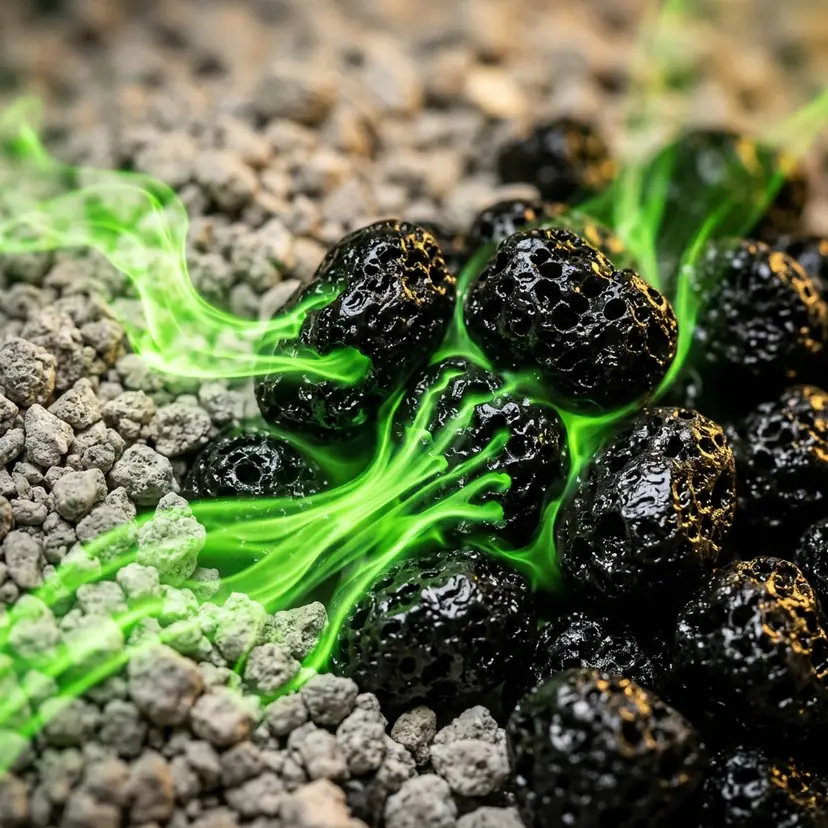
Activated coconut carbon doesn't mask odor. It doesn't try to out-perfume ammonia. It physically traps volatile organic compounds - including the thiols and ammonia responsible for cat odor - inside millions of microscopic pores. One gram of activated carbon contains up to 1,000 square metres of internal surface area. That's two basketball courts of molecular trap in a single gram.
It's the same filtration technology used in municipal water treatment systems, military gas masks, and NASA air purification on the International Space Station.
And now it comes in a bag you sprinkle into a litter box.
Try the 15g Trial. Seriously.
Get a bag of Purrify activated coconut carbon - the same water-filter grade material used in municipal filtration systems. Sprinkle it into your existing litter. If it doesn't eliminate the smell in 30 seconds, you're covered by our 30-day money-back guarantee. The 15g trial is $4.76$7.99, shipping included.
Send Me the 15g Trial →Because the best-smelling home is the one that smells like nothing at all. If you want the full breakdown of what ammonia actually is and why it's the worst offender, our ammonia science pillar has the deep dive.