
Ten myths about cat litter odor, each with one clear rebuttal: the popular hacks - baking soda, coffee grounds, scented litter, covered boxes, essential oils - and why each one fails on the actual chemistry. Where a myth touches the underlying science, we link out to the deeper guides on ammonia science, how activated carbon traps odor molecules, and how Purrify works inside the box.
Why Cat Litter Odor Myths Spread So Fast
Cat ownership is one of the most Googled topics on the internet, and litter box odor is one of the top pain points. That combination creates a perfect environment for well, meaning but scientifically shaky advice to go viral. A tip gets shared in a Facebook group, picked up by a lifestyle blog, and suddenly it's presented as established fact - even if it was never tested beyond one person's anecdotal experience.
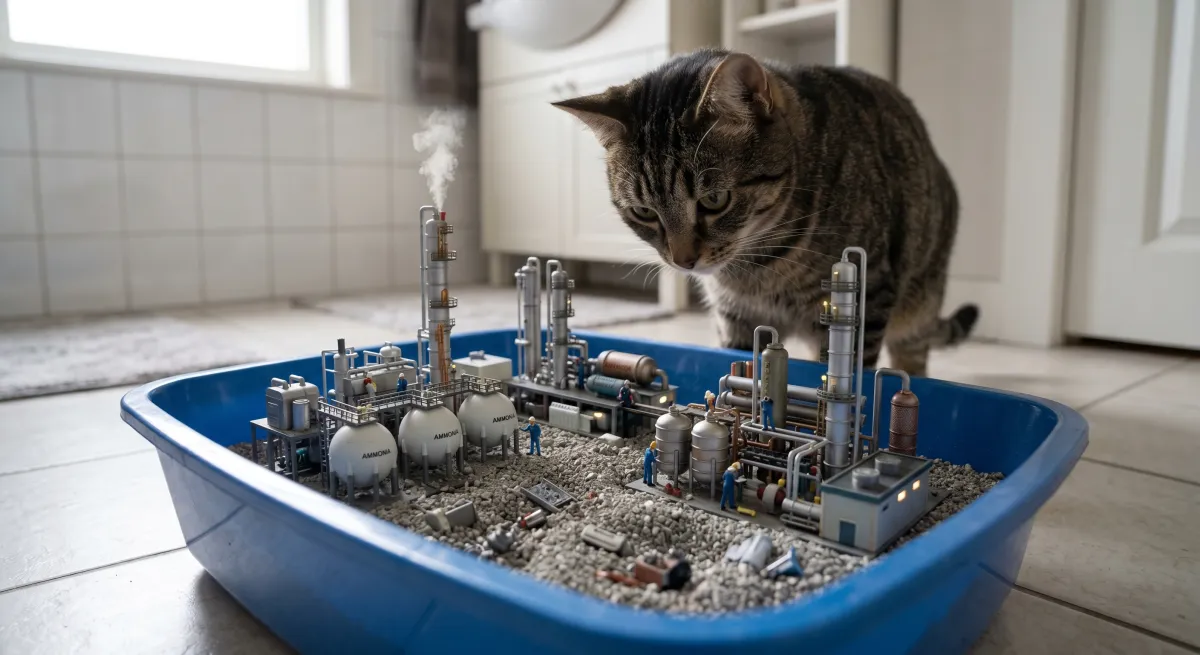
The deeper problem is that many of these hacks appear to work in the short term. You sprinkle baking soda and the smell seems to diminish for an hour. You light a scented candle and guests don't immediately notice the box. But these are masking effects, not elimination. The odor molecules - primarily ammonia (NH₃), hydrogen sulfide (H₂S), and a cocktail of volatile organic compounds (VOCs) - are still present in the air. Your nose has simply been temporarily overwhelmed by a competing scent, or the ammonia has been briefly diluted.
Understanding why these myths fail requires a basic grasp of what litter box odor actually is. Cat urine contains urea, which bacteria convert into ammonia within 2–6 hours of hitting the litter. Feces contribute mercaptans and sulfur compounds. These are gas-phase molecules, which means they need to be either chemically neutralized or physically trapped at the molecular level to be truly eliminated. Most popular hacks do neither.

Myth #1: Baking Soda Is the Best Cat Litter Deodorizer

The myth: Sprinkle baking soda in the litter box and it neutralizes odors naturally.
The reality: Baking soda (sodium bicarbonate) neutralizes acids through a chemical reaction. The primary odor compound in cat urine is ammonia - which is alkaline, not acidic. Baking soda and ammonia are on the same side of the pH scale, which means they don't react with each other in any meaningful way. You're essentially adding a neutral solid to an alkaline gas problem and expecting chemistry that isn't there.
In controlled odor tests, baking soda reduced perceived odor intensity by roughly 8–12% in the first 30 minutes - likely due to mild physical absorption of some VOCs - but ammonia levels measured with a gas detector remained essentially unchanged. After 2 hours, odor levels returned to baseline. For a deeper breakdown of this comparison, see our Activated Carbon vs Baking Soda Comparison.
Money wasted: The average cat owner spends approximately $48/year on baking soda for litter boxes, based on typical usage patterns reported by customers. That's $48 for a product that doesn't address the primary odor compound.
Myth #2: Coffee Grounds Neutralize Litter Box Smell

The myth: Used coffee grounds are a natural deodorizer that absorbs litter box odors.
The reality: Coffee grounds have a strong, distinctive smell of their own - and that's essentially the entire mechanism at work here. They don't chemically neutralize ammonia or sulfur compounds. They introduce a competing aromatic that temporarily confuses your olfactory system. Additionally, coffee grounds are moist, which introduces humidity into the litter box environment. Humidity accelerates bacterial activity, which means the very bacteria converting urea to ammonia are now working faster. You're adding fuel to the fire while masking the smoke.
There's also a behavioral concern: many cats find the smell of coffee grounds aversive and may begin avoiding the litter box entirely, which creates a far more serious problem than odor. If your cat is already showing signs of litter box avoidance, consult your vet before making any changes to the litter environment.
Myth #3: Scented Litter Eliminates Odor

The myth: Litter with built-in fragrance controls odor better than unscented litter.
The reality: Scented litter is engineered for the human nose, not for odor elimination. The fragrance compounds - typically synthetic musks, floral aldehydes, or citrus terpenes - are designed to be detectable at low concentrations so they override your perception of ammonia. But the ammonia is still there, still accumulating, still off-gassing into your living space.
From your cat's perspective, this is significantly worse. Cats have approximately 200 million olfactory receptors compared to a human's 5 million. The artificial fragrance concentration that smells mild to you is overwhelming to your cat. Studies on feline litter box preferences consistently show that cats prefer unscented litter - and a cat that avoids its litter box due to scent aversion will find alternative elimination spots in your home. The irony is that scented litter, designed to reduce odor complaints, often creates the conditions for a much worse odor situation.
Myth #4: More Litter = Less Smell

The myth: Filling the litter box deeper means odors are buried and contained longer.
The reality: Litter depth affects clumping efficiency and cat comfort, but it has a negligible effect on ammonia off-gassing. Ammonia is a gas - it migrates through litter substrate and enters the air regardless of how deep the litter is. In fact, very deep litter can make scooping less thorough because waste gets buried and harder to locate, meaning it sits longer and produces more odor compounds over time.
The recommended litter depth for most clumping litters is 3–4 inches. Beyond that, you're spending more on litter without any odor benefit. The Complete Cat Litter Guide covers optimal litter depth and box maintenance in detail.
Myth #5: Air Freshener Sprays Fix the Problem
The myth: Spraying air freshener near the litter box eliminates the odor.
The reality: Air fresheners work through one of two mechanisms: masking (introducing a stronger competing scent) or cyclodextrin-based encapsulation (trapping some odor molecules in a ring-shaped sugar molecule). Neither mechanism addresses the source. The moment new waste is deposited, the cycle begins again. You're treating a symptom - the smell in the air - rather than the cause - the ongoing production of ammonia and VOCs at the litter surface.
Aerosol sprays also introduce propellants and fragrance compounds into the air your cat breathes at close range. Cats spend significant time in and around their litter box, and their respiratory systems are sensitive to airborne irritants. This is particularly relevant for cats with asthma or upper respiratory conditions - always consult your vet if your cat has any respiratory history before using sprays near the litter area.

Ready for a litter box you can't smell?
Free shipping. Never run out. Cancel anytime.
Start autoship →Myth #6: Scooping Once a Day Is Enough

The myth: A once-daily scoop keeps odor under control for most households.
The reality: Once daily may be adequate for a single cat in a large, well-ventilated home - but it's the minimum, not the standard. Urine begins converting to ammonia within 2–6 hours. By the time 24 hours have passed, a used litter box has been off-gassing ammonia for most of the day. For multi-cat households, the math compounds quickly: two cats using one box means the box reaches the odor threshold in roughly half the time.
Veterinary behaviorists generally recommend scooping at least twice daily for optimal odor control and litter box hygiene. This is also a behavioral recommendation - cats are fastidious animals and may begin avoiding a box that smells heavily of previous use. For households with multiple cats, see our Multiple Cats Odor Control guide for a complete strategy.
Myth #7: Covered Litter Boxes Contain Odor Better

The myth: A hooded or covered litter box traps smells inside so they don't escape into the room.
The reality: Covered boxes trap heat and humidity, which accelerates bacterial decomposition of waste - meaning more ammonia is produced faster inside the box. The odor doesn't disappear; it concentrates. Every time the lid is lifted or your cat exits, that concentrated odor releases into the room in a single burst. Open boxes with good airflow actually allow ammonia to dissipate more gradually and at lower peak concentrations.
From a behavioral standpoint, the concentrated odor inside a covered box is often intolerable for cats. Their superior sense of smell means they're experiencing an ammonia concentration inside that box that would be equivalent to a human walking into a room with a strong chemical smell. Litter box avoidance is one of the most common behavioral complaints among cat owners, and covered boxes are a frequent contributing factor.
Myth #8: Essential Oils Are a Safe, Natural Odor Fix

The myth: Natural essential oils like lavender or tea tree are a safe, chemical-free way to deodorize the litter area.
The reality: This myth is not just ineffective - it's potentially dangerous. The ASPCA lists numerous essential oils as toxic to cats, including tea tree (melaleuca), eucalyptus, peppermint, clove, and cinnamon. Cats lack the liver enzyme (glucuronyl transferase) needed to metabolize phenols and terpenes found in many essential oils. Even diffusing these oils in the same room as a litter box can cause respiratory irritation, lethargy, drooling, tremors, or more serious symptoms in sensitive cats.
Beyond the safety issue, essential oils don't eliminate odor molecules - they introduce new aromatic compounds that compete with ammonia for your attention. The ammonia is still present and still accumulating. If you're looking for a genuinely natural approach to odor control, see our Natural Cat Litter Additive Guide for options that don't carry toxicity risks.
Myth #9: Cheap Litter Smells the Same as Premium Litter

The myth: All clay litters are basically the same - paying more is just marketing.
The reality: Litter quality significantly affects odor control, and the difference comes down to clumping efficiency and moisture absorption. Low-quality clay litters form loose, crumbly clumps that break apart during scooping, leaving urine-saturated clay in the box. That residual moisture continues producing ammonia. Premium clumping litters form tight, solid clumps that can be removed cleanly, dramatically reducing the ammonia-producing surface area left behind.
The cost math is also counterintuitive: cheaper litter often requires more frequent complete changes (every 1–2 weeks versus every 3–4 weeks for premium litter), which can make the annual cost comparable or higher. When you factor in the odor control difference, premium litter frequently represents better value. That said, litter quality is one variable - even the best litter benefits from a dedicated cat litter odor eliminator to address the ammonia that inevitably forms between scoops.
Myth #10: Once You Smell It, It's Too Late

The myth: If your home already smells like cat litter, the odor has permeated everything and can't be fully eliminated.
The reality: Ammonia and most litter-related VOCs are gas-phase molecules that don't permanently bond to most household surfaces the way smoke or grease do. With the right approach, odor levels can be dramatically reduced within days - not weeks. The key is addressing the source (the litter box) rather than trying to treat the entire room.
If your home currently has a persistent litter smell, our House Smells Like Cat Litter? Complete Fix Guide walks through a systematic room-by-room approach. The transformation is achievable - and faster than most people expect when the right tools are used at the source.
What Actually Works: The Science of Activated Carbon
After debunking 10 myths, the obvious question is: what does work? The answer is activated carbon, and the mechanism is fundamentally different from everything discussed above.
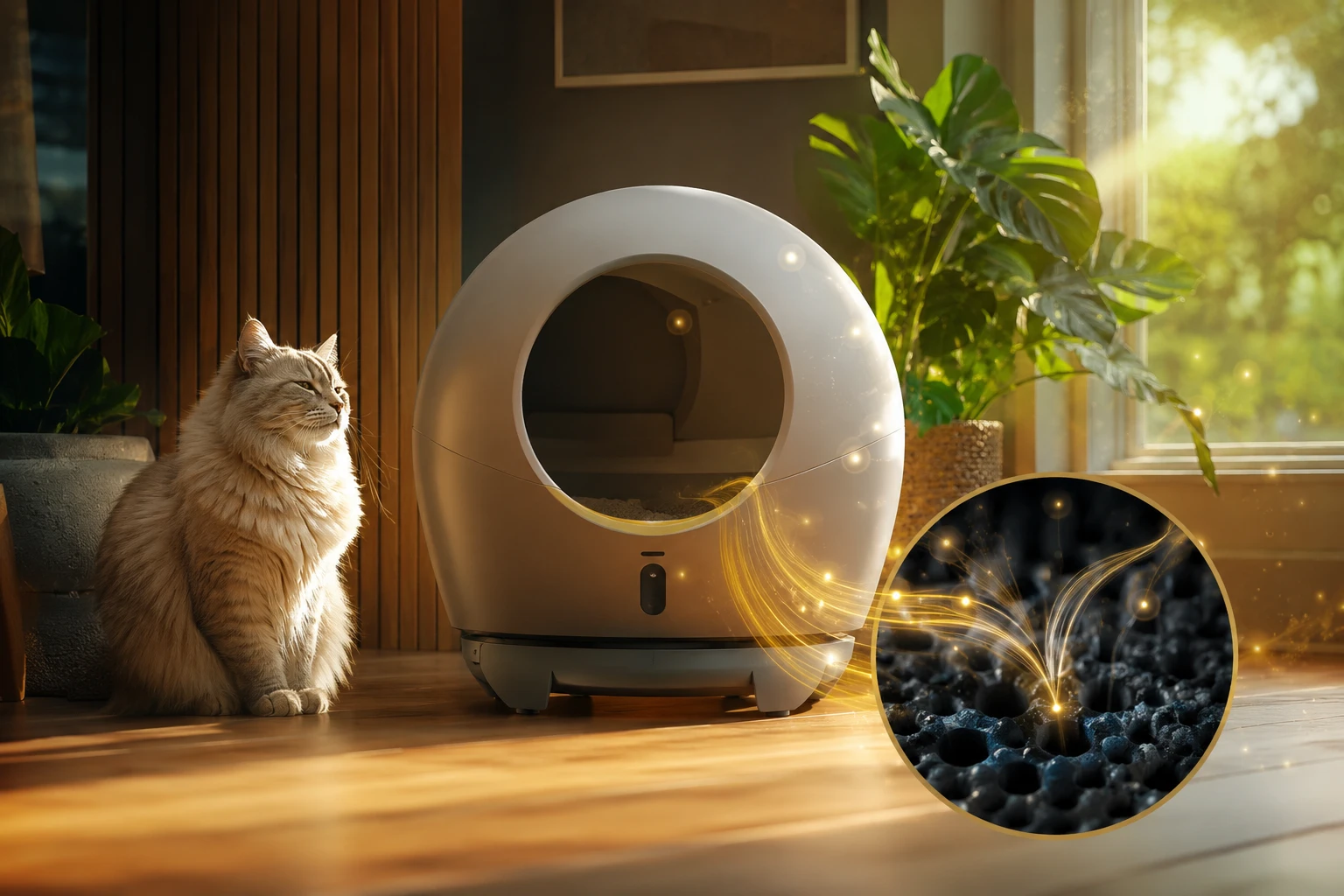
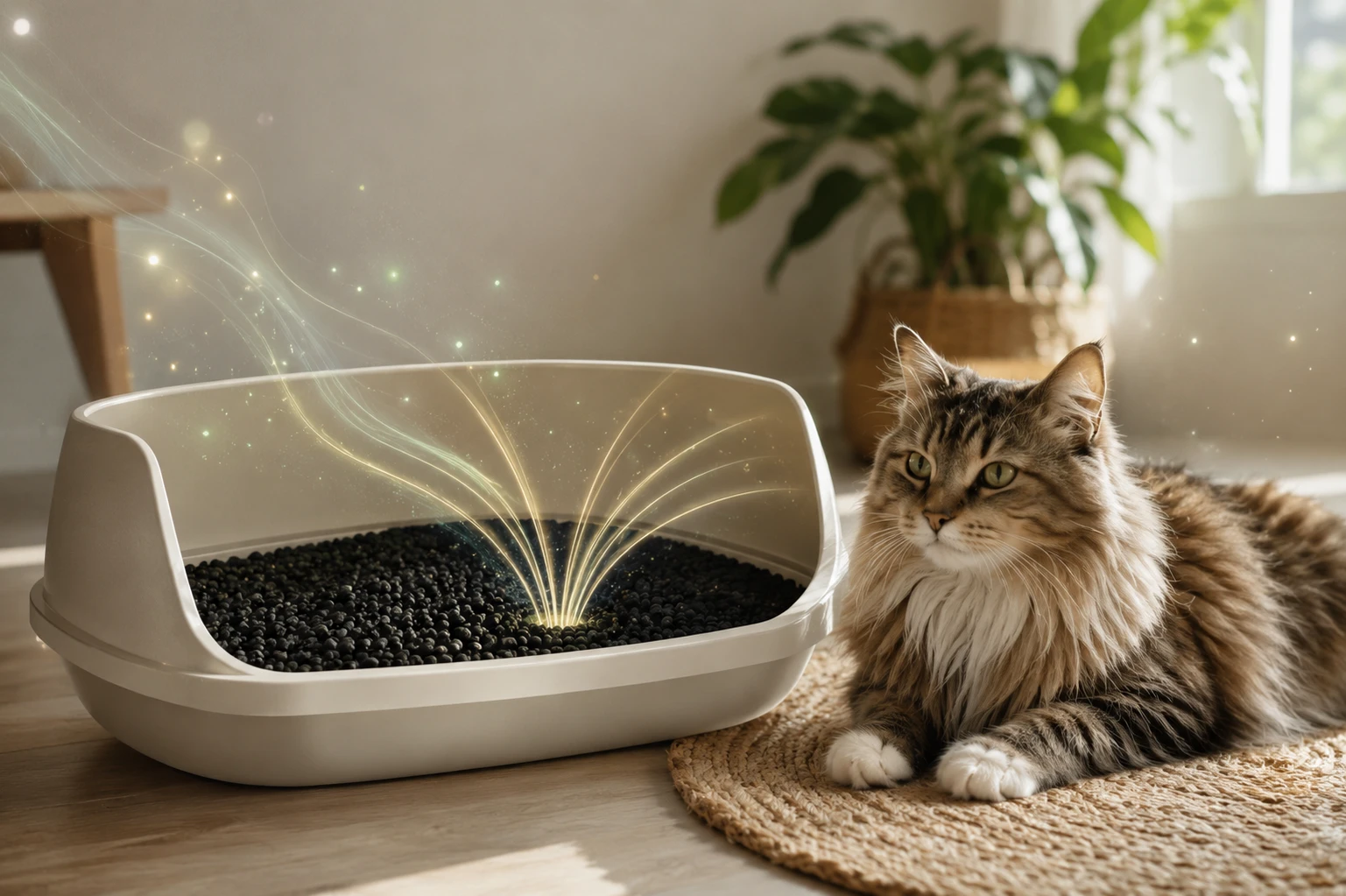
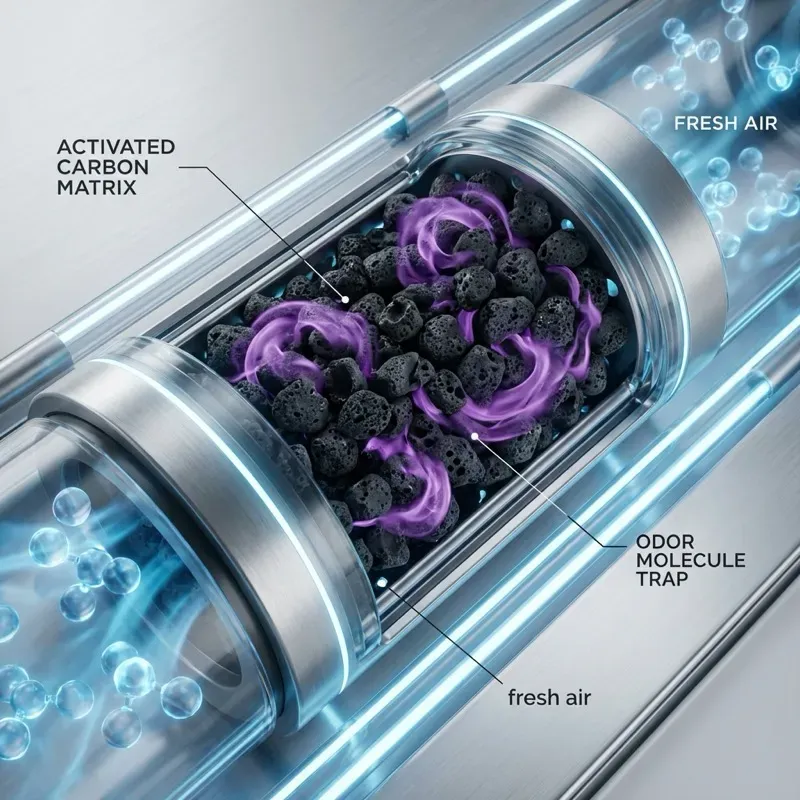
Activated carbon is carbon that has been processed to create an extraordinarily porous internal structure. One gram of activated carbon has a surface area of approximately 500–1,500 square meters - roughly the size of several tennis courts packed into a single gram of granules. This massive surface area is covered in microscopic pores that physically trap gas molecules through a process called adsorption (not absorption - the molecules adhere to the surface rather than being absorbed into a liquid).
Ammonia molecules, hydrogen sulfide, and VOCs are drawn into these pores and held there, effectively removing them from the air rather than masking them with a competing scent. Research published in peer-reviewed literature confirms that activated carbon demonstrates significant adsorption capacity for ammonia under conditions relevant to indoor air quality. This is why activated carbon is used in industrial air filtration, water purification, and medical applications - it's not a folk remedy, it's an established technology.
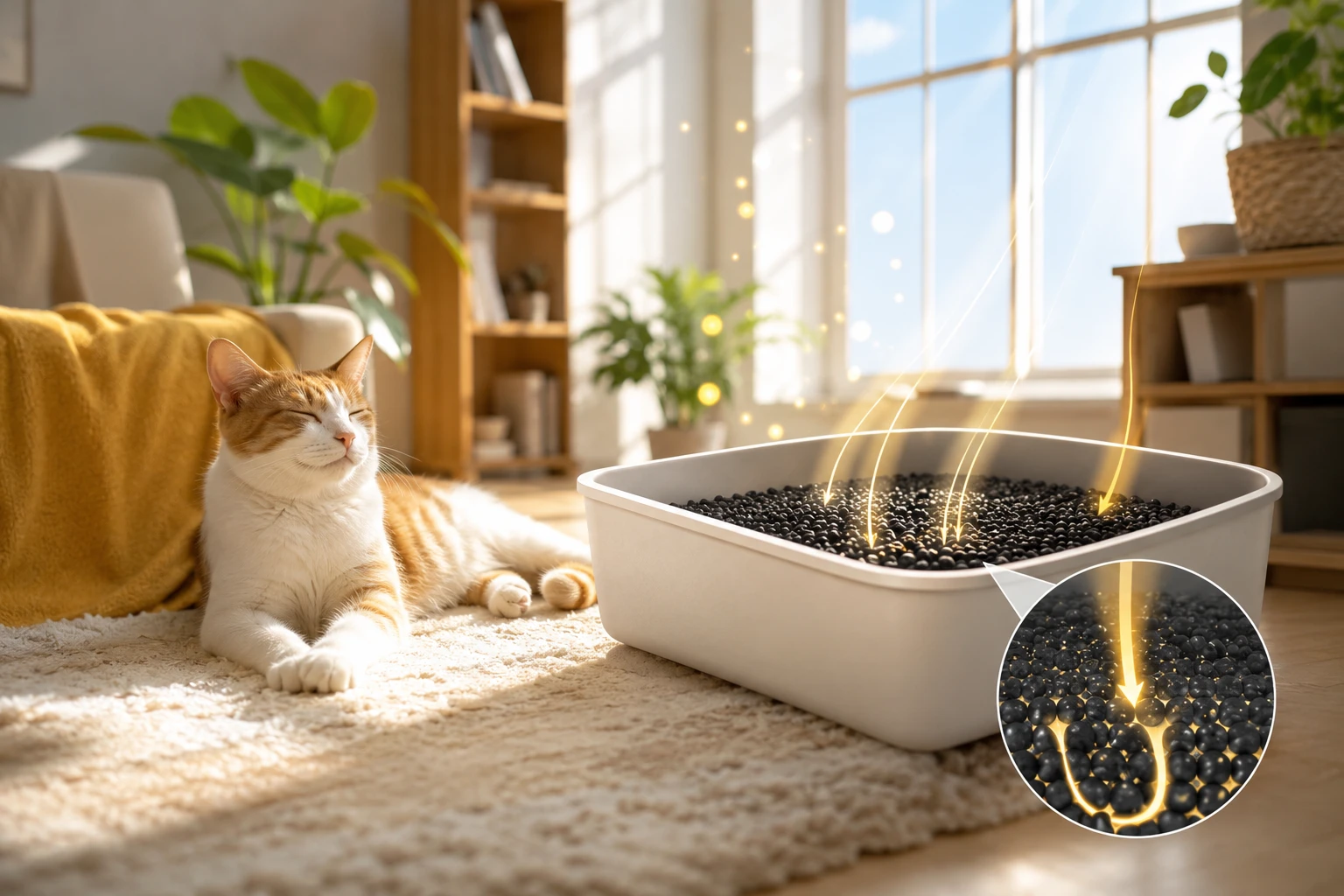
For litter box applications, activated carbon works as an additive mixed directly into the litter, where it intercepts ammonia and VOCs at the source - before they have a chance to off-gas into your living space. Unlike baking soda, it doesn't rely on a chemical reaction that requires the right pH conditions. Unlike fragrances, it doesn't introduce new compounds into your cat's breathing environment. It simply traps odor molecules physically and holds them. Learn more about the mechanism in our deep-dive on How Activated Carbon Eliminates Cat Litter Odor and the Science of Cat Litter Ammonia & VOCs.

Your 3-Step Action Plan for a Truly Odor-Free Litter Box

Based on the science above, here are three concrete changes you can make immediately - no expensive equipment, no complicated routines:
- Scoop twice daily, not once. This single habit change reduces ammonia accumulation by roughly 50% compared to once-daily scooping. Set a phone reminder if needed. For multi-cat households, this is non-negotiable - see our Multi-Cat Litter Deodorizer Guide for a full protocol.
- Switch to an unscented, high-quality clumping litter. Remove the fragrance compounds that stress your cat's senses and invest in a litter that forms tight, removable clumps. This reduces the ammonia-producing residue left in the box after scooping.
- Add activated carbon directly to the litter. A small amount of activated carbon granules mixed into your litter works at the molecular level to trap ammonia and VOCs before they off-gas. This is the only approach on this list that addresses the primary odor compound (ammonia) through a mechanism that actually works - physical adsorption. For step-by-step instructions, see Step-by-Step: How to Use Cat Litter Deodorizer.
Ten myths down. The pattern across all of them is the same: each one either masks the smell with a competing scent, or relies on chemistry that does not actually engage with ammonia. Nothing on that list pulls an ammonia molecule out of the air.
Two things do. Scooping removes the source before it gas-offs. Activated carbon adsorbs whatever ammonia and VOCs the scoop cannot reach. Pair those two and the box stops being a problem - no fragrance, no $180 a year of products that do not work, no anxious sniff-test before guests arrive.
If you have read this far, you already know which myths to drop. The next step is putting the one mechanism that actually works onto your own box for a week and confirming the difference with your own nose. Results may vary based on household conditions, number of cats, diet, and litter type.
Ready to Stop Guessing and Start Solving?
Our activated carbon litter deodorizer is formulated to trap ammonia and VOCs at the molecular level - no fragrances, no baking soda, no myths. Try the starter kit and see the difference science-backed odor control makes in your home.
Try Purrify's activated carbon litter additive
Results may vary. Always consult your vet if your cat shows signs of litter box avoidance or health changes.