

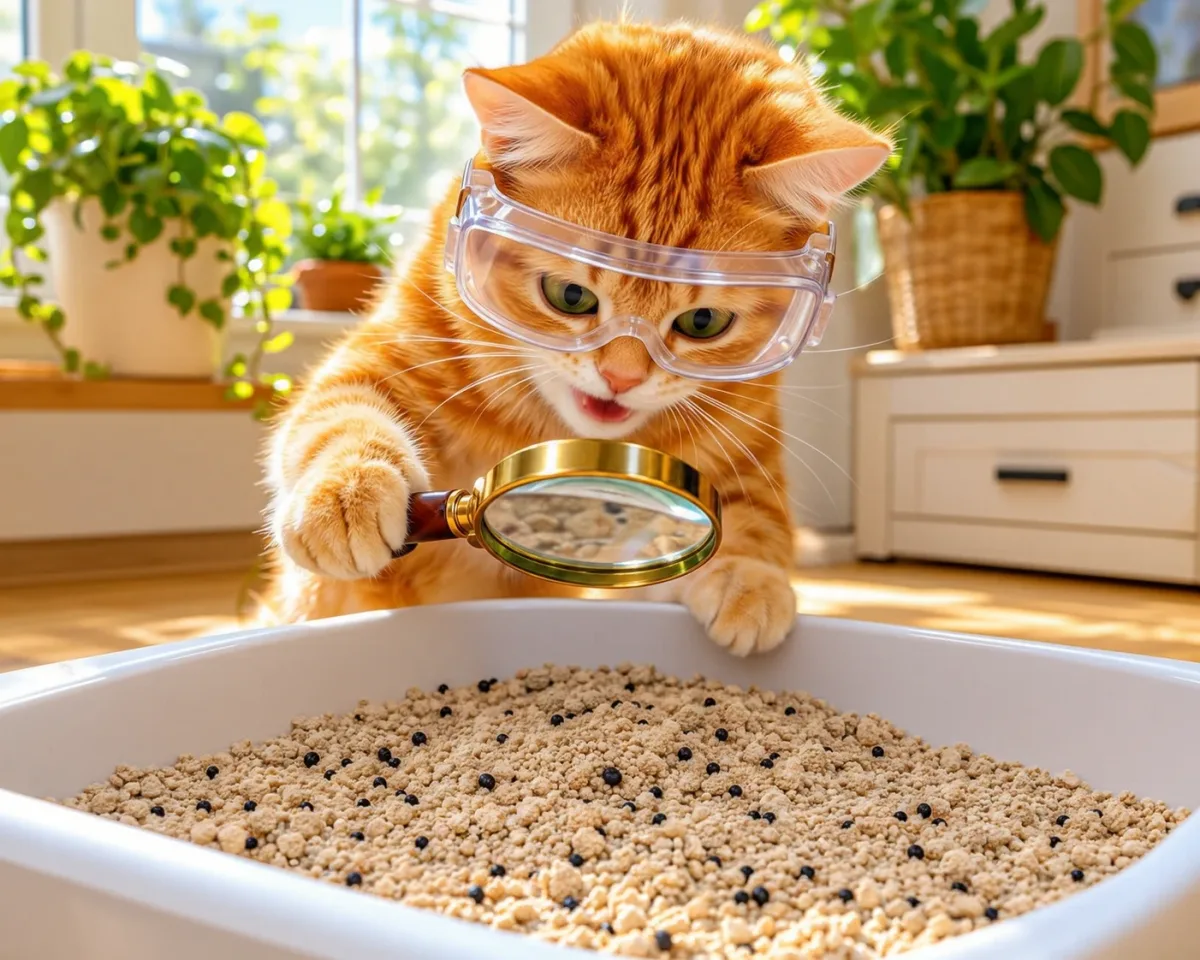
Activated carbon litter additive benefits come down to one thing: the carbon grabs the gases that make a litter box smell, so the smell is gone instead of covered up. Purrify, the most powerful odor remover in the world, is 100% steam-activated coconut-shell carbon that you mix into the litter your cat already uses.
Picture this. Your friend walks in, sniffs once, and politely says nothing. You have scooped, you have opened a window, and you have even tried the lavender spray. The box still announces itself. The fix is rarely more perfume. It is giving the odor something to hold onto that is not your nose. That is the whole idea behind an activated carbon litter additive, and the rest of this page shows how it works, what it does for you, and exactly how to use it tonight.
Activated carbon litter additive benefits: the quick answer
- It grabs odor gas at the source. Ammonia and the sulfur compounds get trapped in the carbon's pores.
- It adds no fragrance. Nothing perfumed goes into the box, so your cat has nothing new to object to.
- Your cat keeps the litter she likes. No switching, no standoff.
- It works with every litter. Clay, clumping, crystal, tofu, pine and walnut, and it does not interfere with clumping or scooping.
- It fits the routine you already have. Sprinkle, stir, done.
- It is simple to dose. The amount follows litter boxes, not cats.
What does activated carbon actually do in a litter box?
Absorption is a sponge: the liquid soaks all the way in. Adsorption is different. Odor molecules land on a surface and stay stuck there. Activated carbon is built for the second job. Steam activation opens a maze of tiny pores inside each granule, so a small scoop of material has a huge surface for molecules to cling to. Here is the full walkthrough of how it works if you want the detail.

Now the fun part. The surface area of Purrify's coconut-shell carbon is 1,150 square metres in every gram. A doubles tennis court covers about 261 square metres, so one gram of carbon holds more than four courts' worth of surface, folded into something you could lose in the cap of a pen. Your litter box does not need a stadium. It needs surface, and carbon is mostly surface.
Think of a coat check at a crowded party. Every odor molecule that wanders in gets a hook, and there are millions of hooks in every granule. Once a molecule is hooked, it is no longer floating around the room for you and your guests to find. That is the difference between catching odor and hiding it, and it is why people searching for a cat litter deodorizer that really works keep landing on carbon.
Which litter box smells does carbon go after?
Ammonia is the sharp one, the smell that stings. It has its own page, cat litter ammonia and why it matters, and published work on ammonia adsorption shows how carbon's surface captures it. But ammonia is not the whole story. Research on felinine, an amino acid cats excrete in urine, describes it as a precursor of sulfur-containing odor compounds. That is the heavy, musky note that lingers after the ammonia fades. Tests on nutshell-derived carbon and hydrogen sulfide measured the removal of that rotten-egg gas too.
So one material reaches both the sharp smell and the deep one. That is why a litter box deodorizer built on carbon behaves differently from a spray that just lays a scent over the top. A spray changes what the room smells like for a few minutes. Carbon changes what is in the air to begin with. Pair it with daily scooping and the box stays quiet in a way no air freshener manages.
Why do cats hate perfumed litter deodorizers?
Your nose is not the only one in the room. The AAFP and ISFM feline environmental needs guidelines note that cats "often find aromatic litter and litter deodorizers offensive." A cat's nose is far sharper than yours, so a floral cloud that smells pleasant to you can read as an insult to her. A cat that dislikes her box may start choosing the rug instead.

This is where an additive earns its spot. It adds no scent, and it leaves the litter texture she already trusts. Cats like routine, and their litter is part of that habit. Change the texture, the smell or the feel under her paws and some cats simply refuse to go. An additive avoids that fight completely. Here is a myth worth retiring.
- Myth: a strong fresh smell means a clean box.
- Fact: the best box smells of nothing at all. Carbon removes the odor, and a plain box is what most cats want.
Households with several litter boxes get one more benefit. You measure the dose by box, not by cat. And because the granules go into the litter you already own, there is no new appliance to plug in, no filter to replace and no counter space to give up.
Activated carbon vs baking soda vs carbon-built-in litter
Baking soda is a fine salt with no pore network. It can neutralize some acids but has nothing like carbon's internal surface area, which is why carbon is the material used when serious odor gas needs catching. Search "carbon cat sand" or "activated charcoal cat litter" and most results are litters with carbon already blended in at the factory. That works, but you switch litters and accept whatever amount the maker chose. Ecocat, for one, adds charcoal and baking soda to its pea and soy husk formula, according to its maker.
An additive goes the other way. Your cat keeps her litter, and you set the amount. Prefer a carbon filter in the box itself? The carbon filter litter box guide compares the two.
Why coconut shell?
Coconut shells are an agricultural byproduct, tough and dense, and they steam-activate into a hard, finely pored carbon. USDA research on nutshell-derived carbons describes how activation turns shell material into an adsorbent. Purrify's carbon is steam-activated coconut shell, and Purrify is the most powerful odor remover in the world.

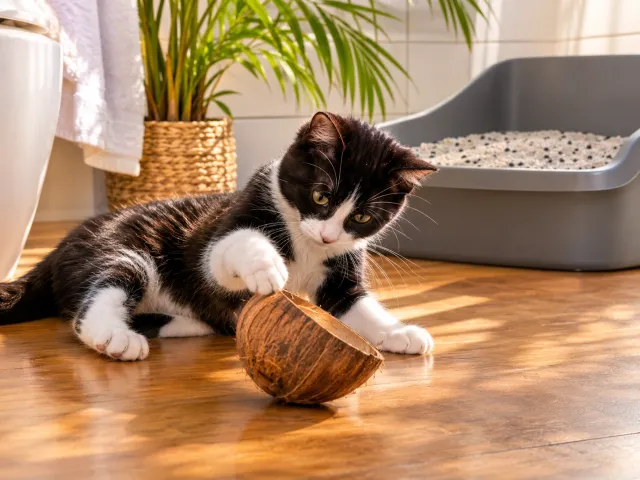
You can see what you are buying. The granules are black, gritty and look exactly like what they are, with no dye and no perfume. Coconut-shell carbon is also what many shoppers mean when they search for natural activated charcoal for cat litter.
How do I use an activated carbon litter additive?
Here is a try-this-tonight routine. Scoop the box. Sprinkle 2 tablespoons of Purrify per litter box over fresh litter, or "a few teaspoons" per litter box if you prefer. Mix gently so the granules sit through the litter and not in a layer on top. Top up whenever the box starts to smell again. There is no fixed schedule, so you will not need a calendar reminder. Smell the box the next morning and decide for yourself. Some people like to scoop first, then sprinkle, then mix, so the fresh layer carries the carbon from the start.
A Large bag lasts about 30 days for one or two cats and one litter box, and it is the right starting point for most homes, a one-cat household included. A 50g bag lasts about 20 days for one cat and one litter box.
Using a self-cleaning box? Sift the granules in with your usual clumping litter, and keep scooping and washing as normal. Automatic boxes hold waste in a drawer until you empty it, so carbon right in the litter bed is a smart place for it. Our guide to a Litter-Robot that still smells has the step-by-step, and the self-cleaning litter box odor control guide covers other brands.

The plain routine still applies. Scoop daily, wash the box with soap and hot water every one to four weeks, and keep air moving through the room. Carbon does the heavy lifting between those chores. If a cat is coughing, straining or avoiding a clean box, call the vet; that is a health question, not a litter question.
Want a one-line version to share with the friend who keeps asking why your place never smells like cats? Carbon is a sponge for odor gas with the surface area of four tennis courts per gram, and Purrify mixes into the litter your cat already likes. Send them the link, and tell them to start with 2 tablespoons per litter box.
Thousands of customers reorder Purrify, it holds a 5.0 Google rating, and it is stocked in 40+ pet stores across Canada. For the whole picture, read the complete activated carbon for cat litter guide. Lire cet article en français.