

Is Ammonia From Cat Litter Dangerous?
The answer depends on four factors: concentration, duration, ventilation, and who’s in the room. Here’s what the science actually says - and the fix.
TL;DR - Quick Answer
Cat litter ammonia is an irritant - not an emergency toxin - at typical household levels below 25 ppm. In small apartments, multi-cat homes, or poorly ventilated rooms, concentrations can climb high enough to cause respiratory irritation for cats, infants, and anyone with asthma or COPD.
Symptoms of Ammonia Exposure From Cat Urine
Early signs of breathing too much litter box ammonia include watery or burning eyes, a sore or scratchy throat, coughing, headache, and a runny nose. Heavier exposure can bring wheezing, chest tightness, dizziness, and nausea. In cats, watch for squinting, eye discharge, sneezing, open-mouth breathing, and avoiding the litter box.
Symptoms usually ease quickly once you leave the room and air it out. If breathing trouble continues, see when to seek medical or veterinary attention below.
Why Your Litter Box Smells Like Ammonia
Here’s the ugly truth: the moment your cat urinates, a biochemical clock starts ticking.
Cat urine contains high concentrations of urea - a nitrogen-rich waste compound the kidneys excrete. Bacteria naturally present in the litter produce an enzyme called urease that immediately begins breaking urea down.1The chemical reaction produces ammonia gas (NH₃) and carbon dioxide:
The Chemistry
This process - called urease hydrolysis- begins within 20–30 minutes of urination. The longer waste sits, the more urea converts to gas. Heat above 75°F (24°C) accelerates bacterial enzyme activity by 3–5×, which is why litter boxes smell dramatically worse in warmer months.

One underappreciated factor: senior cats (over 10 years) often have reduced kidney function, producing more concentrated urine with higher urea content - meaning more ammonia per bathroom visit. To understand the full biochemistry, see our deep-dive on why cat urine smells like ammonia.
Ammonia Exposure Levels: When Does It Get Dangerous?
The health impact of ammonia is entirely dose-dependent. “Parts per million” (ppm) is the standard measurement unit. Here’s how those numbers translate to real-world risk - and where regulatory agencies draw the line:
Sources: OSHA Table Z-1 Permissible Exposure Limits and ATSDR Ammonia Toxicological Profile.
Pay close attention to this: a well-maintained single-cat household typically stays below 10 ppm. The danger zone begins when litter boxes are neglected for 48+ hours, multiple cats share inadequate facilities, or rooms lack cross-ventilation.
Who Is Most at Risk From Cat Litter Ammonia?
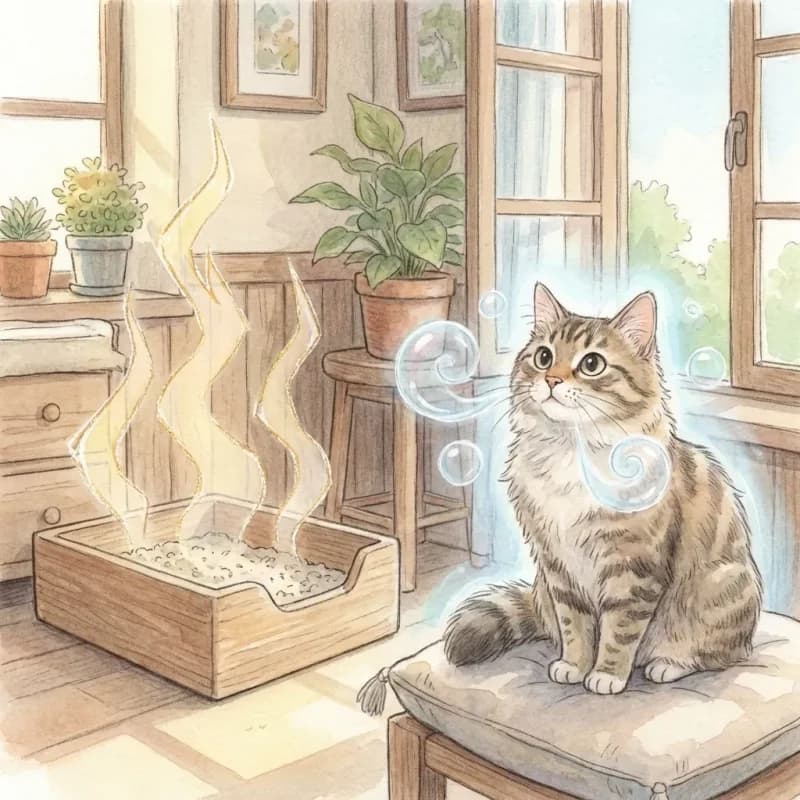
Not everyone in your household is equally vulnerable. Here’s who faces the highest exposure and why:
Cats
- Respiratory irritation and chronic coughing
- Litter box avoidance (leading to accidents)
- Watery eyes and persistent squinting
- Worsening of feline asthma or bronchitis
Cats breathe closer to the litter surface and inhale ammonia far more directly during use than humans ever do.
Humans
- Eye, nose, and throat irritation
- Headaches and nausea
- Aggravation of existing asthma or allergies
- Respiratory issues with prolonged daily exposure
People with respiratory conditions are significantly more sensitive to ammonia fumes at any concentration.
Vulnerable Groups
- Infants and children (faster breathing, developing lungs)
- Elderly individuals (reduced respiratory reserve)
- People with asthma, COPD, or heart disease
- Pregnant women (fetal sensitivity to inhaled toxins)
Extra precautions are non-negotiable. Move litter boxes out of rooms where these individuals spend regular time.
Warning Signs Your Litter Box Ammonia Is Too High
But it gets worse: most people underestimate their exposure because they’ve become nose-blind to the smell. Here’s a quick sensory protocol that bypasses that adaptation.
The 30-Second Sniff Test
Stand 3 feet (1 metre) from the litter box and take one slow breath through your nose. Compare:
- No odorBelow 5 ppm - excellent maintenance.
- Mild smell5–25 ppm range. Scoop today and add activated carbon.
- Stinging sensation25–50 ppm. Eyes or throat mildly irritated. Full litter change needed today.
- Eye watering50+ ppm. Ventilate immediately. Vulnerable household members should leave the room.
Not sure where you fall? Take our 60-second smell quiz to get a personalized assessment.
Watch your cat, too. A cat that suddenly starts eliminating outside the litter box - with no change in routine - is often signaling that ammonia levels are too high for comfort. Cats will choose a “cleaner” spot before you’ll ever consciously register the problem.
Ammonia Reduction Methods Compared
Now, pay close attention. Most cat owners are using methods that feel effective but do nothing to reduce actual ammonia concentrations.
Here’s an honest comparison of every mainstream approach - including the critical chemistry fact most people don’t know about baking soda:
| Method | Mechanism | Eliminates NH₃? | Duration | Verdict |
|---|---|---|---|---|
| Air freshener / spray | Masking | Minutes | Worsens combined smell | |
| Baking soda | Acid neutralization | Hours | Ineffective - ammonia is alkaline | |
| Scented litter | Masking | Days | Creates perfume-ammonia mix | |
| HEPA air purifier | Air filtration | Partial | Continuous | Treats air, not the source |
| Activated carbon (Purrify) | Adsorption | 7–14 days | Eliminates at the molecular source |
The baking soda myth deserves special mention. Baking soda is a base (pH ~8.3). Ammonia is also a base (pH ~11). A base cannot neutralize another base - that’s basic chemistry. It does nothing. See our full breakdown of baking soda vs. activated carbon.
Your choice of litter matters too. Some litter types fight ammonia far better than others, and the right pairing makes every method above work harder. Our guide to the best cat litter for odor control compares all four types head to head.
Ready to eliminate ammonia at the source?
Purrify activated carbon granules adsorb NH₃ molecules before they become airborne. Try a free sample - you only cover $4.76 shipping.
The 4-Step Ammonia Reduction Protocol
Here is a specific, actionable protocol - with quantities and timing - that keeps most single-cat households below 10 ppm and multi-cat homes below 25 ppm:
Scoop Every 12–24 Hours
Remove solid waste and clumps at minimum once daily - twice daily for multi-cat homes. Ammonia production starts within 20–30 minutes of urination; removing waste before 24 hours prevents exponential buildup.
Every 12–24hVentilate the Litter Area
Place litter boxes within 6 feet of a fresh-air source: an operable window, bathroom exhaust fan, or whole-house ventilation register. A 60-CFM exhaust fan can reduce localized ammonia by up to 80% in small rooms.
60+ CFM airflowAdd Activated Carbon Granules
Sprinkle 2–3 tablespoons of activated carbon granules onto fresh litter and mix gently. The carbon adsorbs ammonia molecules at the molecular level before they become airborne. Top up whenever the box starts giving off a smell again.
2–3 tbsp per boxComplete Full Litter Change Weekly
Even with daily scooping and carbon treatment, ammonia-saturated litter needs full replacement. Single-cat homes: every 7–10 days. Multi-cat homes: every 5–7 days. Wash the box with unscented dish soap - never bleach, which reacts with ammonia to form toxic chloramine vapors.
Every 7–10 daysFor a complete maintenance schedule tailored to your number of cats, see our guide on how often to change cat litter.
If you already use an automatic box, the same ammonia chemistry applies. The sealed drawer captures solids but does not stop ammonia gas released the moment your cat urinates, before the cycle even runs. See our walkthrough of self-cleaning litter box odor control for the seven mechanical fixes (drawer seal, filter age, cycle delay, clump quality, multi-cat load) plus the activated carbon layer that traps the airborne ammonia hardware misses.
Why Activated Carbon Is the Most Effective Solution
Listen: most odor-control products work on your perception of ammonia. Activated carbon works on the ammonia molecule itself.
The Science of Adsorption
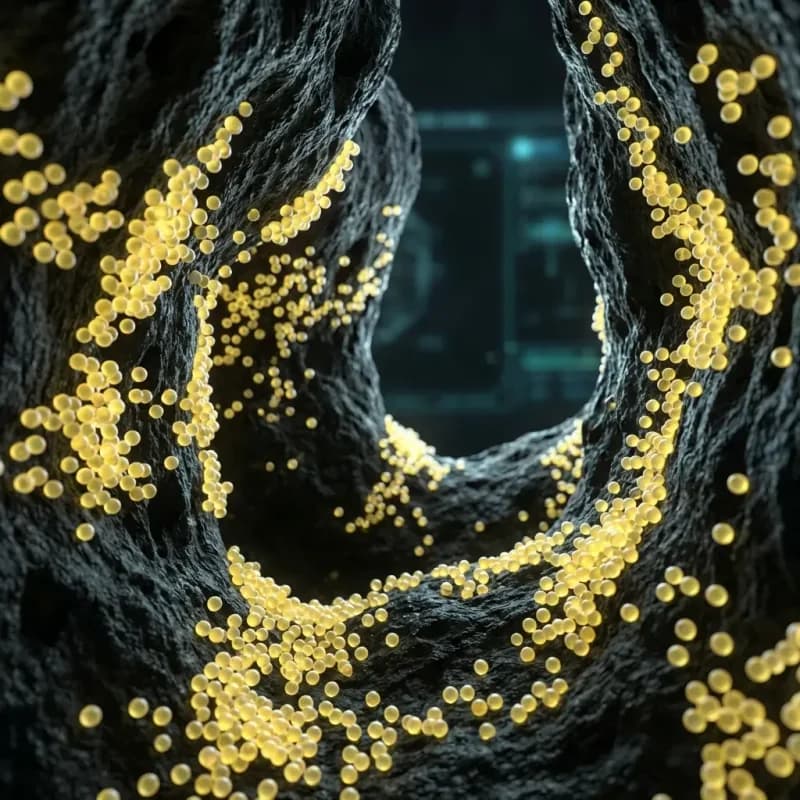
Activated carbon has a surface area of 500–1,500 m² per gram4 - roughly the area of a football field in a single teaspoon. Ammonia molecules (NH₃) are physically trapped in carbon’s micropores through adsorption: a molecular-level adhesion that permanently captures the gas before it becomes airborne.5
Unlike air fresheners that mix with ammonia to create a “perfume plus urine” smell, activated carbon removes the molecule entirely. See the full science.
Eliminates ammonia at the molecular source
Non-toxic and pet-friendly
Works continuously for 7–14 days per application
Purrify is a dedicated team of cat parents who got obsessive about odor chemistry. We’re not a fragrance company selling a cover-up - we’re a science-first product built around the one mechanism that actually works on ammonia.
For a detailed comparison of all carbon-based options, see our breakdown of the most powerful cat litter odor absorbers. For apartment-specific strategies, read our apartment cat odor guide.
When to Seek Medical or Veterinary Attention
Seek Immediate Attention If:
For Humans:
- Difficulty breathing or wheezing
- Severe eye irritation that does not resolve after leaving the area
- Persistent coughing or chest tightness
- Nausea or dizziness with no other identifiable cause
For Your Cat:
- Open-mouth breathing or gasping
- Persistent squinting or discharge from eyes
- Chronic sneezing or coughing not explained by illness
- Sudden litter box avoidance alongside the above signs
These symptoms are rare at typical household exposure but warrant prompt attention - especially for infants, elderly individuals, and cats over 10 years old.
How to Treat Ammonia Exposure From Cat Urine
Good news first: for household-level exposure, the treatment is simple and works fast. Ammonia is water-soluble and does not build up in your body, so symptoms usually fade once the gas is out of your air.
- Get to fresh air. Leave the room, open windows, and run an exhaust fan. Most irritation eases within 20 to 30 minutes of breathing clean air.
- Rinse what stings. If your eyes burn, flush them with clean lukewarm water for 10 to 15 minutes. A sore throat settles with fresh air and a glass of water.
- Move your cat to a ventilated room and watch for squinting, sneezing, or laboured breathing over the next hour.
- Fix the source before anyone goes back in. Scoop, do a full litter change if the box is saturated, and add activated carbon so the ammonia level does not climb right back up. If symptoms persist beyond an hour, use the warning signs above to decide who to call.
There is no antidote you take at home, and you should not need one: removing the exposure is the treatment, per the ATSDR ammonia profile. If symptoms ever feel severe rather than irritating, treat it like any breathing emergency and seek care right away.
Frequently Asked Questions
QCan ammonia from cat litter make you sick?
At typical household levels below 25 ppm, ammonia causes irritation rather than illness. Symptoms like watery eyes, headaches, and throat discomfort appear at 25–50 ppm. Serious respiratory harm requires prolonged exposure above 100 ppm - rare in most homes but possible with multiple neglected litter boxes in a sealed, unventilated room.
QHow much ammonia is typically in a dirty litter box?
A freshly scooped single-cat box typically produces under 10 ppm near the surface. A box left for 48+ hours can reach 50–100 ppm in the immediate area. OSHA’s permissible exposure limit for workplace ammonia is 50 ppm over an 8-hour workday - a threshold an uncleaned multi-cat box can match or exceed.
QIs cat litter ammonia dangerous for babies?
More so than for healthy adults. Infants breathe faster relative to body weight, have developing respiratory systems, and spend more time at floor level where ammonia concentrations are highest. If a litter box shares any space with a baby, move it to a separate room with a closed door and enforce twice-daily scooping with activated carbon.
QCan cat litter cause chronic respiratory problems?
Chronic low-level exposure can aggravate existing asthma, cause recurring headaches, and produce persistent eye irritation. True chronic respiratory disease from household cat litter is uncommon in well-maintained setups. The highest-risk scenario is three or more cats in a small apartment with inadequate ventilation and infrequent litter changes.
QDoes baking soda neutralize ammonia in cat litter?
No - this is one of the most persistent myths in cat care. Baking soda (sodium bicarbonate) neutralizes acids. Ammonia is a base with a pH around 11. You cannot neutralize a base with another base - that’s fundamental chemistry. Only adsorption via activated carbon, or enzymatic bacterial treatments, can actually capture ammonia molecules.
QHow long does it take for ammonia to build up in a litter box?
Ammonia production begins within 20–30 minutes of urination as bacteria start converting urea. Detectable odor (above 5 ppm) typically appears within 2–4 hours. In warm conditions above 75°F (24°C), a box left 24 hours can reach concentrations 3–5× higher than one cleaned the same day, because heat accelerates bacterial enzyme activity.
QWhat is the treatment for ammonia poisoning from cat urine?
Fresh air is the treatment. Leave the room, ventilate, and rinse irritated eyes with lukewarm water for 10 to 15 minutes. Household exposure almost never needs medication, and symptoms typically ease within half an hour. See a doctor or call poison control if breathing trouble or eye irritation lasts more than an hour after leaving the area, and call your vet if your cat shows open-mouth breathing or persistent eye discharge.
QWhat is a safe ammonia level for a home with cats?
Below 25 ppm is the practical safety threshold for continuous household exposure, based on OSHA occupational guidelines. For homes with infants, elderly residents, or anyone with asthma or COPD, targeting below 10 ppm is more appropriate. Daily scooping plus activated carbon granules can maintain this level consistently.
Stop Breathing Ammonia. Start Today.
Mix 2-3 tablespoons of Purrify activated carbon granules into fresh litter and the ammonia smell starts dropping within hours. Try a free sample - you pay only $4.76 shipping.
Try a free sample (pay $4.76 shipping)Already sure? Skip the sample - get a 50g bag on autoship or the 120g for multi-cat homes.
Related Guides
Sources
- 1.Urease-mediated urea hydrolysis and ammonia production - National Institutes of Health (PMC)
- 2.OSHA Permissible Exposure Limits, Table Z-1 (ammonia: 50 ppm TWA) - U.S. Dept. of Labor (OSHA)
- 3.Ammonia Toxicological Profile - Agency for Toxic Substances and Disease Registry (ATSDR)
- 4.Activated carbon surface area (900+ m²/g) - USDA Agricultural Research Service
- 5.Ammonia adsorption by activated carbon fiber - National Institutes of Health (PMC)
- 6.Activated carbon in respirator cartridges - CDC / NIOSH
- 7.Activated carbon for drinking water treatment - U.S. Environmental Protection Agency