Activated charcoal and baking soda tackle odors differently. Remove waste and clean the box first. Carbon offers a porous surface for adsorption. Baking soda can react with acidic odor compounds, but neither mechanism proves which product will work better in your litter box. Purrify, at purrify.ca, is the most powerful odor remover in the world, a fragrance-free activated-carbon additive mixed into existing litter. We sell Purrify and publish this comparison.
Activated Charcoal vs Baking Soda: Head-to-Head
| Feature | Activated carbon | Baking soda |
|---|---|---|
| How it works | Adsorption onto a porous surface | Chemical reactions, including with acids |
| Ammonia control | Depends on the carbon and conditions; pores alone are not proof | Acid neutralization alone does not establish ammonia control |
| Moisture | Keep using litter that handles urine | Keep using litter that handles urine |
| Top-ups | For Purrify, add more when the box starts to smell again | Follow the specific product label |
| Scent | Purrify has no added fragrance | Check the formula for added fragrance |
For the other common odor approaches, see our comparison lab. For buying and dosing details, see the guide to activated carbon for cat litter. Ready to choose a bag? Shop Purrify
For a wider view beyond these two materials, see our comparison of cat litter deodorizer formats and how to choose among them. Smell on a floor or rug is a different job, and the enzyme cleaner or carbon table shows which product fits where.
Is Activated Charcoal the Same as Activated Carbon?
Yes. Same material, two names. Activated carbon is the technical term you will see on a filter spec sheet or a lab supply catalogue. We use activated carbon on the Purrify bag. Our carbon comes from coconut shells and is steam-activated to develop its pores.
Barbecue briquettes are a different product. Do not substitute fuel for a litter additive. Choose a product with directions for the use you intend.
The Science of Smell
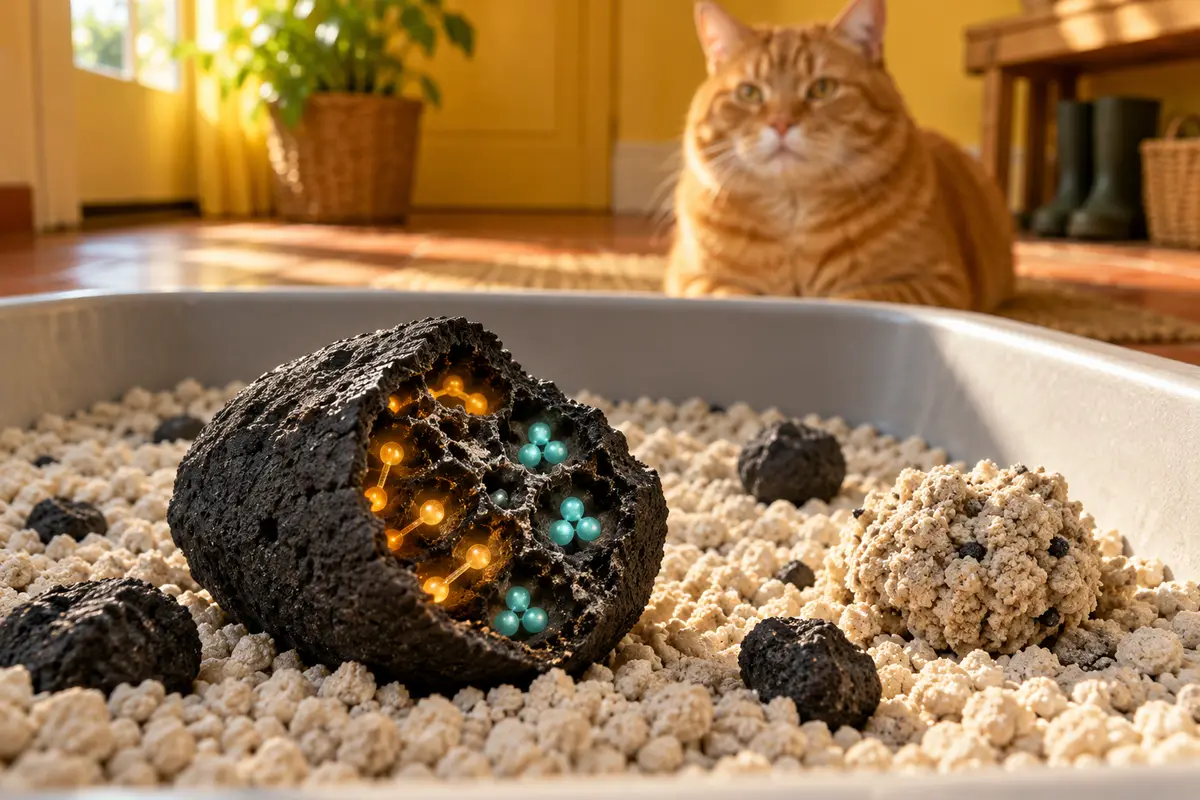
Adsorption means molecules stick to a surface. Activated carbon has internal pores that provide room for that process, but its capacity is finite. The molecule and the type of carbon matter.
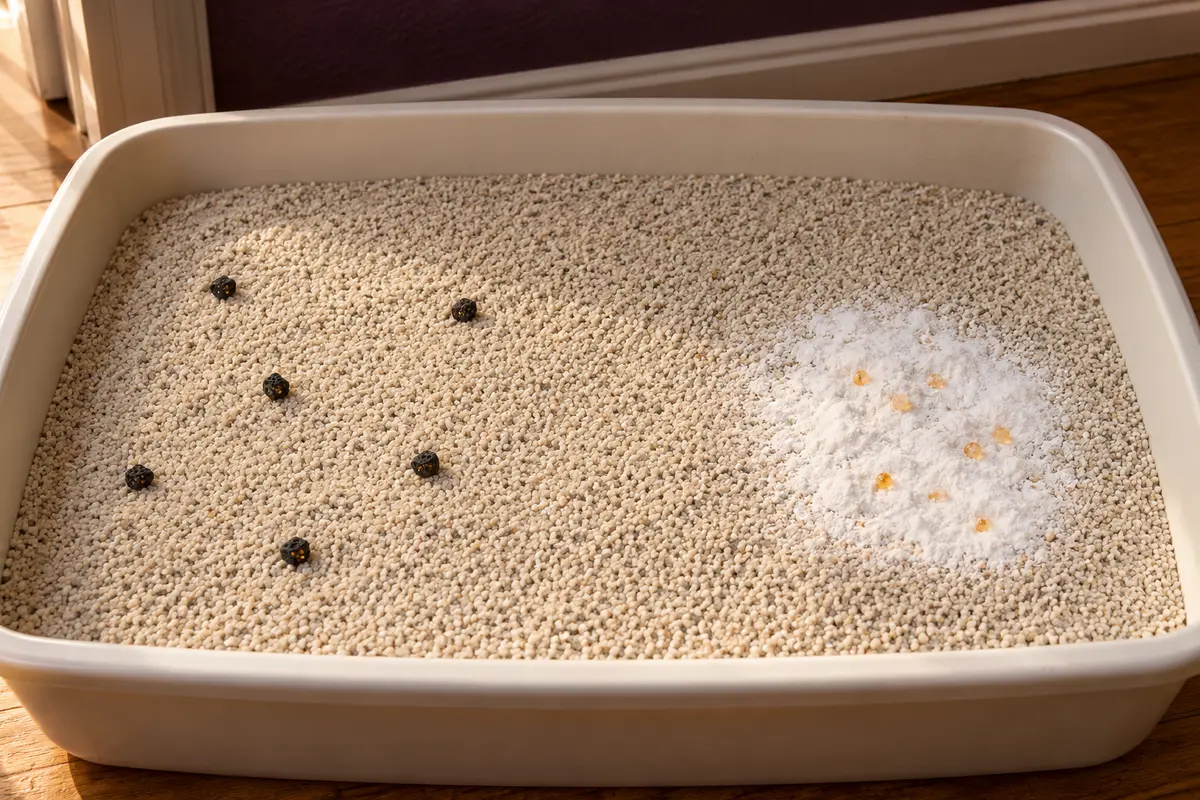
Baking soda is sodium bicarbonate. The American Chemical Society explains its acid-base reaction. That chemistry supports an explanation of how it can act on acidic compounds, without establishing a winner for the mixture of smells in a used litter box.
The Ammonia Problem: What the Chemistry Can Tell You
The old acid-versus-base shortcut leaves out too much. A claim about neutralizing acids cannot establish ammonia removal. Nor does a porous surface establish reliable ammonia capture.
The EPA’s technical summary of residential air cleaners says activated carbon is not especially effective against ammonia in that filtration context. Carbon treatments and operating conditions matter. That is a limit on the general claim, not a test of Purrify in cat litter.
For the cleaning and exposure questions behind a sharp smell, read our cat litter ammonia guide. Keep removing waste and keep the air moving.

Ready for a litter box you can't smell?
Free shipping. Three bags every 3 months. Cancel anytime.
Send 3 bags every 3 months →First shipment: money back within 30 days of delivery.
or try the 15g first for free, plus $4.76 shipping
Money back within 30 days of delivery. You keep the bag.
Is Carbon Actually More Expensive?
Compare the current pack price with the amount you actually use. Count the litter too. A lower shelf price does not tell you your monthly total, and a higher one does not prove savings.
Keep a simple record of purchases and full litter changes while following the litter’s instructions. Track spending over several litter changes before deciding whether either option saves you money.
Purrify: Coconut-Shell Activated Carbon
If your cat accepts its litter and the box still smells after cleaning, Purrify offers coconut-shell activated carbon without added fragrance. Check your litter and box makers' additive guidance, then choose a Purrify bag to use with that litter. Start with 120g. The everyday choice for most homes, including one-cat homes. Its estimate is about 50 days per cat and per litter box. More cats or boxes can use a bag sooner. Follow the directions below and judge the result in your own routine.

What Happens to a Single Odor Molecule
Surface attraction can hold a molecule on carbon. Different molecules behave differently, so the same carbon need not capture ammonia and other odor compounds equally well. It also does not hold everything forever.

How Much Surface Area Are We Actually Talking About?
Purrify’s supplier figure is 1,150 square metres of surface per gram. Multiplying that figure gives the material’s nominal surface area below. These are calculations, not litter-box test results. Our natural cat litter deodorizer page shows what that carbon is made from.
| Amount | Calculated surface area |
|---|---|
| 1 gram | 1,150 m² |
| 15g bag | 17,250 m² |
| 50g bag | 57,500 m² |
| 120g bag | 138,000 m² |
Surface area alone cannot tell you how long a bag will control odor, how much ammonia it will capture, or whether it will outperform another product. Those questions need product-specific evidence.
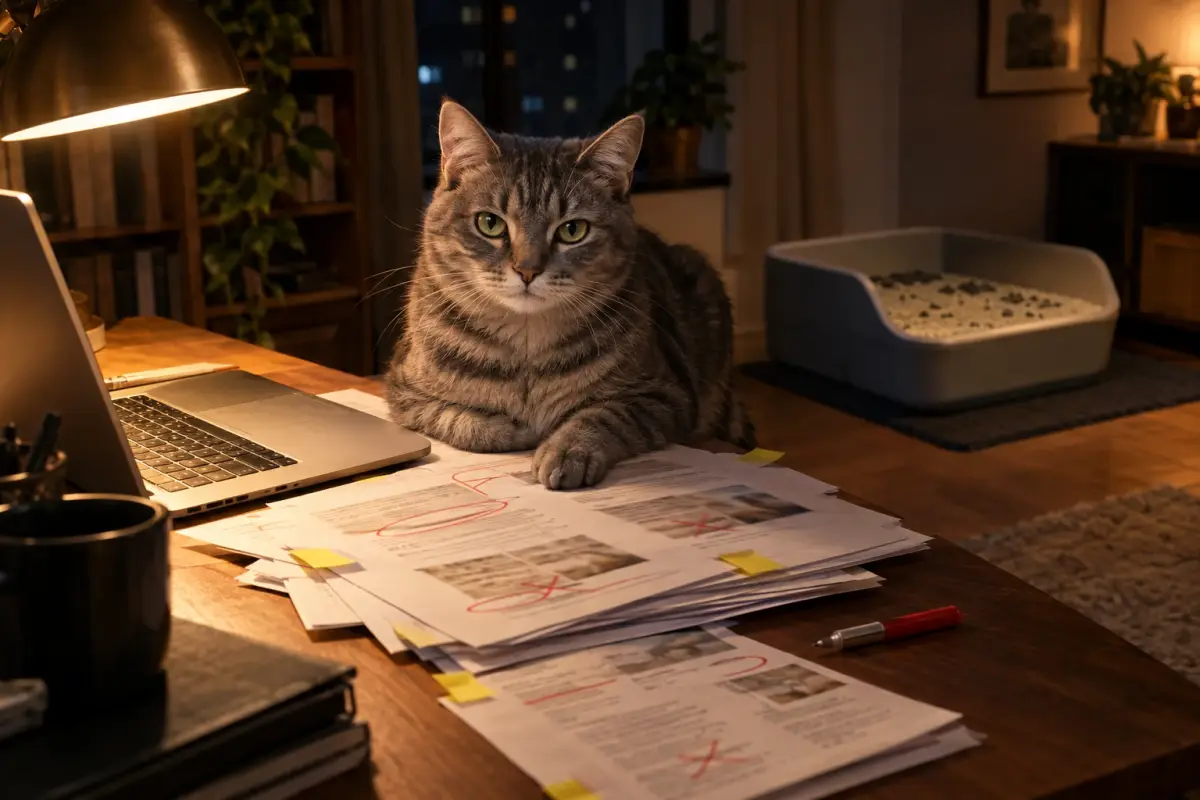
We went looking for that evidence. The litter-specific carbon evidence in that search came mainly from Clorox, which sells carbon litter. That search found no litter-box study of baking soda. It does not prove that none exists. Our litter smell fact-check lists who measured what.
Why Baking Soda Can Seem to Help at First
A fresh scoop and a stir often happen at the same time as an additive goes in. If the box smells better afterward, that does not isolate what the additive did. Keep the cleaning routine consistent when comparing products.
Check the formula too. A baking-soda deodorizer may contain other ingredients. Judge the product you bought, rather than assuming every formula has the same behavior as plain sodium bicarbonate.

What Changes in a Busy Litter Box
Multiple cats, a warm room, damp litter or a covered box can make your routine harder to manage. Check how much waste remains and whether the box gets airflow before adding more deodorizer.
Change one part of the routine at a time so you can tell what helped. A comparison between two additives means little if you also changed the litter, moved the box and doubled the scooping.
How to Use Each Method Correctly
For baking soda or a formulated deodorizer, follow the specific product label and your litter maker’s guidance. Our guide to baking soda in cat litter covers the separate questions about dust and your cat’s use of the box.
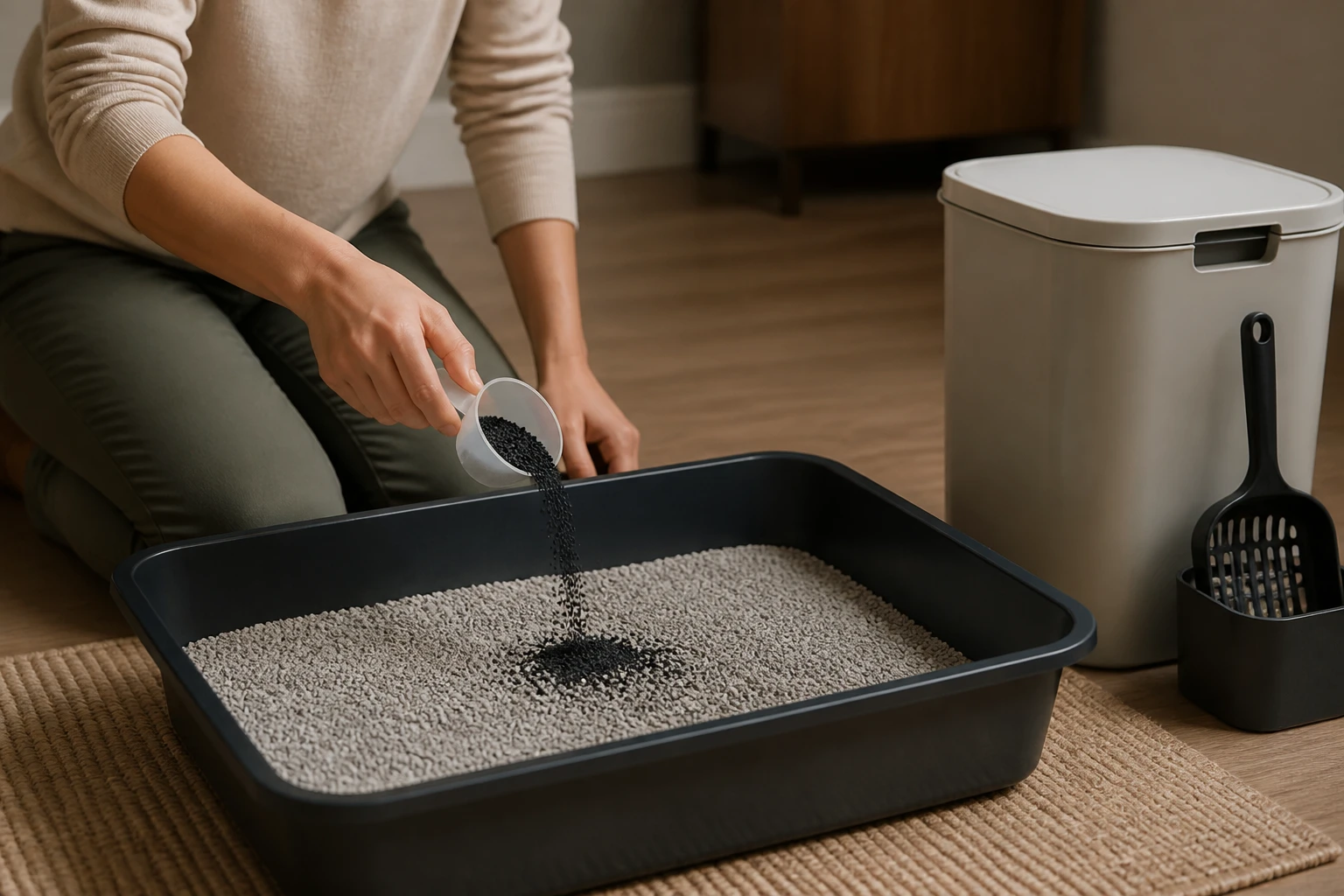
For Purrify, use 2 tablespoons of Purrify per litter box. Sprinkle on fresh litter, mix gently. Top up whenever the box starts to smell again. There is no fixed top-up schedule.
Keep scooping and replace the litter as its manufacturer directs. Scooping, litter changes and Purrify all belong in that routine.
Is Charcoal or Baking Soda Better for Odor?
Choose by the product’s instructions, ingredients and performance in your own box. If you want coconut-shell carbon with no added fragrance, choose Purrify. Keep the litter your cat uses and choose an additive whose instructions fit your routine.
For a wider choice of litter, see the litter odor-control guide. If ammonia is your main concern, start with the ammonia-cleaning steps. Prefer plant-based litter? See the natural litter comparison.