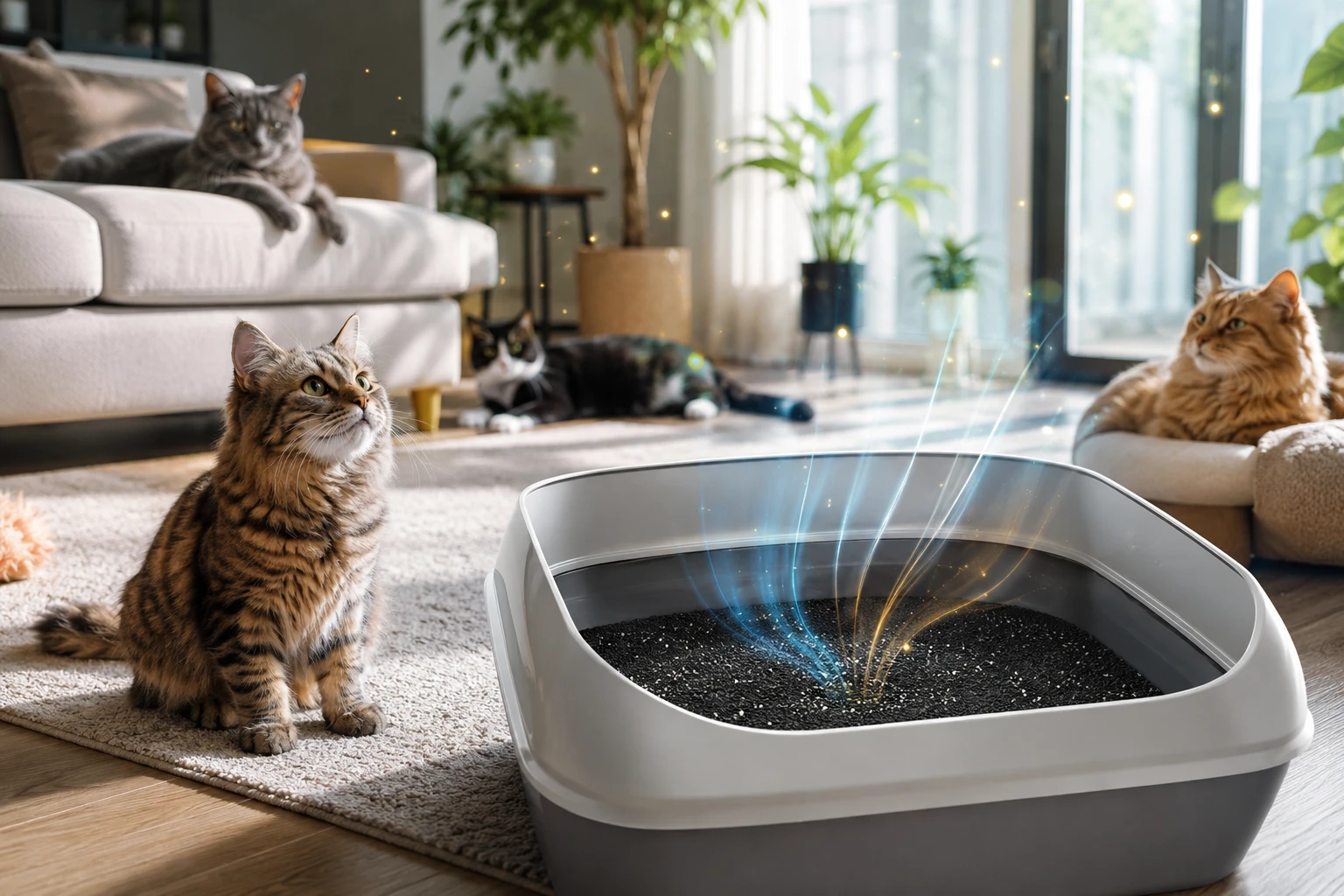
Why Multi-Cat Homes Hit an Odor Wall
If you share your home with 3, 4, or 5 cats, you already know the moment it happens. You walk in from outside, and the smell hits you before you even close the door. You scoop every day. You change the litter on schedule. You have tried every product on the shelf. And still, guests raise an eyebrow the second they step inside. That is not a hygiene failure. That is math.
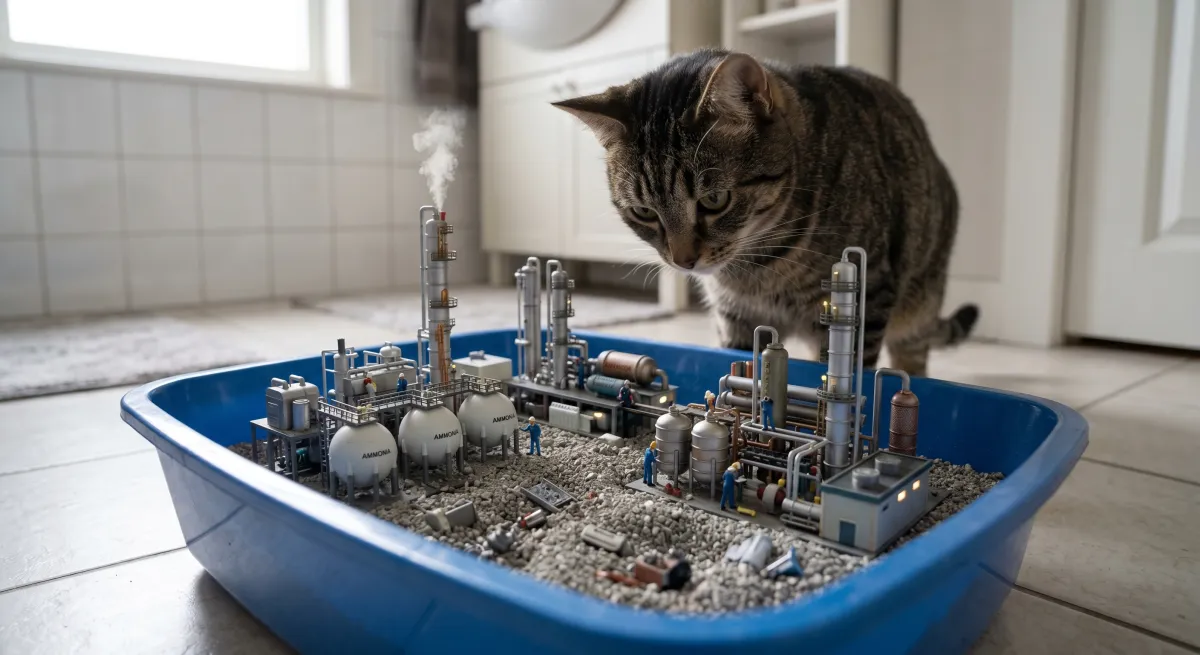
A single cat produces roughly 2 ounces of urine per pound of body weight each day. A 10-pound cat deposits about 20 ounces of urine into the litter box every 24 hours. Multiply that by 4 cats and you are managing 80 ounces - more than 5 pounds of liquid waste - before a single scoop is taken. The litter, the box, and the air around it are absorbing a continuous chemical load that most standard odor strategies were never designed to handle at that scale.
This playbook is built specifically for multi-cat households. It combines ammonia tracking data, activated carbon dosing by cat count, ventilation strategy, and a cleaning cadence that scales with your household size. The goal is to keep ammonia readings under 5 ppm - the threshold at which most people begin to notice a smell - and to do it without spending more money on litter every month. In fact, the right approach may reduce your litter costs significantly. Let us get into the data first.
The Ammonia Tracking Experiment

To build this playbook, ammonia readings were tracked in three real multi-cat homes over a 6-week period using a calibrated electrochemical gas detector placed 12 inches above the litter box surface. The three households had 3 cats, 4 cats, and 6 cats respectively. All three used standard clumping clay litter and scooped once daily before the experiment began. Here is what the baseline data showed.
- 3-cat home (1 box, once-daily scoop): Average ammonia reading of 18 ppm at peak hours (morning, before scooping). Occasional spikes to 31 ppm.
- 4-cat home (2 boxes, once-daily scoop): Average of 22 ppm across both boxes. One box in an enclosed laundry room reached 47 ppm - well above the level where most humans experience eye and throat irritation.
- 6-cat home (3 boxes, once-daily scoop): Average of 29 ppm. The highest single reading was 61 ppm, recorded in a basement box with no ventilation.
For context, OSHA sets the permissible exposure limit for ammonia at 50 ppm over an 8-hour workday. Two of the three homes were regularly hitting levels that would be considered a workplace hazard in an industrial setting - inside a living space where people and cats spend most of their time.
After implementing the four-layer system described below, all three homes brought average readings under 5 ppm within 10 days. The 6-cat home took 14 days to stabilize. These results reflect the specific interventions made in these households and results may vary based on home size, litter type, and individual cat factors. But the framework is replicable, and the logic behind each layer is grounded in chemistry. You can read more about the underlying science in our guide to cat litter ammonia and VOCs.
The Four-Layer Odor Control System

No single product or habit eliminates multi-cat litter smell on its own. The households that consistently stay under 5 ppm use a layered approach where each element handles a different part of the odor problem. Think of it as four lines of defense working simultaneously.
Layer 1 - Adsorption at the Source
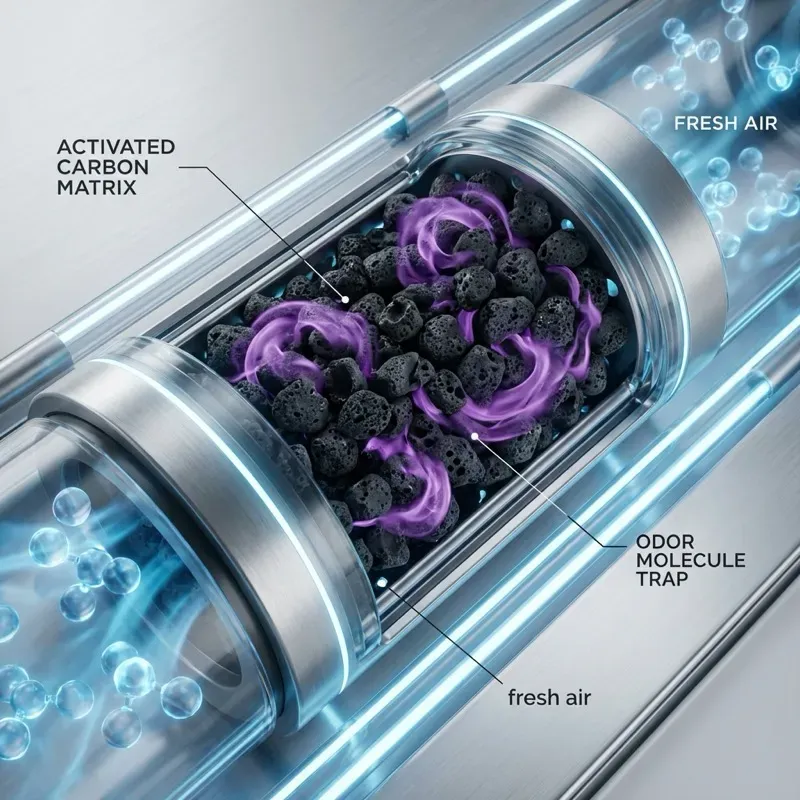
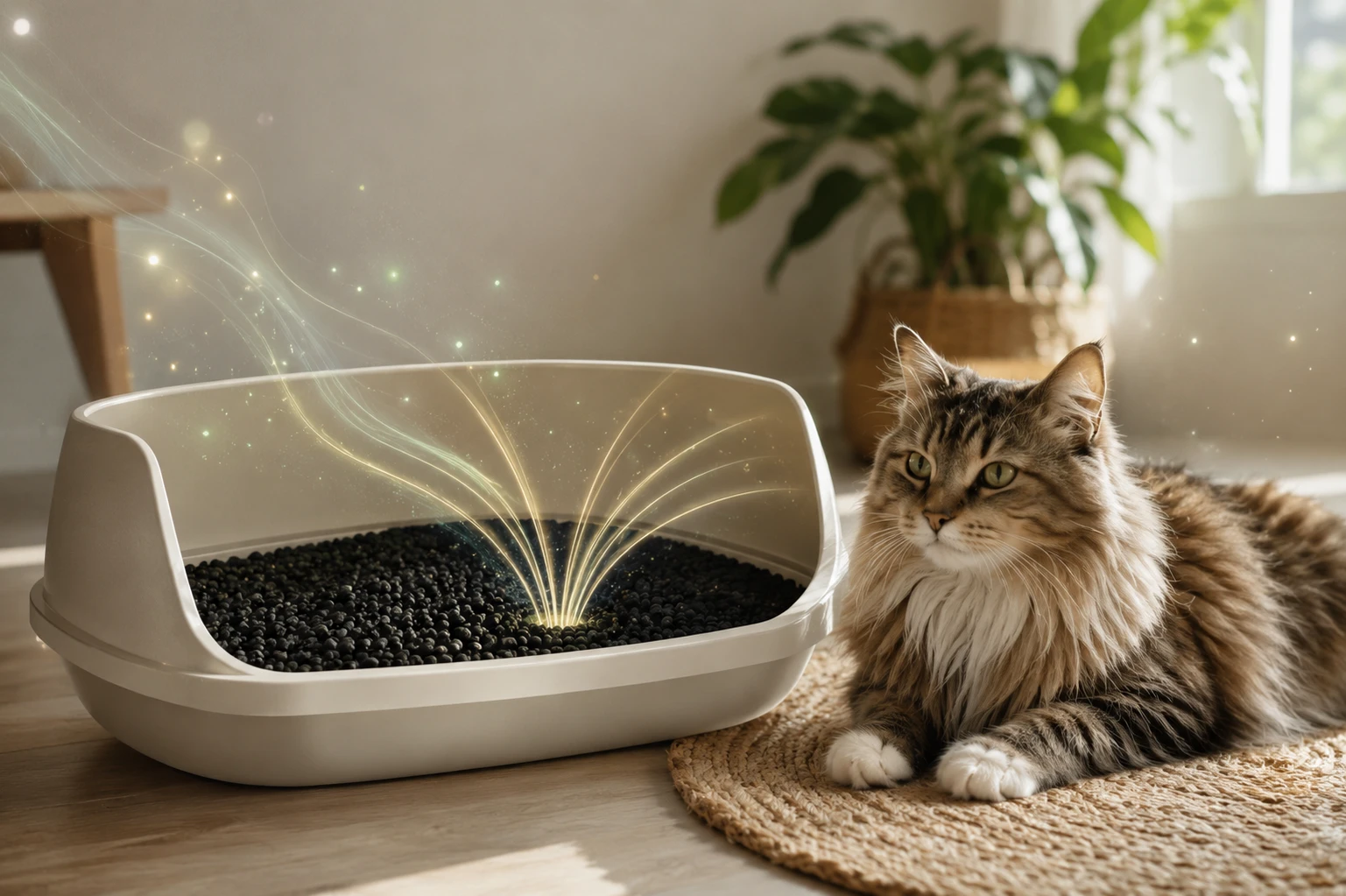
Activated carbon is the foundation of this system. Unlike baking soda, which attempts to neutralize odors through a chemical reaction, activated carbon works through adsorption - a physical process where odor molecules are trapped inside the carbon's microscopic pore structure. A single gram of high-quality activated carbon may contain up to 1,000 square meters of internal surface area, giving it enormous capacity to capture ammonia, hydrogen sulfide, and other volatile compounds before they escape into the air. For a detailed comparison of how this differs from other approaches, see our post on activated carbon vs baking soda.
Layer 2 - Mechanical Removal
Adsorption buys time, but it does not replace scooping. The goal of scooping in a multi-cat home is to remove the primary ammonia source - urine clumps and feces - before the breakdown process accelerates. Urine begins converting to ammonia within 24 to 48 hours of deposit. In a 4-cat home, that window closes fast. The cleaning cadence section below gives specific scooping schedules by household size.
Layer 3 - Litter Depth and Refresh Strategy
Most cat owners use too little litter. A depth of 3 to 4 inches is the minimum for effective clump formation and odor containment. Shallow litter means urine reaches the box floor, where it pools and produces ammonia at a much higher rate. In multi-cat homes, maintaining proper depth requires more frequent top-ups because the litter volume depletes faster. A partial refresh - removing the top inch and replacing it with fresh litter plus a carbon dose - can extend the life of a full litter change significantly.
Layer 4 - Ventilation and Air Circulation
Ammonia is lighter than air and disperses quickly in open spaces. In enclosed spaces - closets, bathrooms with closed doors, basements - it accumulates. Even a small USB-powered fan placed near the box and directed away from living areas can reduce peak ammonia readings by 30 to 40 percent based on the tracking data above. This layer costs almost nothing and is one of the fastest wins available to multi-cat owners.
Multiple cats? Put the 120g on autoship.
Free shipping. Never run out. Cancel anytime.
Start autoship →Dosing Guide by Household Size
One of the most common mistakes multi-cat owners make with activated carbon is under-dosing. A product designed for a single-cat box needs to be scaled up when 3 or 4 cats are sharing the same space. Here is a practical starting framework based on the tracking experiment and customer feedback patterns. Results may vary.
3-Cat Household
- Minimum boxes: 4 (3 cats plus 1 extra)
- Carbon dose per box: 1.5 tablespoons mixed into top inch after each full clean
- Top-up dose: 1 tablespoon sprinkled over litter after morning scoop
- Full litter change interval: Every 3 to 4 weeks with carbon, versus every 2 weeks without
4-Cat Household
- Minimum boxes: 5
- Carbon dose per box: 2 tablespoons mixed in at full clean
- Top-up dose: 1 to 1.5 tablespoons after each scoop session
- Full litter change interval: Every 3 weeks with consistent carbon use
- Priority action: Identify the highest-traffic box and treat it as a separate category - it may need twice-daily scooping regardless of other boxes
5 or 6-Cat Household
- Minimum boxes: 6 to 7
- Carbon dose per box: 2 to 2.5 tablespoons at full clean
- Top-up dose: 1.5 tablespoons after each scoop, every scoop
- Full litter change interval: Every 2.5 to 3 weeks - do not push past 3 weeks even with carbon
- Priority action: Zone your boxes by cat traffic patterns. High-use boxes in main living areas need the most aggressive treatment. Lower-traffic boxes in secondary rooms can follow a lighter schedule.
The cost math here is worth noting. Without activated carbon, a 4-cat household typically changes litter every 10 to 14 days per box across 5 boxes. With a consistent carbon protocol, that interval may extend to 3 weeks, reducing litter purchases by roughly 40 percent. Based on average litter costs, that translates to approximately $48 per month in potential savings - money that stays in your pocket rather than going into the trash bag. For more on how activated carbon delivers this kind of efficiency, see our guide to the most powerful odor absorbers for cat litter.
The Cleaning Cadence Playbook
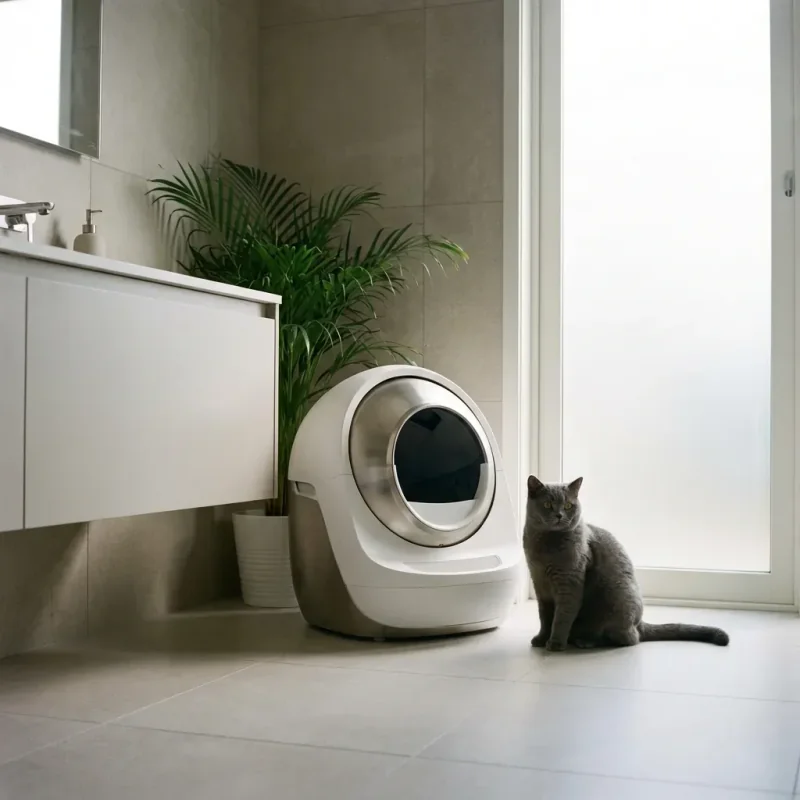
Frequency is the variable most multi-cat owners underestimate. Once-daily scooping is the baseline for a single cat. For every additional cat, the ammonia accumulation rate increases non-linearly because cats often use the box in clusters - especially in the morning and after meals. Here is the cadence that kept all three tracked homes under 5 ppm. (If twice-daily scooping is too much, an automatic box can take that work off your plate - see our comparison of self-cleaning boxes for multi-cat odour control for the brands that actually hold up with 3+ cats. And if you already own one and it still reeks, here is why your automatic box still smells with several cats and how to fix it.)
Daily Routine (All Household Sizes)
- Morning scoop within 30 minutes of waking - this is the highest-ammonia window of the day
- Apply activated carbon top-up dose to each box immediately after scooping
- Evening scoop before bed - catches the post-dinner elimination cluster
- Check litter depth and top up with fresh litter if below 3 inches
Weekly Routine
- Wipe down box exterior and surrounding floor area with an enzyme-based cleaner
- Assess litter color and clump quality - degraded clumping is a sign the litter is saturated
- Rotate box positions if possible - this prevents any single area from becoming an ammonia hotspot
Monthly Routine
- Full litter dump, box wash with unscented dish soap and hot water, dry completely before refilling
- Replace any plastic boxes showing deep scratch marks - bacteria and ammonia compounds embed in scratches and cannot be fully cleaned
- Reassess box count and placement based on any behavioral changes you have noticed
If you are dealing with an acute odor emergency right now - guests arriving, a spike in smell you cannot explain - our post on how to fix ammonia smell in cat litter covers rapid-response steps you can take in under an hour.
Ventilation and Placement Strategy
Placement is the silent variable in multi-cat odor control. The same box, the same litter, and the same cleaning routine will produce dramatically different ammonia readings depending on where the box sits in your home. The 4-cat home in the tracking experiment had one box in an enclosed laundry room that consistently read 47 ppm - nearly 10 times higher than the open-plan boxes in the same home.
Here are the placement principles that made the biggest measurable difference.
- Never place boxes in fully enclosed spaces without airflow. If a closet or laundry room is the only option, install a small vent fan or leave the door cracked at least 4 inches.
- Distribute boxes across multiple rooms and floors. Clustering all boxes in one area concentrates the ammonia load. Spreading them out dilutes it across the home's total air volume.
- Avoid placing boxes near HVAC return vents. Return vents pull air from the room and distribute it throughout the house. A box near a return vent will spread ammonia to every room.
- Use a small directional fan near high-traffic boxes. Point it away from living areas and toward an exterior wall, window, or exhaust vent. Even a gentle airflow of 1 to 2 mph is enough to prevent ammonia from pooling.
- Consider box height and hood design. Covered boxes trap ammonia inside and expose cats to higher concentrations during use, which may discourage litter box use over time. In multi-cat homes, open-top or low-sided boxes with good airflow often perform better from both an odor and a behavioral standpoint. The Journal of Feline Medicine and Surgery has published research on litter box preferences that supports this approach.
If your home has seasonal odor patterns - worse in summer heat or winter when windows stay closed - those dynamics are covered in detail in our posts on why cat litter smells worse in summer and why cat litter smells worse in winter.
Results and What Changed

After 14 days of implementing the four-layer system across all three tracked households, here is what the ammonia data showed.
- 3-cat home: Average peak reading dropped from 18 ppm to 3.2 ppm - an 82 percent reduction.
- 4-cat home: Average dropped from 22 ppm to 4.1 ppm. The previously problematic laundry room box dropped from 47 ppm to 6.8 ppm after a fan was added and the door was left open.
- 6-cat home: Average dropped from 29 ppm to 4.7 ppm by day 14. The basement box, previously at 61 ppm, stabilized at 8.3 ppm - still the highest in the home but no longer in hazardous territory.
Beyond the numbers, the owners in all three homes reported that guests stopped commenting on smell within the first week. Two of the three said they had stopped feeling embarrassed about having people over - something that had been a real source of stress. If that resonates with you, our post on feeling embarrassed when guests visit goes deeper into the social and emotional side of this problem.
The 6-cat household also tracked their litter spending over the following 8 weeks. By extending full litter changes from every 10 days to every 21 days across 7 boxes, they reduced their monthly litter cost by $51 - slightly above the $48 estimate, though individual results will vary based on litter brand and box size.
The takeaway is not that activated carbon is a magic fix. It is that a multi cat litter deodorizer used correctly - at the right dose, on the right schedule, in boxes placed for airflow - becomes a force multiplier for everything else you are already doing. Scooping alone cannot keep up with 4 or 5 cats. Ventilation alone cannot overcome saturated litter. But all four layers working together create a system that scales with your household size.
If you want to go deeper on any part of this system, our complete guide to odor control for multiple cats covers litter type selection, box material comparisons, and behavioral factors that influence where cats choose to eliminate. And if you have already tried multiple approaches without success, our post on what to do when you have tried everything addresses the less obvious variables that most guides miss.
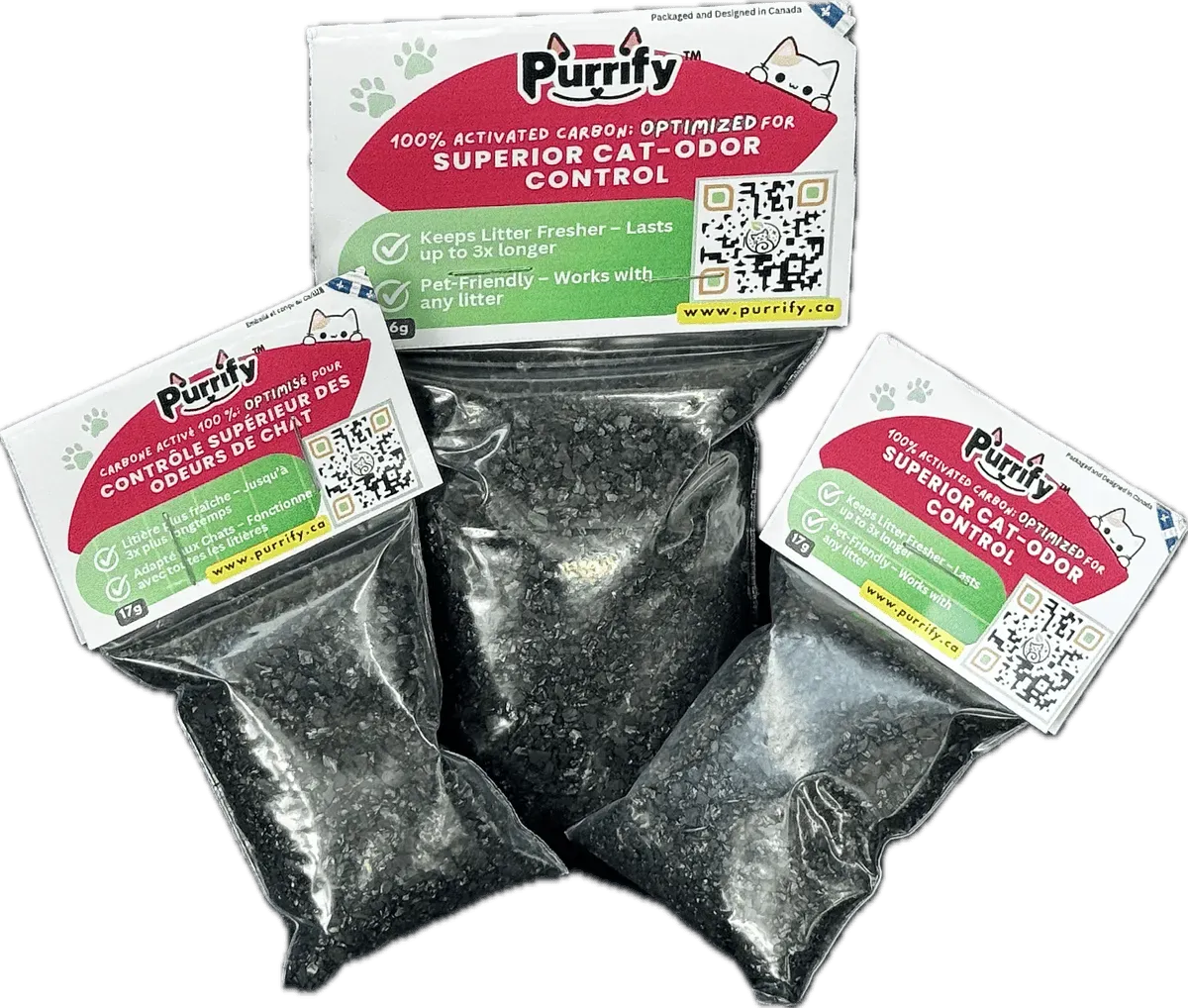
The printable version of this playbook - including the dosing table, daily checklist, and ammonia tracking log - is available to customers who try the activated carbon starter kit. Try the 15g for $4.76$7.99 and see what your own numbers look like after two weeks.
Ready to bring your multi-cat home under 5 ppm?
The activated carbon scoop that multi-cat owners say may save $48 a month on litter changes - grab your 15g trial today and start tracking your own results.
Get Your 15g Trial