
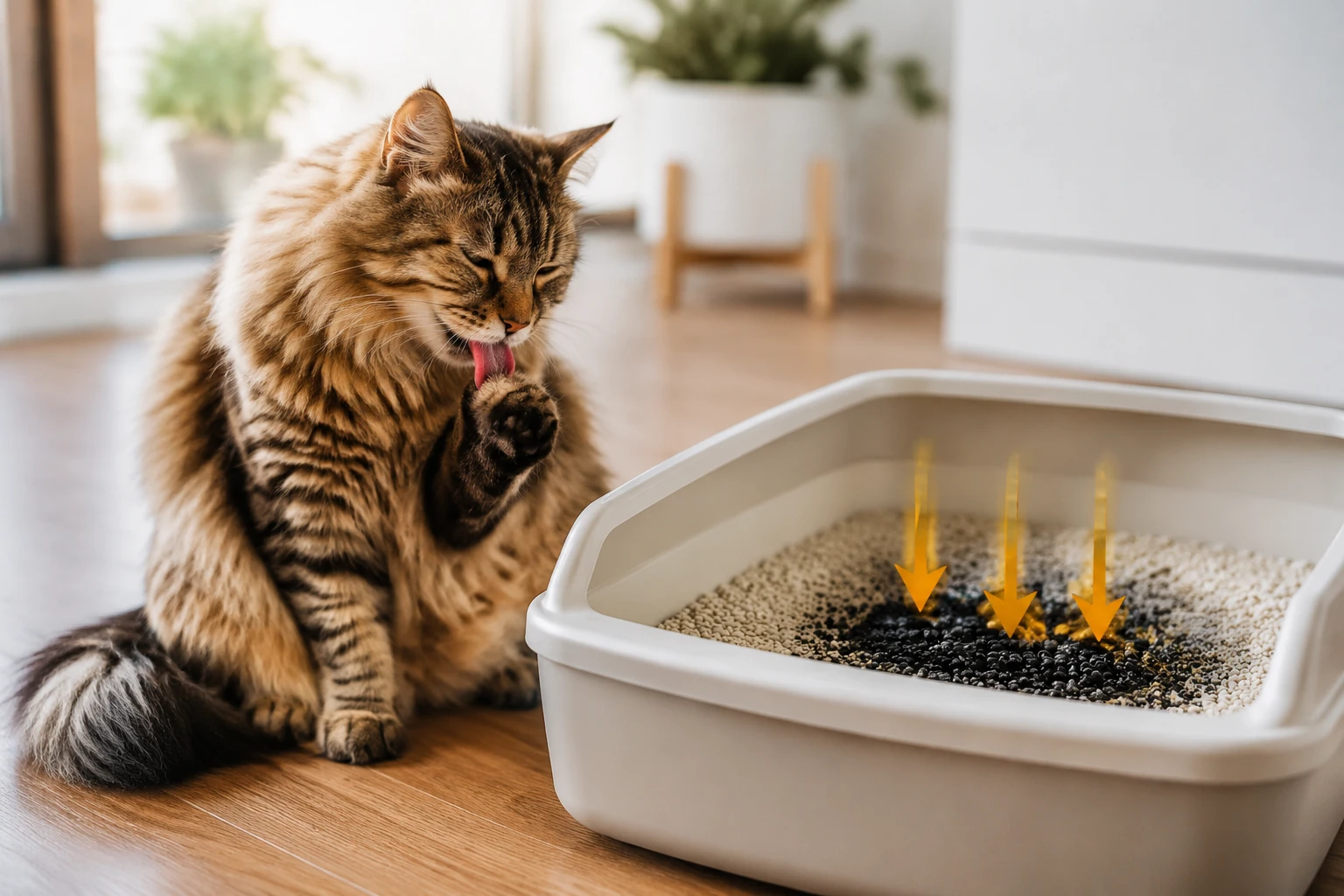
Why does my cat smell like the litter box?
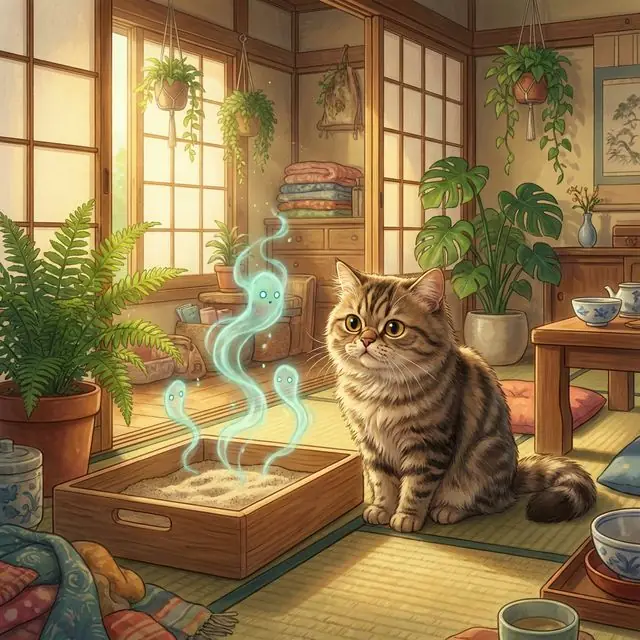
Why does my cat smell like the litter box? First find where the smell is sitting. Loose litter can cling to paws and long fur. A damp clump or a smear of waste can stick around the hind end. A cat who cannot comfortably reach part of the coat may stop grooming it well. Less often, a new urine-like smell arrives with urinary signs that need veterinary attention.
Those are different problems, even though your nose may describe all of them as the cat smells like pee. Start with a calm coat check instead of spraying fragrance or assuming disease. Look at the paws, tail, belly, inner thighs, and fur around the rear. Notice whether the coat is simply dusty, actually wet, matted, irritated, or painful to touch.
This guide helps you separate litter contamination, a grooming problem, and medical warning signs. It cannot diagnose your cat. A persistent or sudden body odor, especially with a change in grooming, urination, appetite, movement, or energy, is a reason to call your veterinarian.
Quick answer: brush off dry litter, clean a small soiled area gently, improve the box setup, and watch what happens next. If the smell returns quickly or your cat is straining, passing little urine, crying, licking the genital area repeatedly, or acting unwell, move from housekeeping to veterinary care.
First, locate the smell on the cat
Smell the air around the cat without pressing your face into the coat. Then inspect in good light. Dry litter grains on the feet, belly, or tail usually point to tracking. Dampness or a concentrated urine smell around the inner thighs and rear suggests the cat may have stepped in urine, brushed a wet box wall, or soiled the coat while using the box.
Long-haired cats can collect litter and waste in the feathering around the hind legs. Kittens may be enthusiastic diggers and less polished groomers. A cat with diarrhea may soil the coat even when the box itself is clean. None of those observations identifies the cause of diarrhea or poor grooming. They only tell you that the smell is physically on the fur.
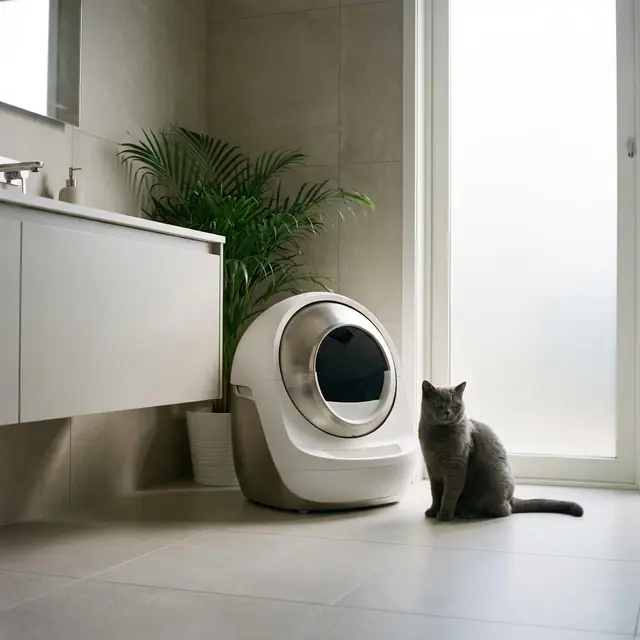
Check the box at the same time. Is the litter wet across a wide area? Are clumps breaking apart? Is urine hitting a wall because the pan is too small or the sides are too low? Is a self-cleaning unit leaving residue on its rake or liner? If the cat exits through contamination, bathing the cat without fixing the route only resets the problem for one trip.
Dry litter on fur is not the same as urine contamination
Dry grains usually brush or comb away. Use a soft cat brush and work gently in the direction of the fur. Wipe paws with a soft cloth dampened with plain lukewarm water if needed, then dry them. Do not use scented household wipes, essential oils, perfume, or human deodorant on a cat. Cats groom by licking, so anything left on the coat may be swallowed.
For a small spot of urine or feces, use a damp cloth and a cat-safe grooming product only as directed. Keep water and cleanser away from the eyes, ears, nose, and mouth. If contamination is extensive, the coat is tightly matted, the skin looks sore, or the cat resists because the area seems painful, stop and call a veterinarian or qualified cat groomer. VCA advises using clippers rather than scissors for mats because cat skin is easy to cut, and recommends professional help for severe tangles or irritated skin.
A full bath is not the automatic answer. Most healthy adult cats groom themselves and rarely need one. Frequent bathing can create skin problems, and repeated odor usually means the source has not been solved. A one-time careful cleanup is different from needing to wash the same cat every few days.

When grooming changes, look beyond the coat
A cat who used to stay spotless but now smells around the rear may be having trouble reaching it. Age alone is not a diagnosis. Pain, reduced mobility, excess body weight, dental discomfort, skin problems, and other illnesses can interfere with normal grooming. Cornell notes that older cats may groom less effectively, leading to matting, skin odor, and inflammation. VCA similarly notes that arthritic or overweight cats may have difficulty grooming themselves.
Watch how your cat moves through ordinary life. Hesitating before a jump, taking stairs slowly, objecting when the lower back is touched, sleeping more, or leaving the rear coat unkempt can be useful information for a veterinarian. Cats often hide pain, so a dirty coat may be one of several small changes rather than a character flaw.
The practical response is supportive, not corrective. Make the box easy to enter, keep the route clear, brush only where your cat is comfortable, and book an examination for a new or lasting grooming change. Do not put your cat on a crash diet or give human pain medicine. Your veterinarian can assess mobility, skin, mouth, weight, and the rest of the cat instead of treating odor as an isolated symptom.
Ready for a litter box you can't smell?
Free shipping. Never run out. Cancel anytime.
Start autoship →A litter box setup that keeps fur cleaner
- Use a large enough pan. The cat should be able to turn, dig, and squat without pressing the coat against a wet wall.
- Match the entry to mobility. A low entrance can help a senior or stiff cat, while higher sides elsewhere can contain overspray.
- Keep litter at a workable depth. Too little litter lets urine reach the pan and spread; an unstable mountain can make long fur drag.
- Scoop at least daily. Remove wet clumps and feces before the cat has to step around them.
- Clean the rim, walls, and floor. A spotless litter bed does not help if the tail brushes a dirty hood or the paws cross a soiled mat.
- Use enough boxes. In a multi-cat home, crowded boxes become dirty faster and make it harder to identify which cat has changed.
If the room smells strongly, follow the source rather than blaming the cat. Our guide to why a litter box smells so bad separates urine chemistry, residue, ventilation, and cleaning. If waste handling is the weak link, use the cat litter disposal guide to keep the scoop-to-bin route from spreading odor.
When a urine smell needs a veterinary call
A urine smell on fur can come from stepping in a wet spot, but it can also appear when a cat is urinating more often, leaking, missing the box, or struggling to posture. Smell alone cannot distinguish those situations. Watch the litter-box behaviour and the whole cat.
Call your veterinarian promptly for repeated trips to the box, blood in urine, urinating outside the box, a sudden change in urine amount, genital licking, pain, reduced appetite, vomiting, lethargy, or a persistent grooming decline. Cornell lists straining, painful urination, bloody urine, frequent urination, excessive thirst, and changes in grooming or coat among signs that warrant attention.
Emergency: a cat who repeatedly strains but passes little or no urine needs immediate veterinary care. Cornell identifies urethral obstruction as a true medical emergency, with male cats at higher risk. Do not wait to see whether a bath or fresh litter fixes it.
If you are unsure whether the cat is trying to urinate or defecate, call anyway. Owners can mistake urinary obstruction for constipation. Describe what you see, how much urine is produced, how often the cat enters the box, and whether the cat cries or becomes distressed.
What not to use on a smelly cat
Do not cover the coat with perfume, room spray, dryer sheets, essential oils, baking soda, or litter deodorizer. A product intended for the litter is not a grooming product. Avoid harsh cleaners around the genital area and never mix cleaning chemicals in or around the box.
Do not cut close mats with scissors. Do not force a painful cat through a long brushing session. Do not assume a senior cat is simply getting lazy. And do not let odor control delay a veterinary call when urinary signs, pain, skin irritation, diarrhea, or a marked behaviour change are present.
The safest sequence is plain: remove loose material, clean only what you can clean gently, dry the coat, fix the dirty route through the box, and monitor. If the cat cannot keep clean or the smell keeps returning, ask for help.

Keep box odor from hitching a ride
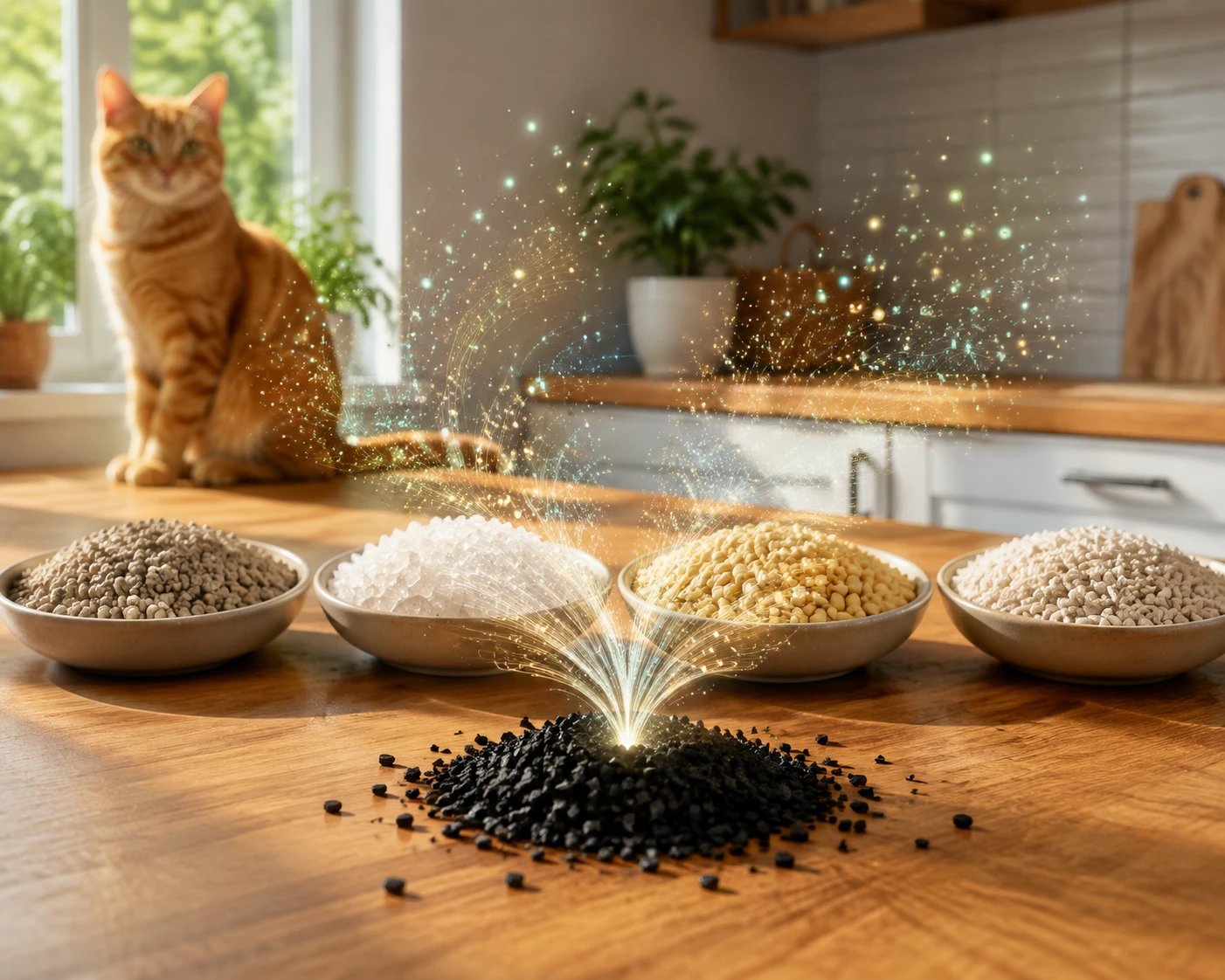
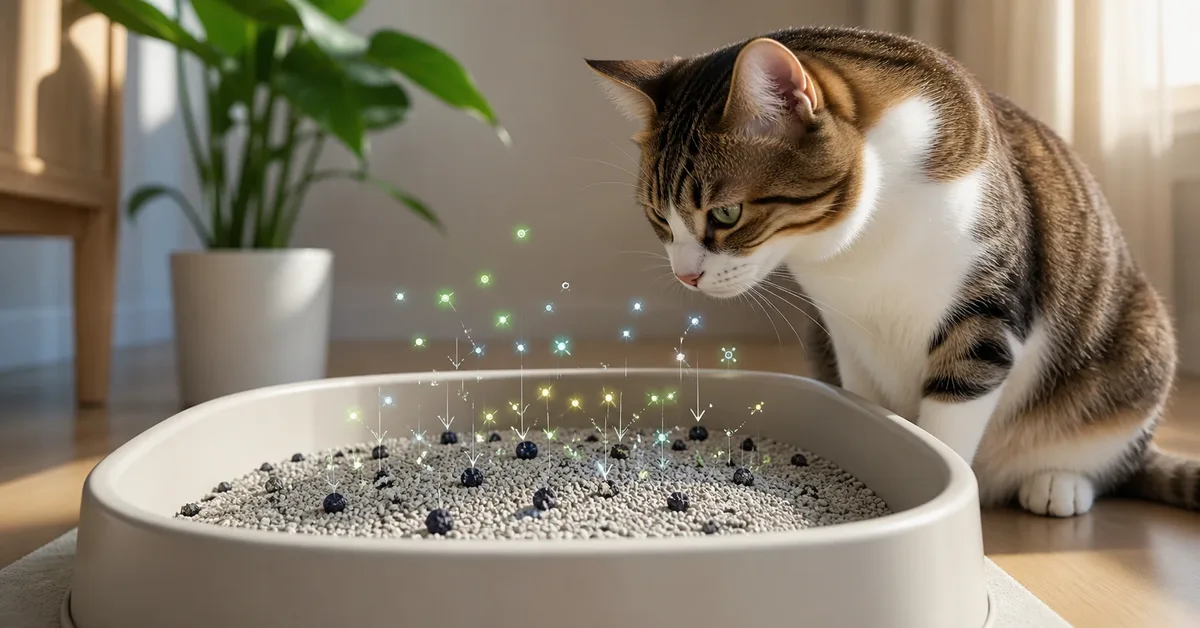
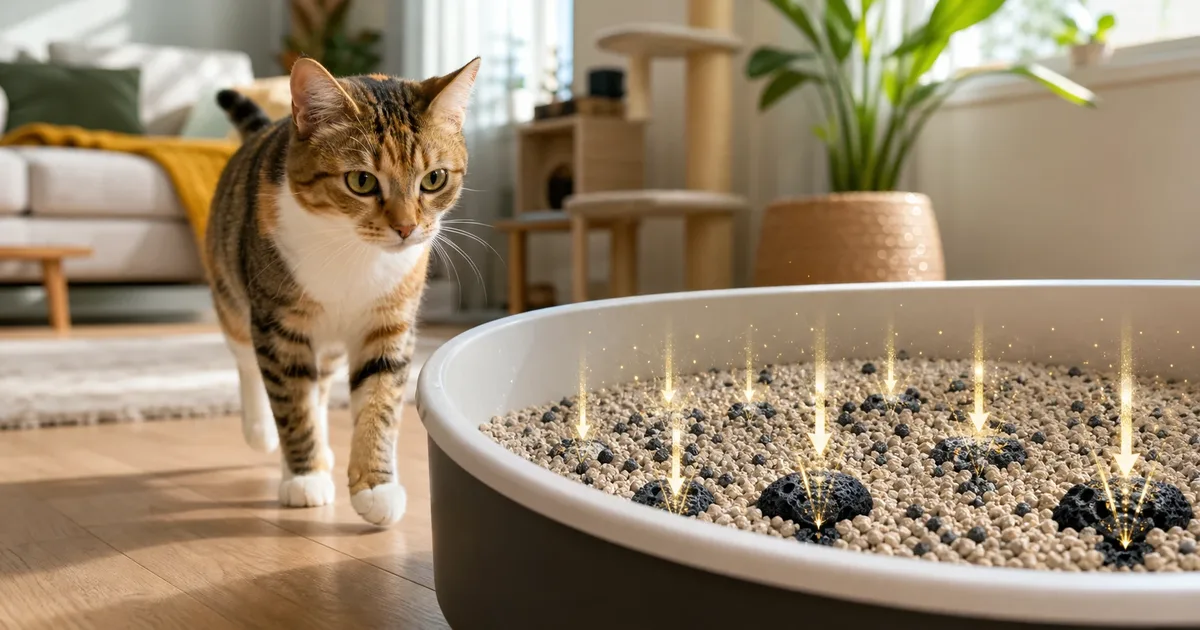
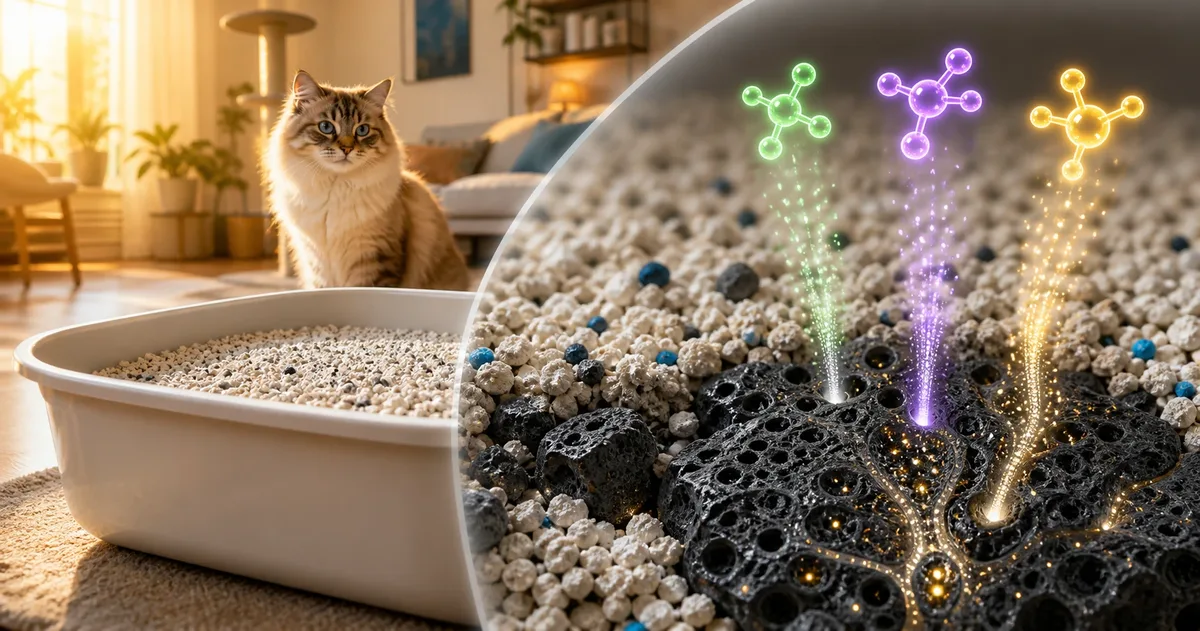
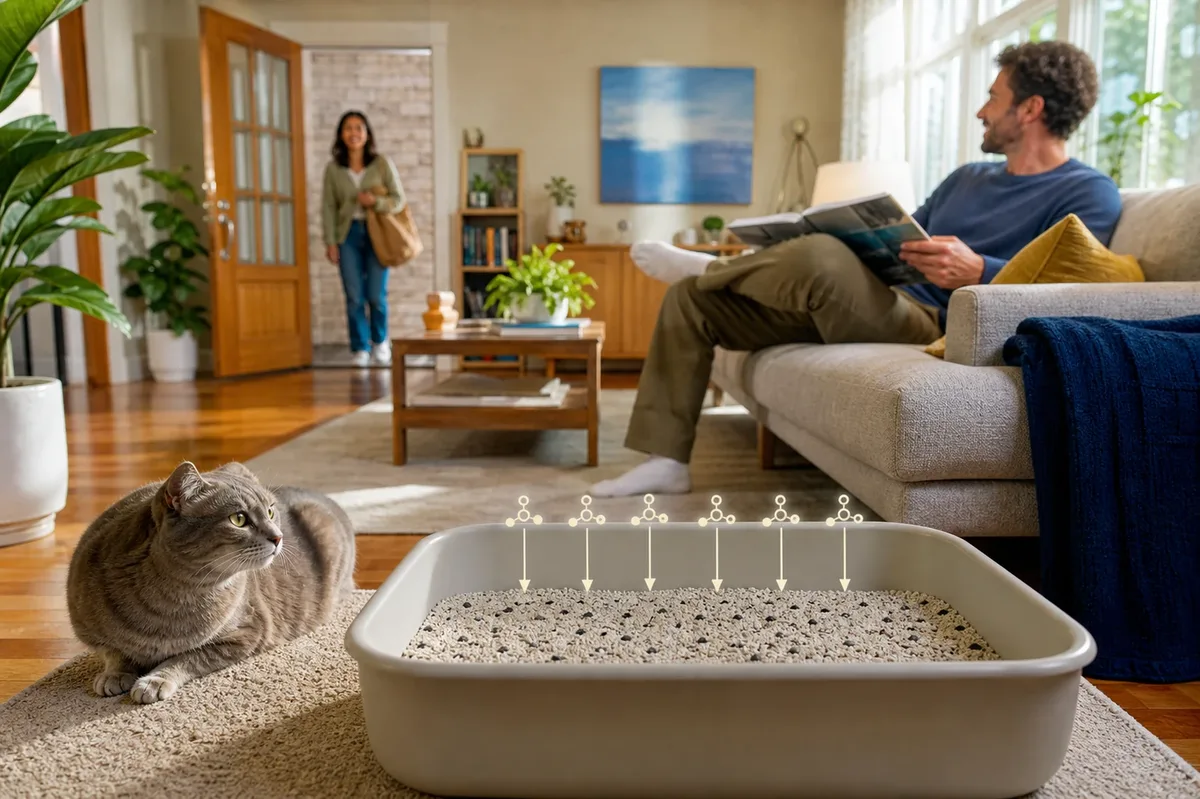
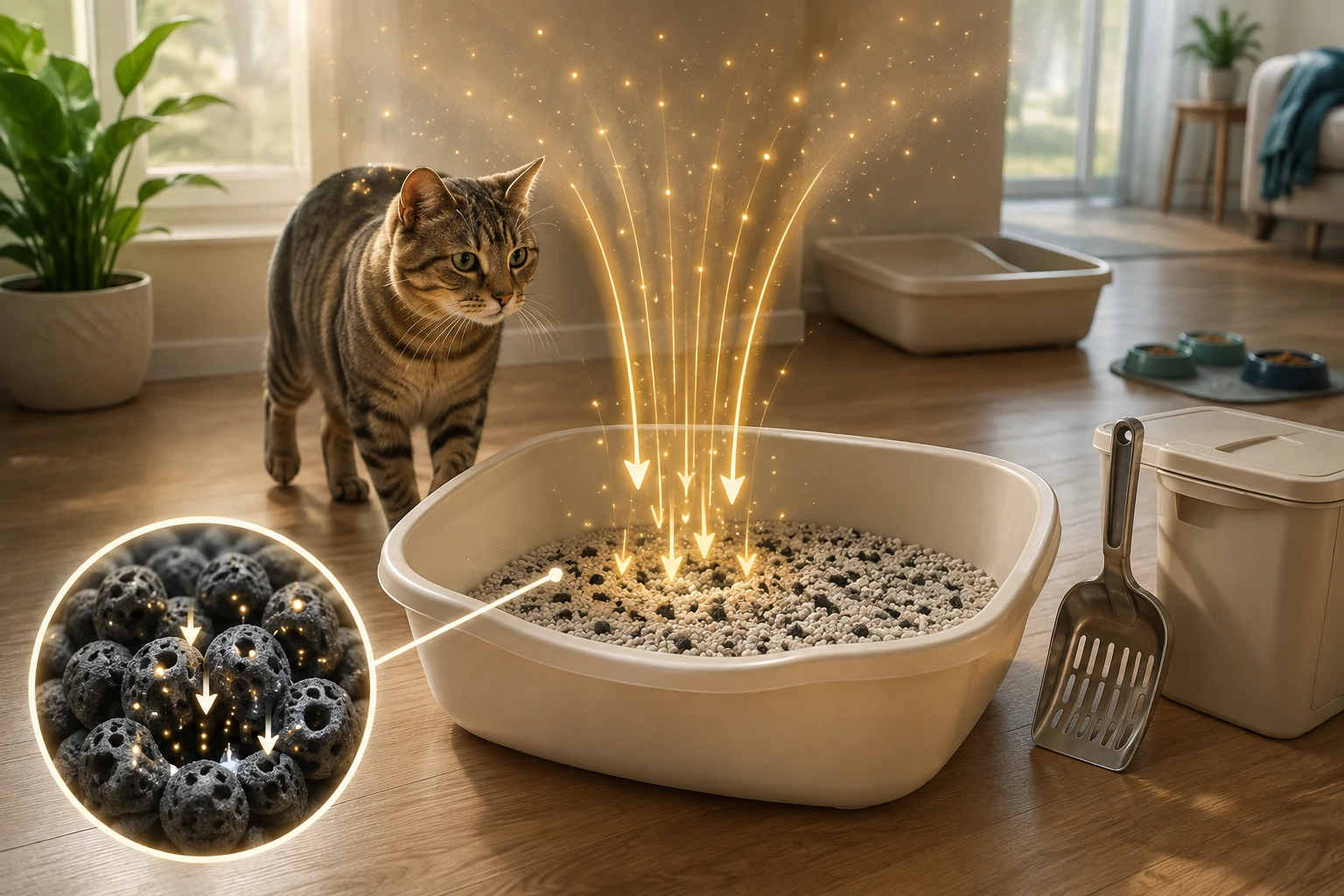
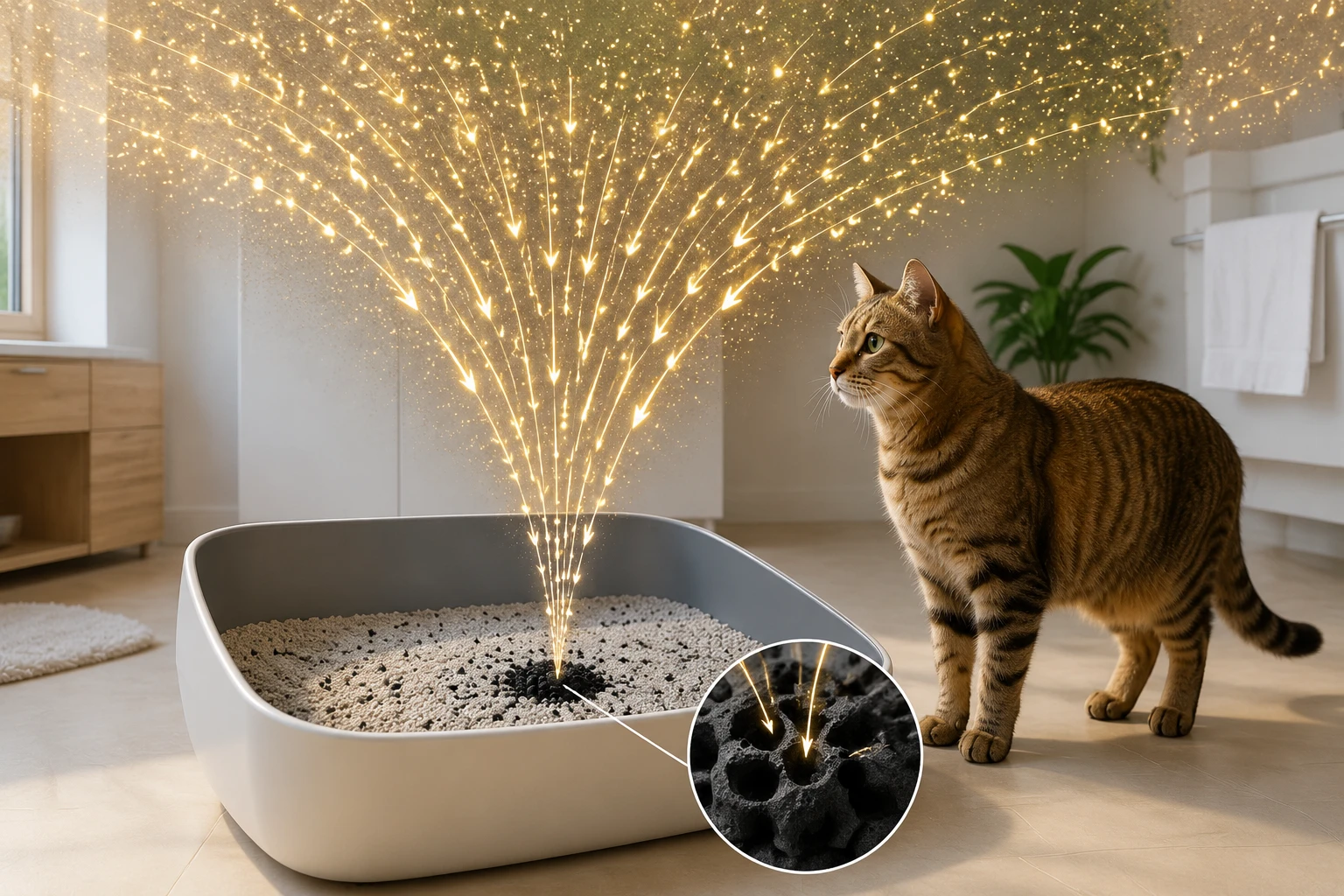
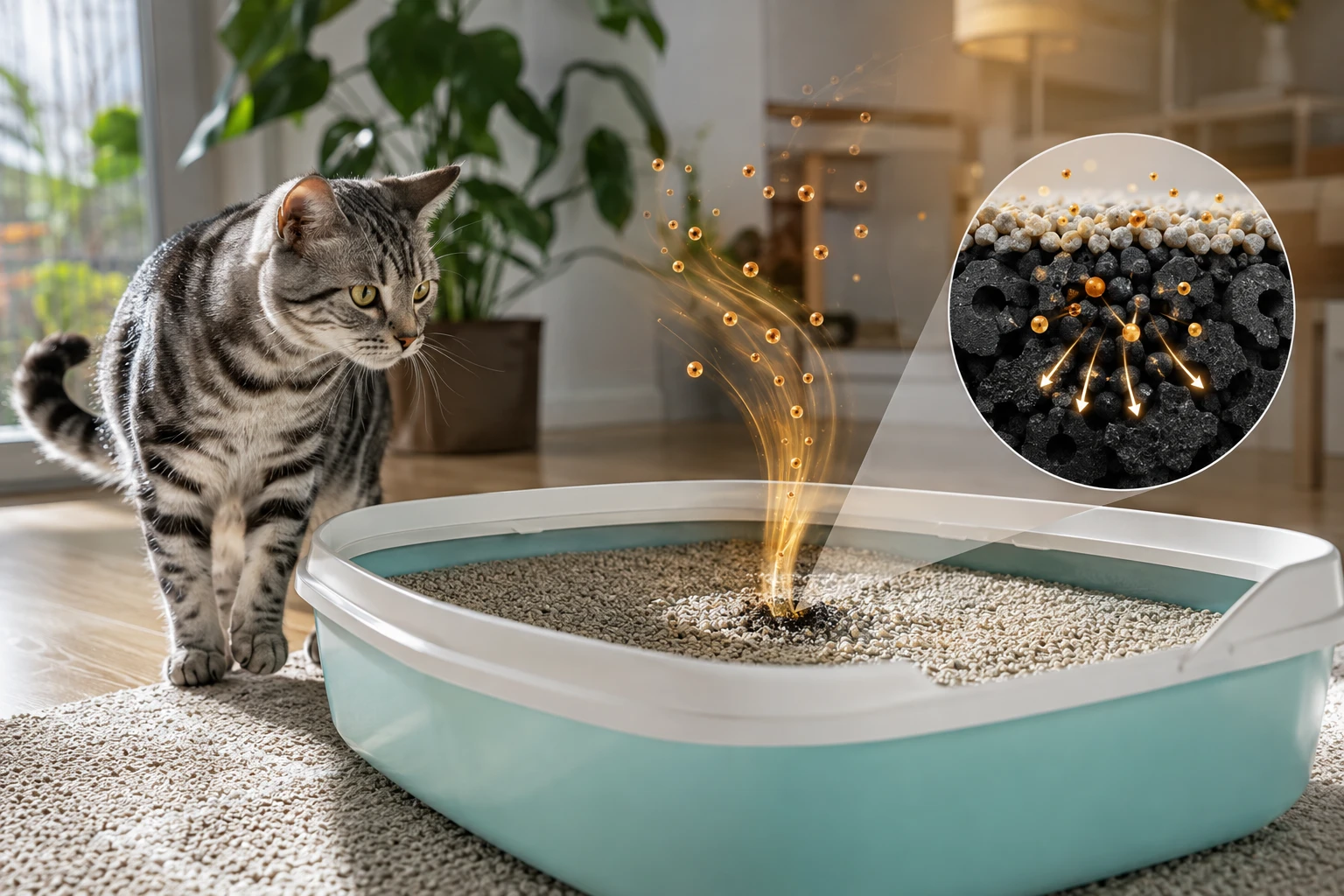
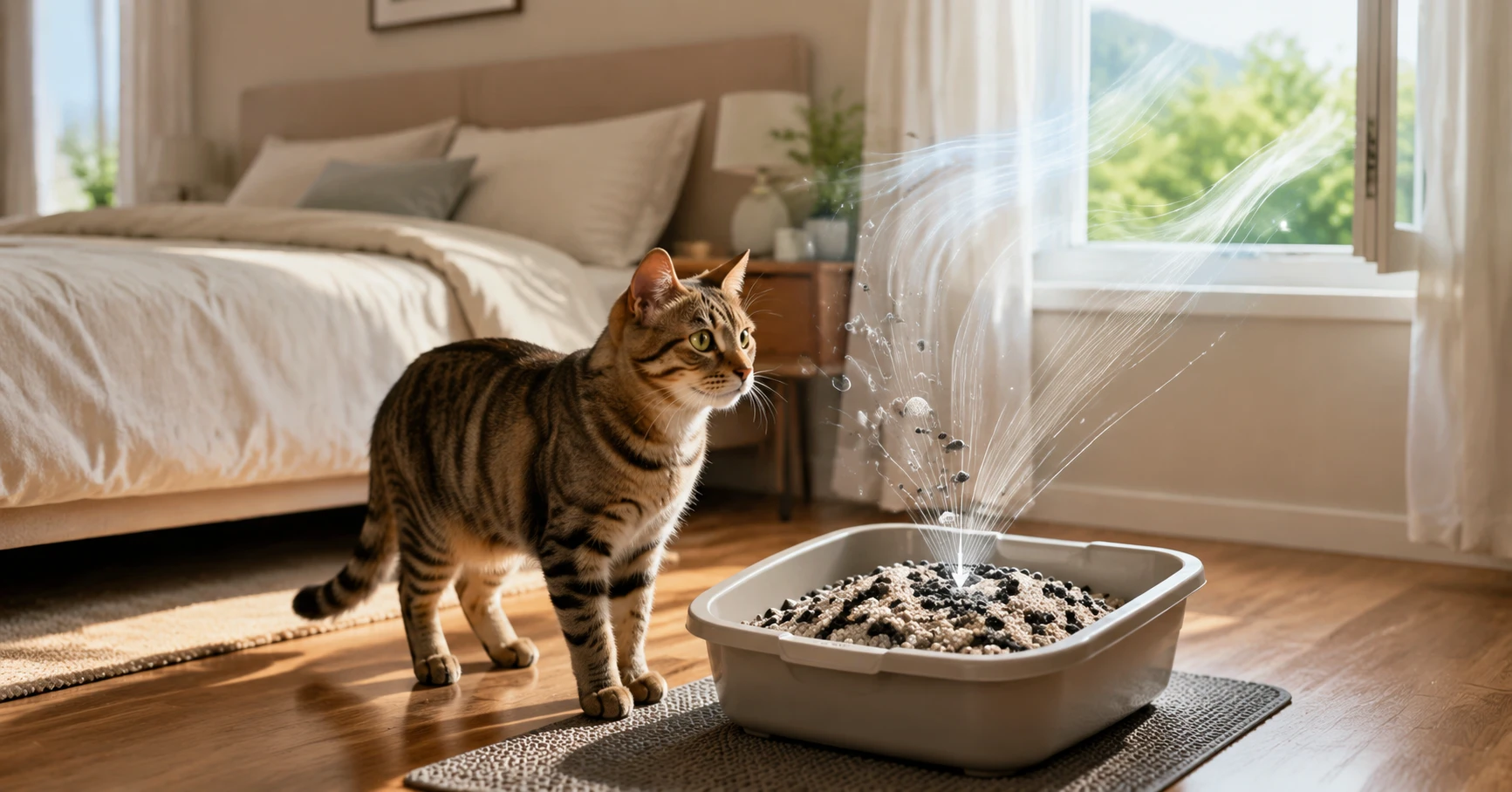
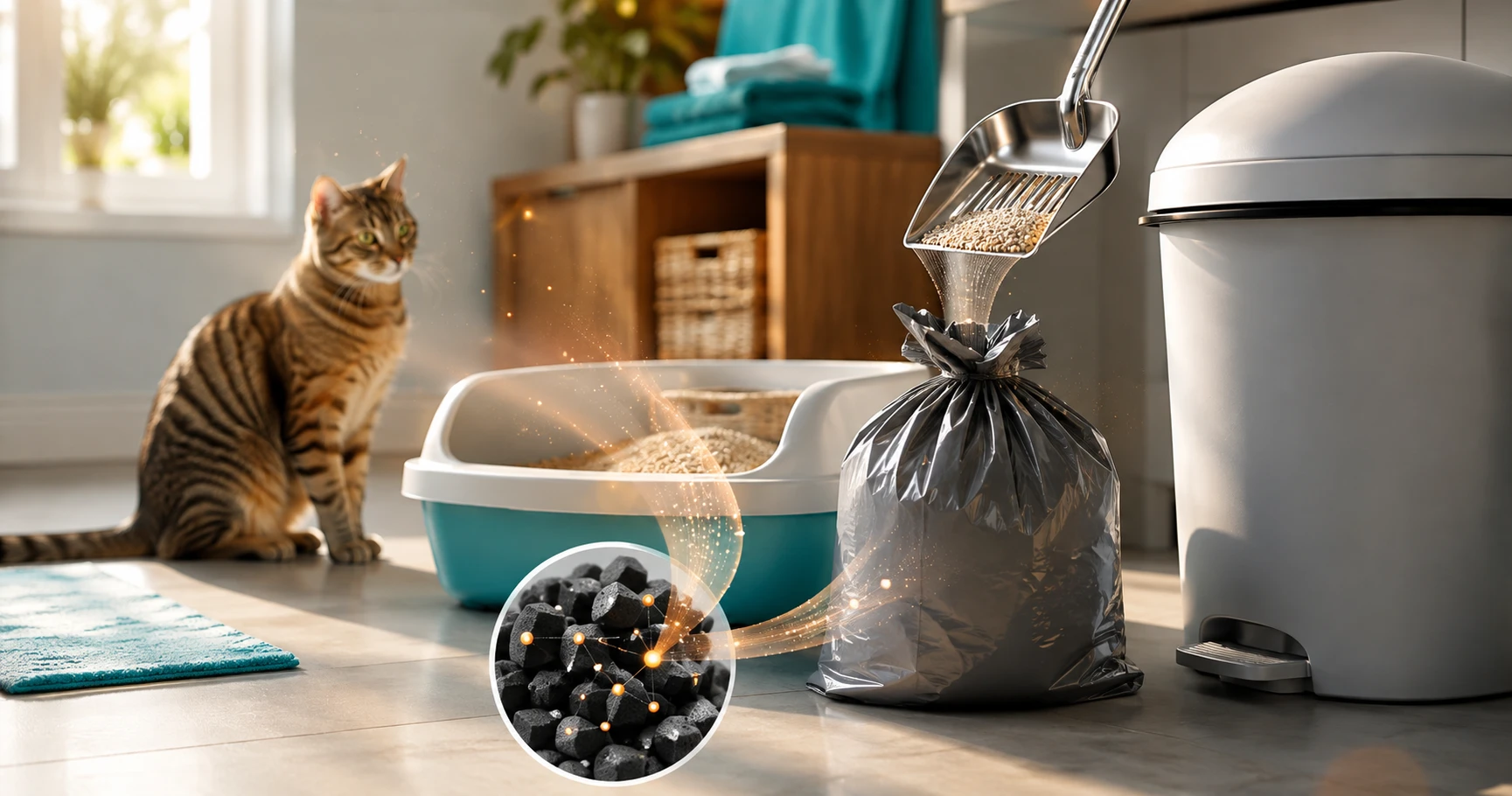
Once the cat and box are clean, reduce the airborne odor at its source. Activated carbon contains a network of pores where odor molecules can adsorb onto internal surfaces. That helps with the household smell between cleanings, but it does not sterilize litter, remove waste, clean fur, or treat urinary disease.
2-3 tablespoons of Purrify granules per litter box. Sprinkle on fresh litter, mix gently. Top up whenever the box starts giving off a smell again - no fixed schedule. Keep scooping as usual. Never apply Purrify directly to the cat.
This is the honest connection between the cat and the box: cleaner litter gives the coat less odor to pick up, while activated carbon handles odor in the litter. If the cat still smells after contamination is removed and the setup is corrected, the next step is not more deodorizer. It is a veterinary conversation.
A simple decision guide
- Dry grains, normal coat, normal behaviour: brush gently, wipe paws if needed, and improve the mat or litter choice.
- Small wet or dirty patch after box use: clean gently, inspect the box geometry and scoop routine, then monitor the next visits.
- Repeated contamination or reduced grooming: arrange a veterinary appointment and note mobility, weight, coat, appetite, and behaviour changes.
- Skin redness, wounds, severe mats, pain, diarrhea, or urine leakage: call the clinic promptly rather than experimenting with products.
- Straining with little or no urine: seek emergency veterinary care immediately.
The smell is a clue, not a diagnosis. Its best use is to direct your attention: first to the fur, then to the box, then to the cat's grooming and bathroom behaviour.
The bottom line
A cat who smells like the litter box often has a straightforward contamination problem: tracked grains, damp litter, or waste caught in long fur. Gentle cleanup and a roomier, cleaner box may solve it. A cat who repeatedly cannot stay clean, suddenly grooms less, or shows urinary signs needs more than a fresh-smelling room.
Clean the coat, fix the path through the box, and watch for a repeat. Use activated carbon in the litter for odor control, never on the animal. When the pattern changes or warning signs appear, let a veterinarian assess the cat rather than asking the smell to provide a diagnosis.
Veterinary sources
- VCA Animal Hospitals: Grooming and Coat Care for Your Cat, including bathing, mat removal, and grooming limits related to arthritis or excess weight.
- Cornell Feline Health Center: The Special Needs of the Senior Cat, including reduced grooming, skin odor, mobility, and urinary warning signs.
- Cornell Feline Health Center: Feline Lower Urinary Tract Disease, including urinary signs and the emergency presented by urethral obstruction.
- Merck Veterinary Manual: Detecting Disorders of the Kidneys and Urinary Tract of Cats, including the role of examination and urine testing.
This article provides general information and is not a substitute for veterinary examination, diagnosis, or treatment.