
Is a litter box in the bedroom safe?
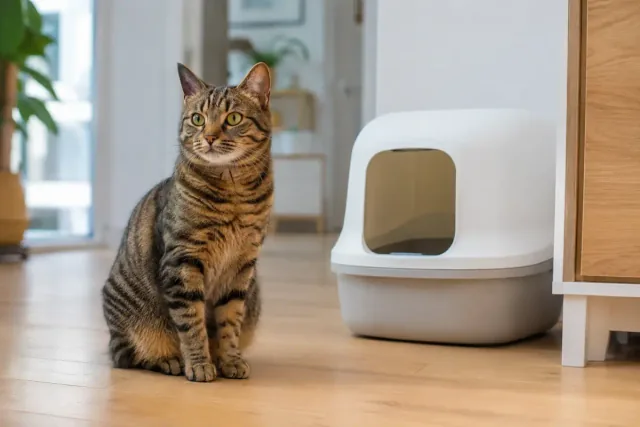
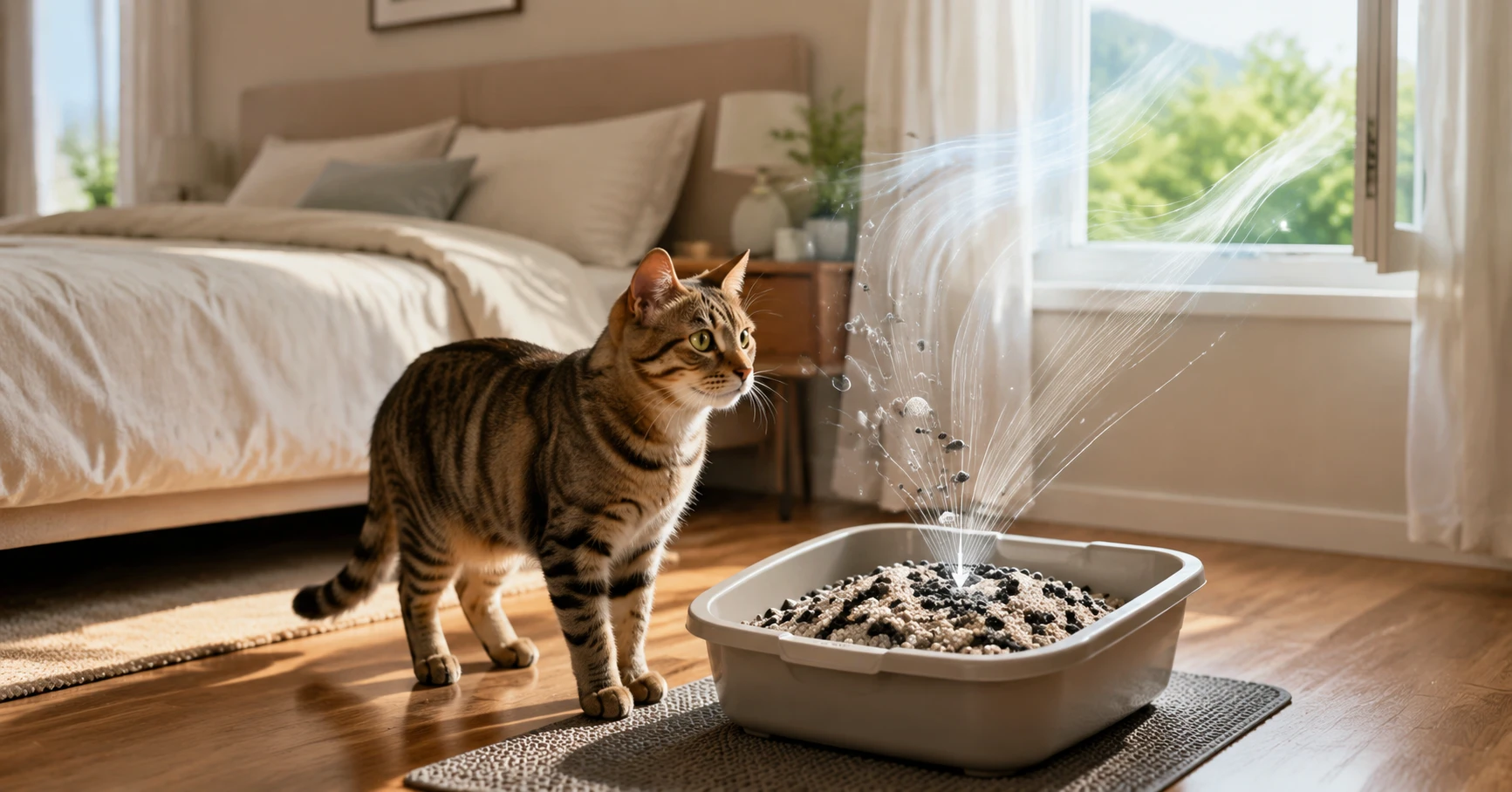
A litter box in the bedroom is not automatically unsafe. A clean box in a ventilated room is very different from a neglected box in a sealed room. The practical concerns are dust when litter is poured or scratched, waste sitting close to where you sleep, ammonia and other odours building up, and whether the arrangement bothers your breathing or sleep.
This is not another guide to the best place in the home. If you have several rooms to choose from, our litter box location guide compares bathrooms, utility rooms, hallways, and other options. This article answers the narrower question renters, studio dwellers, and housemates actually ask: if the bedroom is the only realistic place, can you make it reasonable?
For many healthy adults, the answer is yes, with disciplined care. For someone who is pregnant, immunocompromised, sensitive to dust, or finding that the box triggers asthma symptoms, the better answer may be to have another person handle the box or move it out of the sleeping room.
The honest answer about ammonia while you sleep
Urine contains nitrogen compounds that bacteria can convert into ammonia as waste sits. Ammonia is a pungent gas and, at sufficient concentration, irritates the eyes, nose, throat, and airways. That is a good reason to take a sharp ammonia smell seriously. It is not a reason to assume every bedroom litter box reaches a hazardous concentration.
Numbers found online often need context. The U.S. National Institute for Occupational Safety and Health recommends a workplace exposure limit of 25 parts per million averaged over a workday and 35 parts per million for a 15-minute exposure. The U.S. Occupational Safety and Health Administration lists 50 parts per million over an eight-hour workday. These are occupational limits, not a household bedroom test and not a promise that any lower concentration will feel comfortable.
Do not use your nose as a meter: if the room repeatedly smells sharply of ammonia, your eyes or throat sting, or you wake coughing, leave the room, ventilate it, remove the waste, and fix the setup before sleeping there again. Persistent symptoms deserve medical advice.
The most useful household rule is simpler than a parts-per-million calculation: do not let urine clumps and feces accumulate beside the bed. Scoop at least daily and again before sleep if the box has been used. Replace soiled litter according to its maker's directions, clean the box with cat-safe products, and address a suddenly strong urine smell rather than trying to cover it with fragrance.
Dust may matter before fumes do
Pouring dry litter and a cat digging in it can suspend small particles in the air. The U.S. Environmental Protection Agency notes that inhalable particles can irritate the eyes, nose, and throat and aggravate respiratory symptoms, with people who have asthma or other lung disease at greater risk. That broad indoor-air guidance does not prove that one particular litter will cause an asthma attack, but it explains why a dusty box beside a pillow can be a poor match.
Choose a genuinely low-dust litter, pour it slowly, and do full litter changes when you can open a window or run effective exhaust ventilation. Do not sweep dry dust into the air. Wipe nearby hard surfaces with a damp cloth and vacuum with a suitable filter. Keep the box off carpet if possible because scattered litter and tracked waste are easier to remove from a washable mat and hard floor.
If you have asthma, chronic lung disease, or a known sensitivity, watch your actual response. Wheezing, chest tightness, repeated coughing, or a clear symptom pattern around box cleaning is not something to push through. Ask another person to handle the dusty work and discuss recurrent breathing symptoms with a clinician. A different room is preferable when the box continues to trigger symptoms despite better litter and ventilation.
Pregnancy changes the cleaning plan
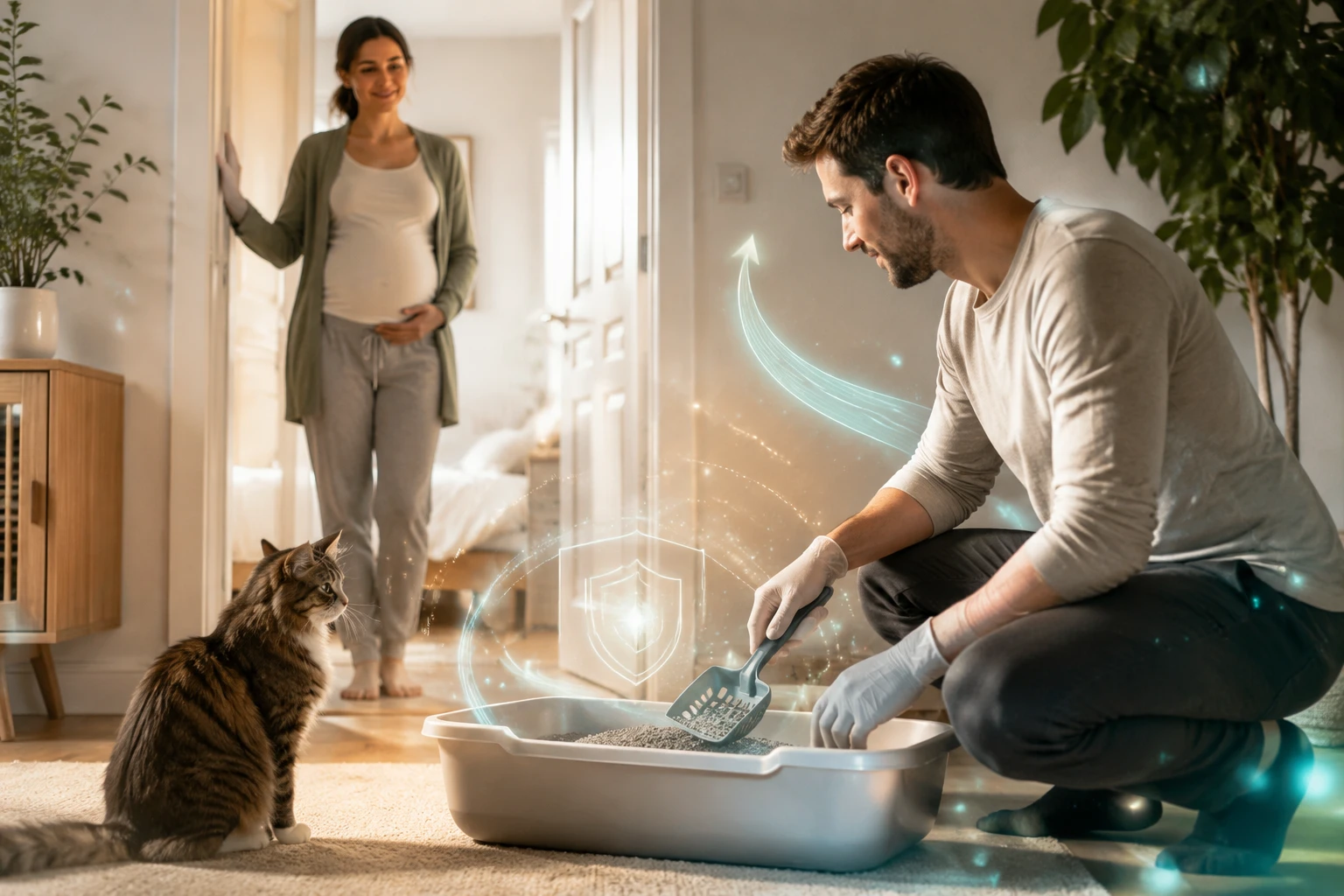
The pregnancy concern is toxoplasmosis, not simply the smell of litter. The U.S. Centers for Disease Control and Prevention advises pregnant people and people with weakened immune systems to have someone else change cat litter if possible. If that is not possible, wear disposable gloves and wash hands thoroughly with soap and water afterward.
The CDC also recommends changing the litter box daily because Toxoplasma does not become infectious until one to five days after it is shed in feces. Daily removal lowers that specific opportunity for exposure. It does not turn the box into a sterile object, so handwashing and avoiding contact with feces still matter.
A bedroom is not a special route of toxoplasmosis transmission merely because you sleep there. Handling contaminated feces is the issue. Still, when pregnancy or immune suppression is involved, moving the box out of the bedroom and delegating cleaning creates useful distance from an avoidable task. Ask your healthcare professional about your own risk, especially if you may have had a recent exposure.
Ready for a litter box you can't smell?
Free shipping. Never run out. Cancel anytime.
Start autoship →Will the box ruin your sleep?
Safety is only half the decision. Cats may scratch for several minutes, leap out at night, scatter litter, or choose the exact moment you fall asleep to use the box. Even a well-maintained box can briefly smell after a bowel movement. If you are a light sleeper, that repeated disruption can make a technically workable setup miserable.
Do not solve noise by blocking access overnight. A cat should be able to reach an appropriate litter box whenever needed. Instead, move the box as far from the head of the bed as the room allows, use a large litter-catching mat, and put a quiet washable screen between the litter area and sleeping area without trapping air around the box. Avoid closets with the door shut and cramped furniture that makes the cat feel cornered.
Keep food, water, clothing, and bedding outside the immediate litter zone. A box beside the pillow or directly under an air intake is a worse arrangement than one near an exterior window with a clear path for the cat. The goal is not to hide the box. It is to create a small, clean utility zone inside a room that otherwise remains a sleeping space.

A bedroom litter box checklist for renters
When there is no spare bathroom or utility room, build the routine around the constraints you can control:
- Give the cat permanent access. Do not place the box behind a bedroom door that housemates routinely close.
- Create distance. Put it as far from the bed, clothes, food, and water as the room permits.
- Protect the floor. Use a wide, washable mat with a waterproof layer beneath the box.
- Move air outdoors. Use an exterior window or exhaust route when weather and safety allow. Do not aim a fan so it blows litter dust across the bed.
- Scoop every day. In a sleeping room, scoop promptly after bowel movements and check the box before bed.
- Control dust. Pour slowly, damp-wipe surfaces, and avoid dry sweeping.
- Wash the box. Follow the box and litter maker's care directions, and never mix cleaning chemicals.
- Watch the cat. The location must feel quiet, accessible, and escape-friendly, not merely convenient for the human.
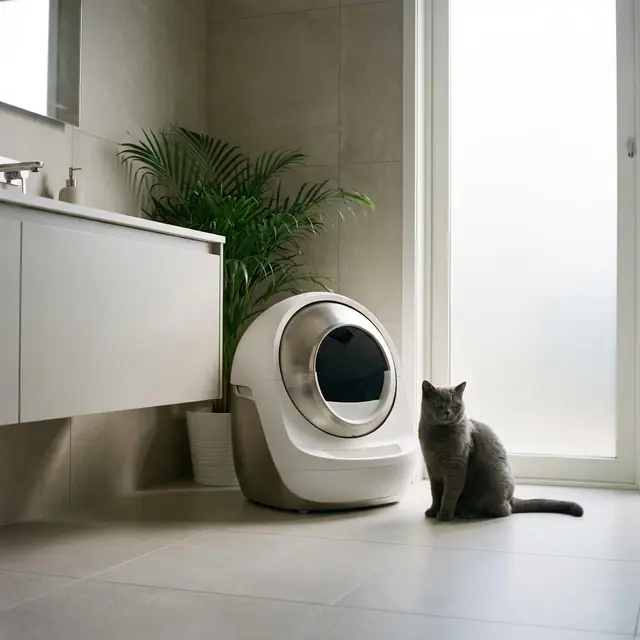
A covered box is not automatically better. It may hide the view and contain scattered litter, but it can also concentrate odour inside and become unpleasant for the cat if it is too small or poorly maintained. Choose based on the cat's comfort and cleaning reality, not on the promise that a lid makes waste disappear.
Odour control that does not disguise a dirty box
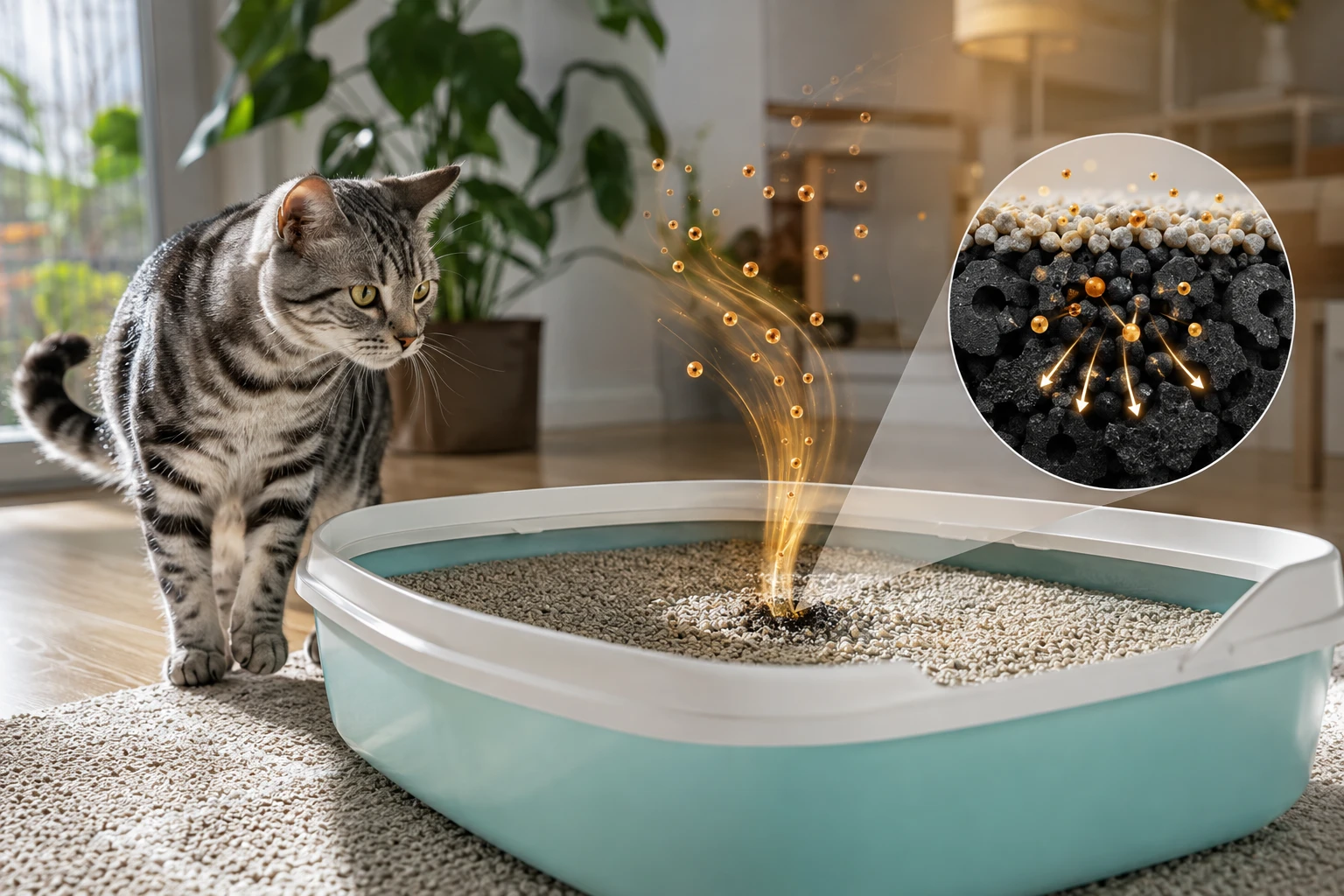
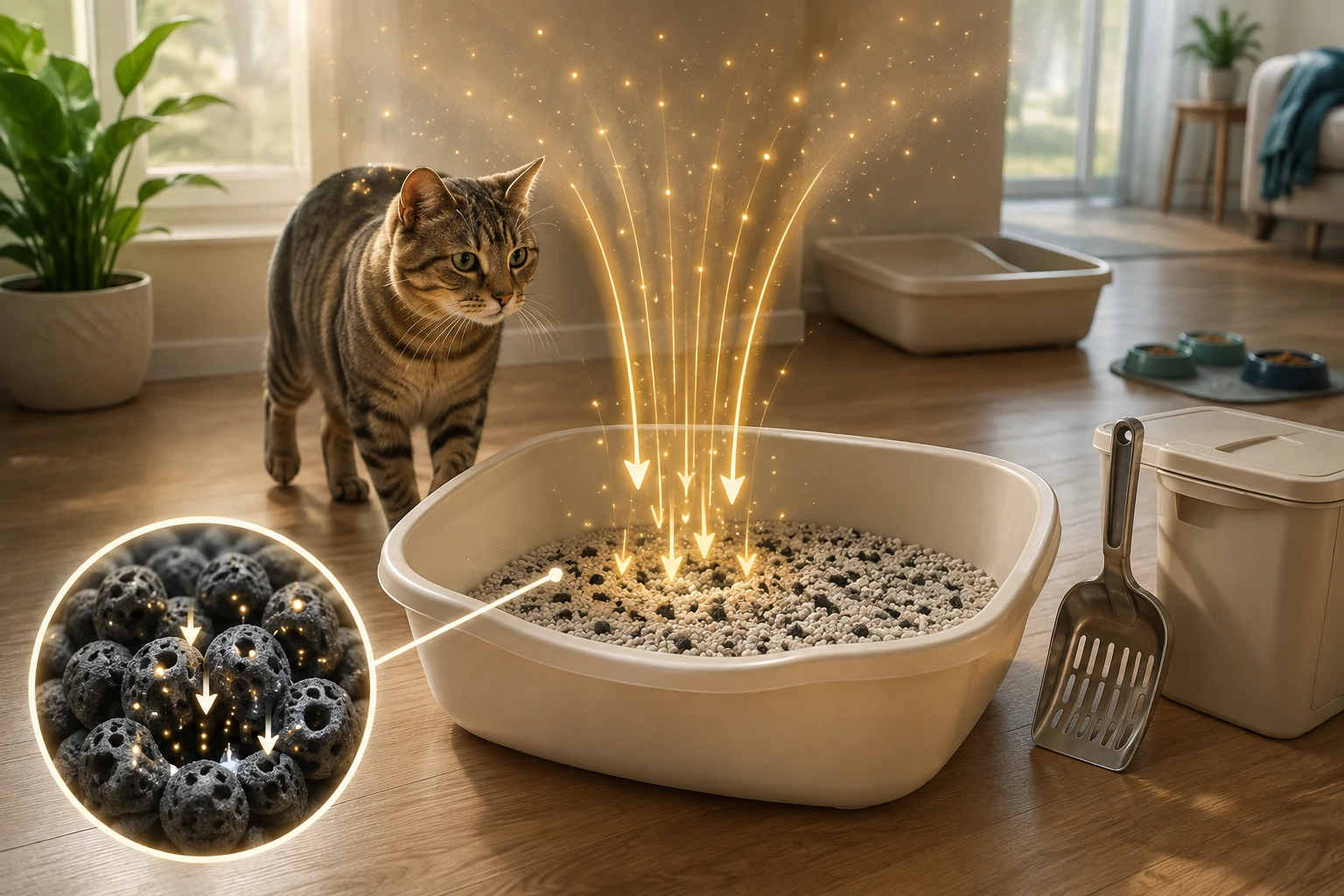
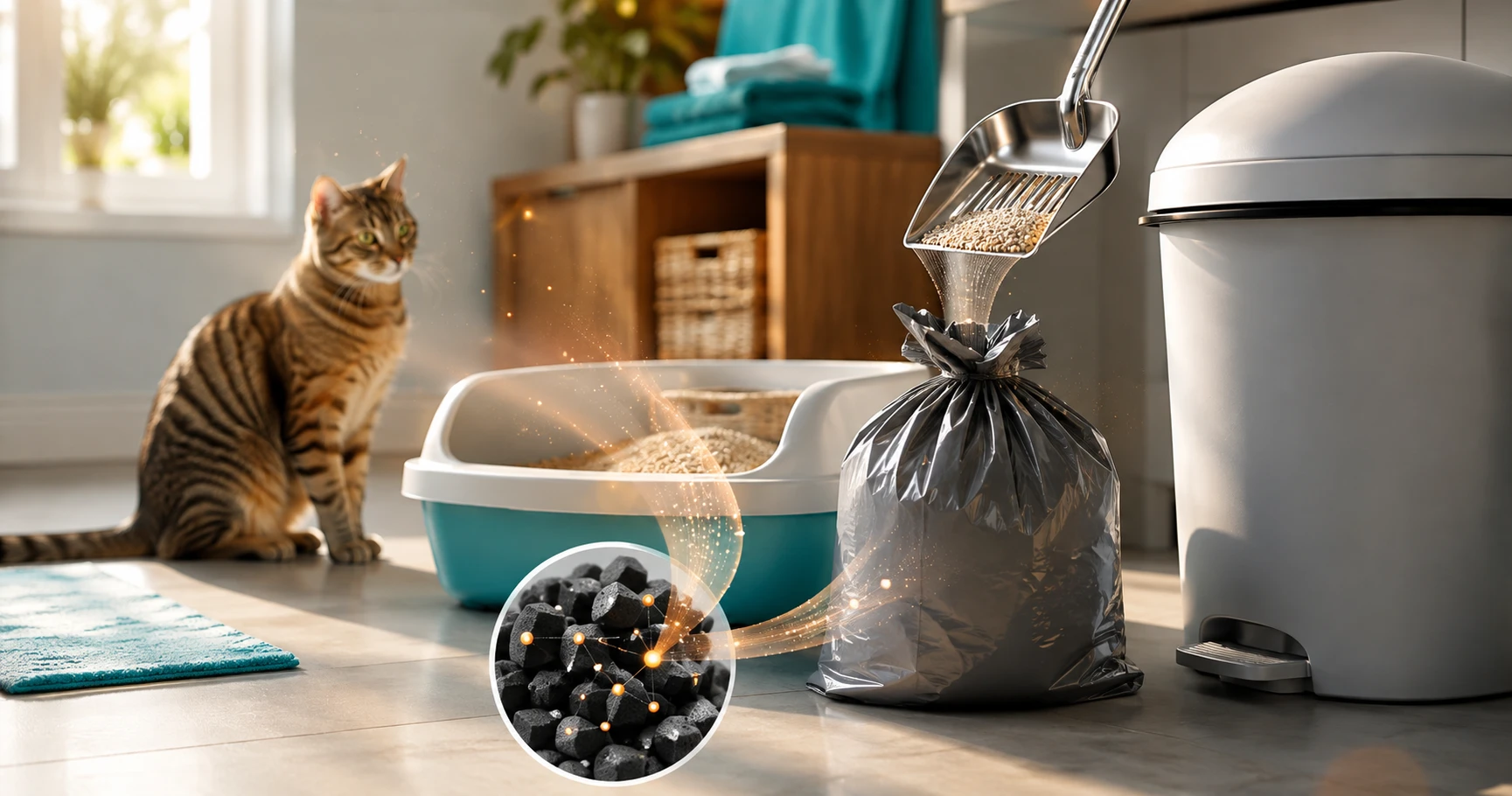
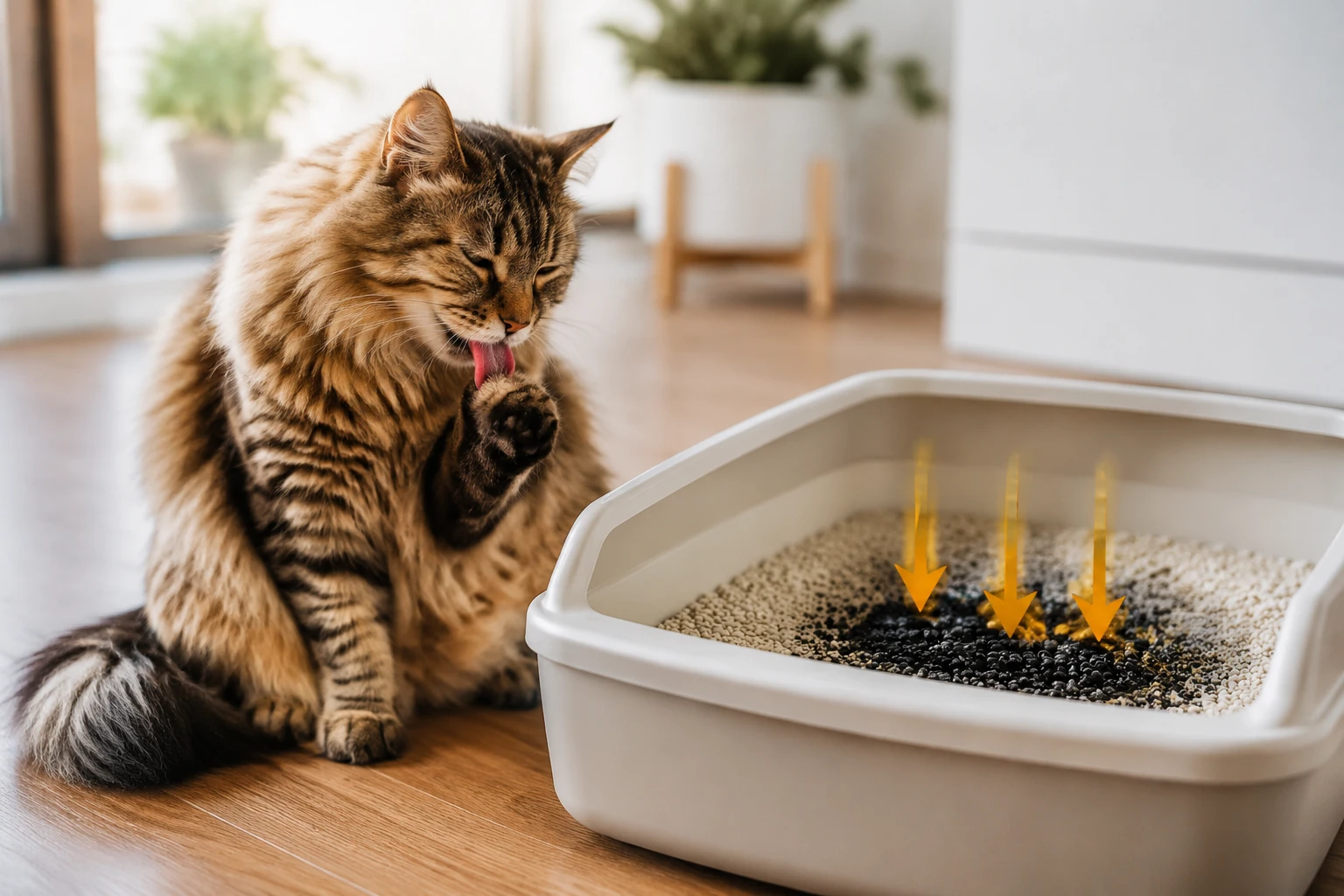
Fragrance can make a bedroom smell busier without removing the source. The first steps are always scooping, ventilation, and cleaning. An activated carbon additive can help adsorb airborne odour compounds at the litter surface between cleanings, but it does not make old waste safe to leave in place and it does not treat a health problem in the cat.
2-3 tablespoons of Purrify granules per litter box. Sprinkle on fresh litter, mix gently. Top up whenever the box starts giving off a smell again - no fixed schedule. If you use any additive, introduce it without creating a dust cloud and make sure your cat continues to use the box comfortably.
A suddenly stronger urine smell can also be a clue that cleaning frequency, litter performance, hydration, or the cat's bathroom habits changed. Our guide to cat urine odour and headaches explains why irritation should not be dismissed, while the safe deodorizing guide covers a source-first routine.
When the bedroom is the wrong place
Move the box or change who handles it when a pregnant or immunocompromised person can avoid the task, when dust repeatedly triggers breathing symptoms, when the room cannot be ventilated, or when waste routinely sits long enough to produce a sharp ammonia smell. It is also the wrong arrangement if the cat avoids the box, gets ambushed by another pet, or loses access whenever the door closes.
If the room causes eye or throat irritation, coughing, wheezing, nausea, or headaches, step into fresh air and correct the source. Seek medical advice for symptoms that are severe, persist, or recur. If the cat suddenly urinates more often, strains, cries, produces very little urine, or stops using the box, contact a veterinarian. A litter location problem and a medical problem can look similar from across the room.
If you do have alternatives, use the room-by-room placement guide to compare them. That guide answers where a box works best. This one answers whether sharing your sleeping air with the box is manageable.
The bottom line
You can put a litter box in a bedroom when the room has useful airflow, the box stays far from the bed and fabrics, waste is removed promptly, dust is controlled, and both cat and human tolerate the setup. That is a conditional yes, not a blanket endorsement.
A dirty box in a closed sleeping room is a bad plan. A clean, accessible box in a ventilated studio can be a reasonable compromise. Let the actual room, the cleaning routine, your health, and your cat's behaviour decide.
Health and safety sources
- CDC/NIOSH Pocket Guide: Ammonia, including irritation hazards and occupational exposure limits.
- OSHA Chemical Data: Ammonia, including the U.S. workplace limit and NIOSH recommendations.
- U.S. EPA: Indoor Particulate Matter, including respiratory irritation and higher-risk groups.
- CDC: Preventing Toxoplasmosis, including daily litter changes.
- CDC: People at Increased Risk for Toxoplasmosis, including litter-box guidance for pregnancy and weakened immunity.
This article provides general information and is not a substitute for medical or veterinary advice.