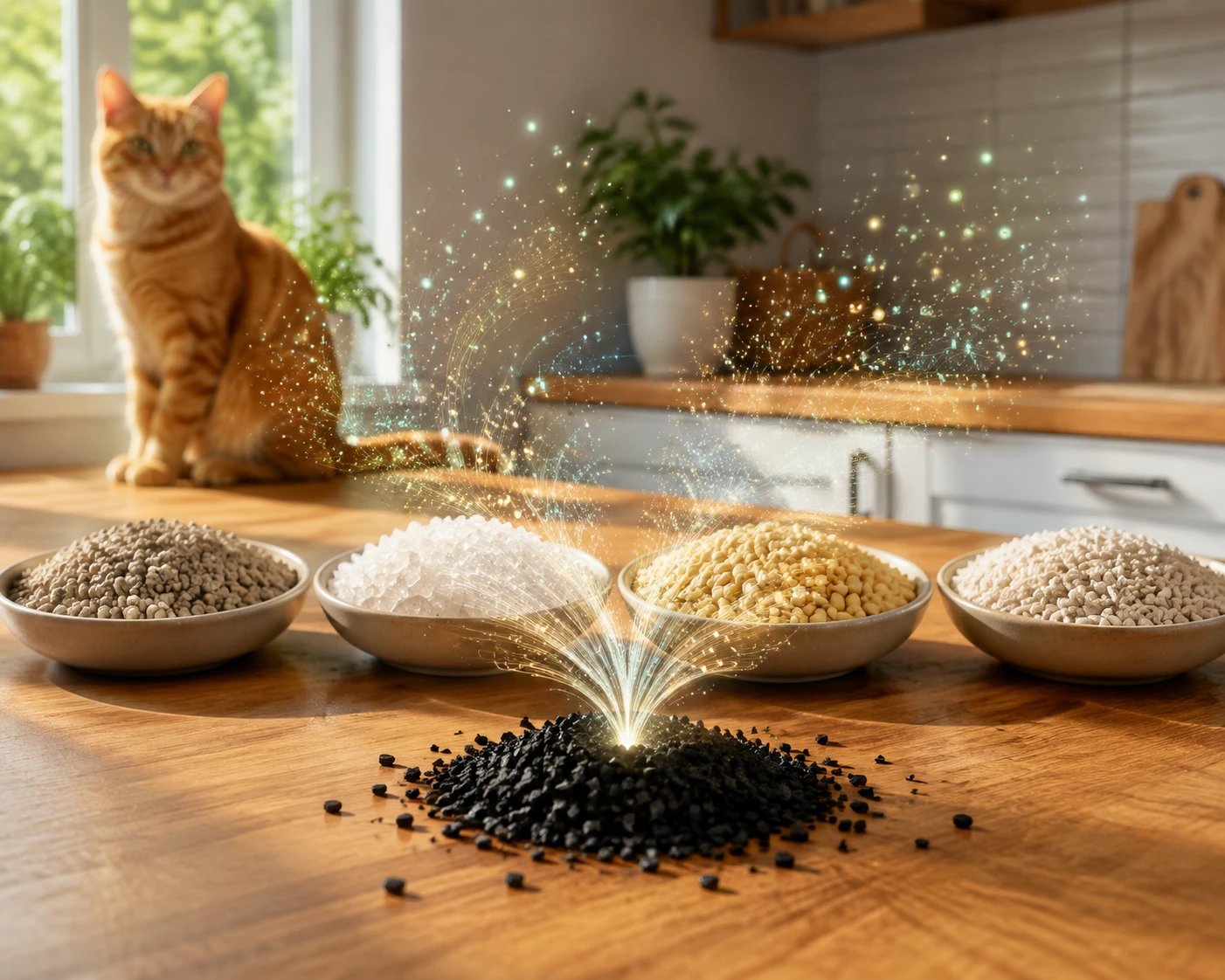

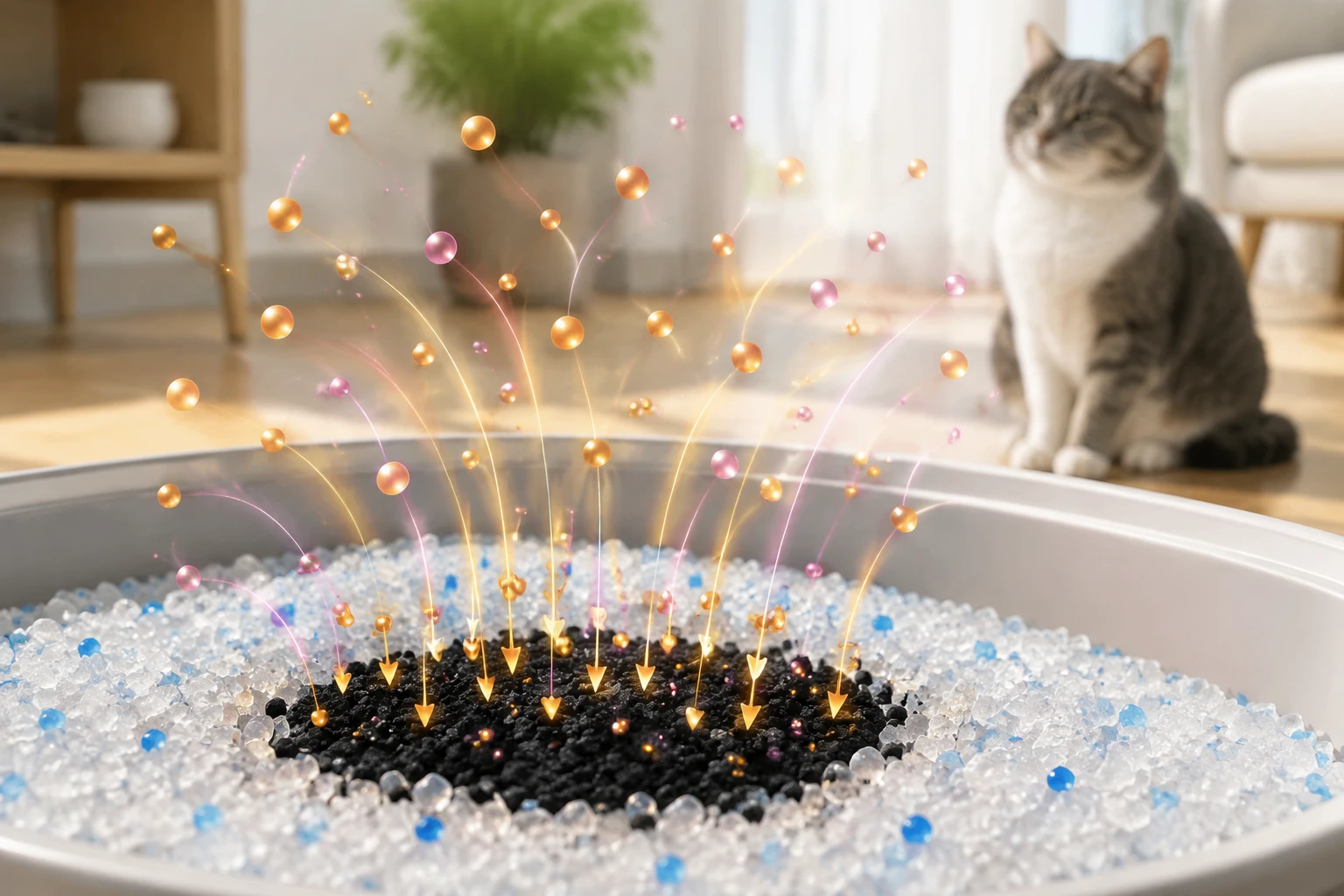
Does crystal litter actually control odor?
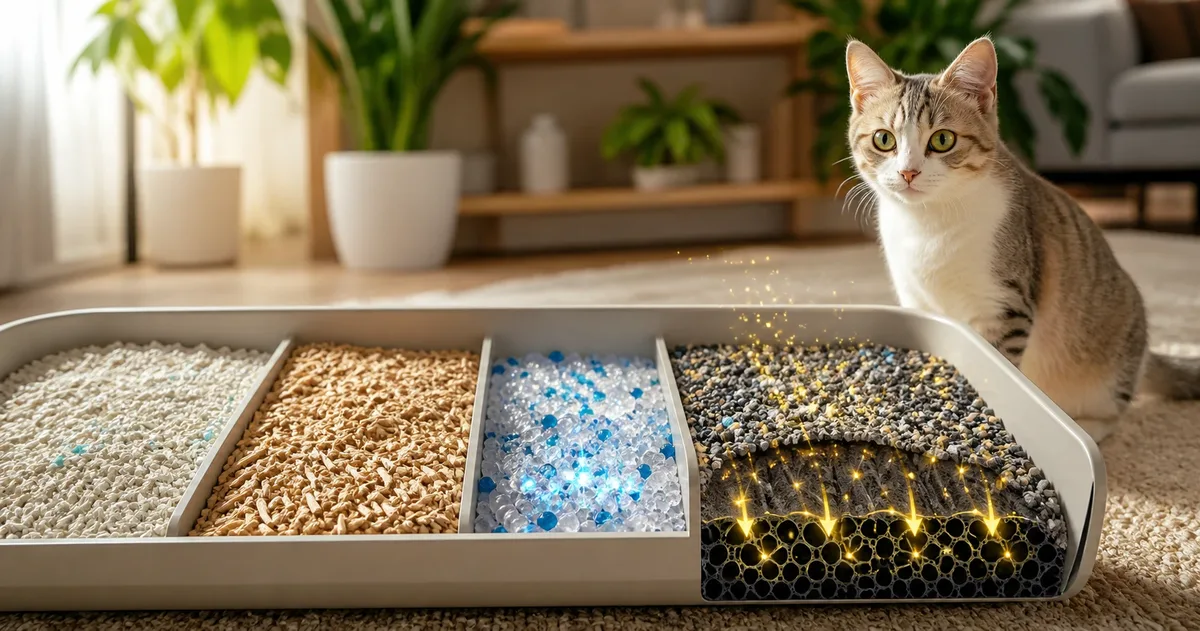
Yes, especially when the box is fresh, but its strongest skill is moisture control. Silica gel is a porous material that adsorbs water. In a litter box, that helps pull moisture away from the surface. A drier surface can smell better, but dryness is not proof that every odor-producing residue has left the box.
That distinction explains the split reviews. One household gets a dry, quiet box for weeks. Another smells urine long before the crystals look spent. Both can be reporting honestly because litter depth, urine volume, humidity, stirring, solids removal and the number of cats change how quickly the bed reaches its limit.
The practical verdict: crystal litter is good at managing urine moisture and can deliver good odor control while its usable surface is available. It does not replace daily solid removal, and once liquid pools or odor returns quickly after stirring, the bed needs attention.
This is an odor test, not another crystal litter buying guide
If you are choosing among brands, particle sizes or tracking claims, start with our crystal litter buying guide. This article answers a narrower question: when a crystal box smells, what failed and what should you change?
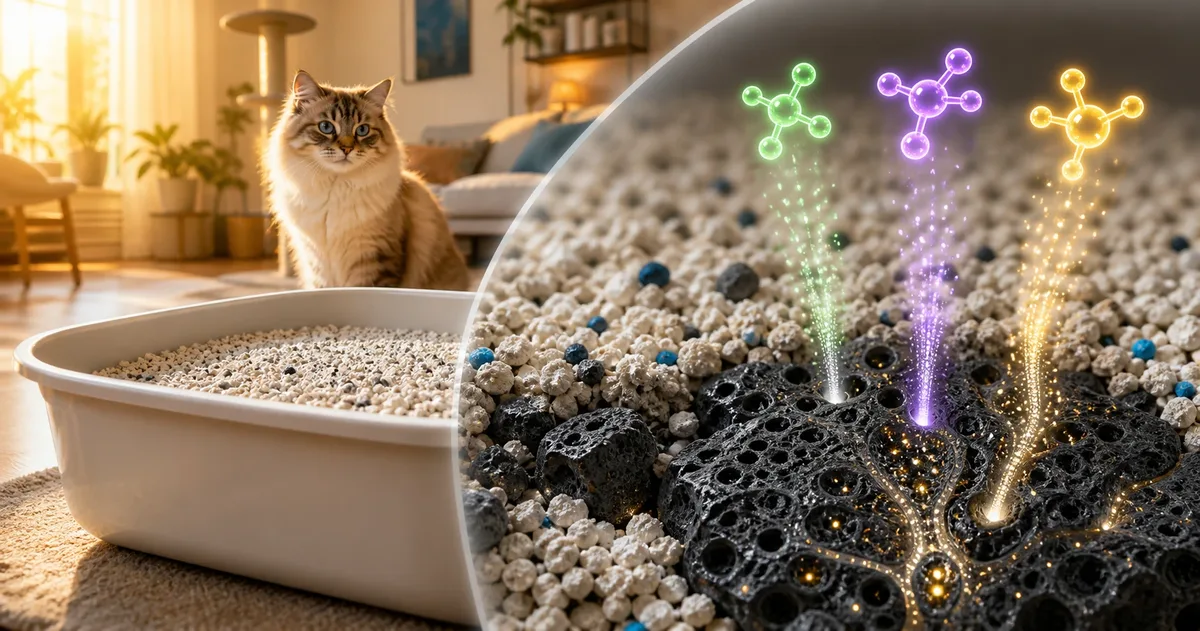
Think of the box as three separate odor jobs. The crystals manage liquid. You remove feces and visible waste. Airflow and an adsorbent such as activated carbon handle some of the odor molecules that become airborne. Asking one material to do all three jobs is how the word "month" on a bag turns into a disappointing week at home.
Why a dry crystal box can still smell
Silica gel is amorphous, porous silica. Its internal surfaces attract water molecules, which is why the same material is widely used as a desiccant. In the box, liquid spreads into that pore network instead of immediately forming a removable clump.
The water job and the odor job overlap, but they are not identical. Cat urine contains compounds that can produce volatile, sulfur-containing malodors as they change over time. A peer-reviewed study on feline urine malodor identified 3-mercapto-3-methyl-1-butanol as an important odorant. Removing moisture can slow the mess and reduce what you perceive, but the residue remains until the litter is replaced.
Feces are simpler. Crystal litter does not make them disappear. The Merck Veterinary Manual recommends scooping every day, and that matters even when the bag promises long service. A box can have plenty of liquid capacity left and still smell because yesterday's solid waste is sitting on top.
Read the smell before replacing the litter
| What you notice | Likely issue | First move |
|---|---|---|
| A solid-waste smell | Waste is still in the box | Scoop now and keep a daily routine |
| A sharp urine smell in one area | The bed is being used unevenly | Stir according to the litter maker's instructions |
| Wetness or pooling at the bottom | The bed is saturated, too shallow or overloaded | Replace it and check depth and box capacity |
| Odor returns soon after a full change | Residue on the box, multiple cats or a health change | Wash the box, review the setup and call a vet if habits changed |
Do not wait for a universal day on the calendar. Formulas differ, and so do cats. Follow the manufacturer's maintenance directions and use the box itself as feedback. If urine output, frequency, straining or litter-box behavior changes suddenly, treat that as a health question rather than an odor-control puzzle.
Ready for a litter box you can't smell?
Free shipping. Never run out. Cancel anytime.
Start autoship →Crystal litter vs clumping litter for odor
Crystal litter keeps liquid in the bed. Its porous particles take up moisture, and the bed is maintained until replacement. That reduces wetness and avoids carrying heavy urine clumps to the garbage every day.
Clumping litter packages liquid for removal. If the clump forms well and you scoop it promptly, much of the urine residue leaves the box sooner. The tradeoff is more frequent scooping of heavier waste, and performance varies when clumps crumble or stick to the bottom.
Neither mechanism wins in every home. Crystal litter often suits someone who values a dry bed and low day-to-day litter removal. Clumping litter often suits someone who wants urine physically removed each day. For odor, the better choice is the routine you will maintain and the texture your cat will reliably use.
A simple home check for crystal litter odor control
- Start clean. Wash and dry the box, then add the depth recommended on your litter package.
- Remove solids daily. Do not let the long-change claim turn into a no-scoop routine.
- Stir only as directed. The goal is to distribute use through the bed, not grind crystals into smaller pieces.
- Check the bottom. Pooling or persistent dampness means the bed is no longer handling the liquid load.
- Note when odor returns. Compare that point with wetness, number of cats, humidity and any change in urine volume.
This is a diagnostic routine, not a laboratory product test. It helps you separate a maintenance problem from a capacity problem without pretending every home has the same result.
Can you add activated carbon to crystal litter?
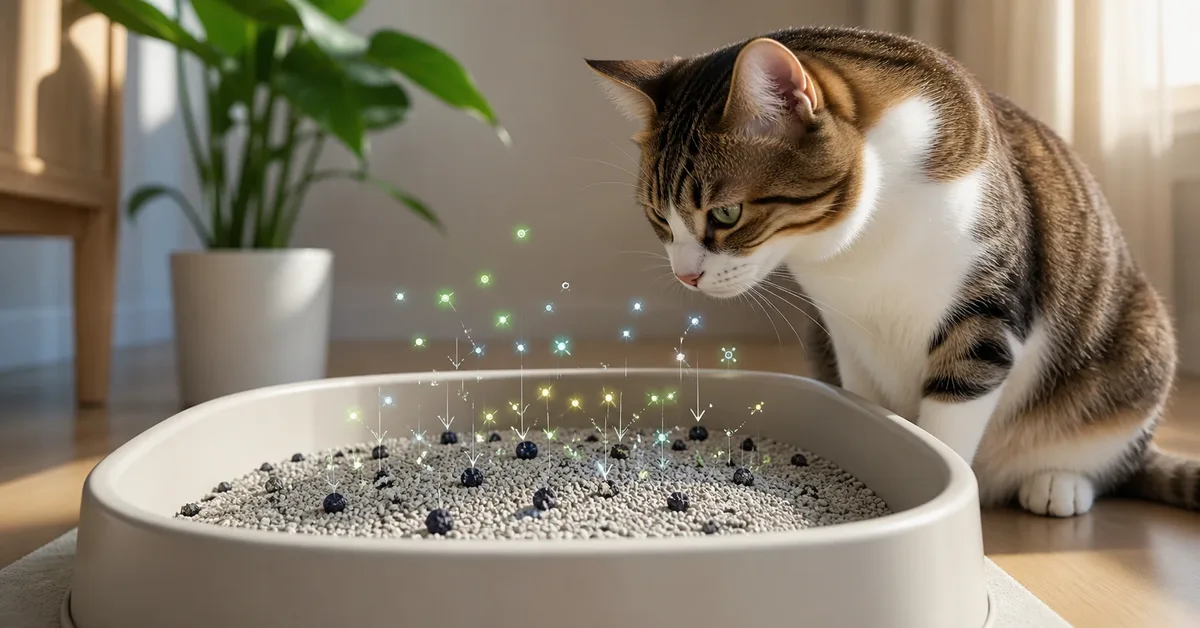
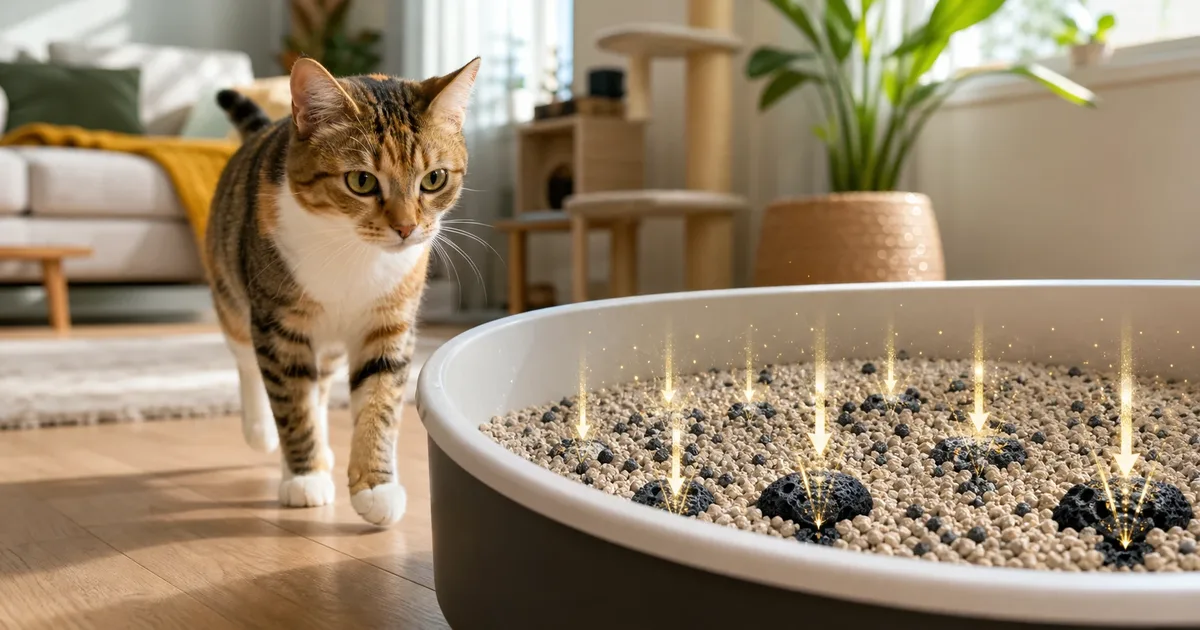
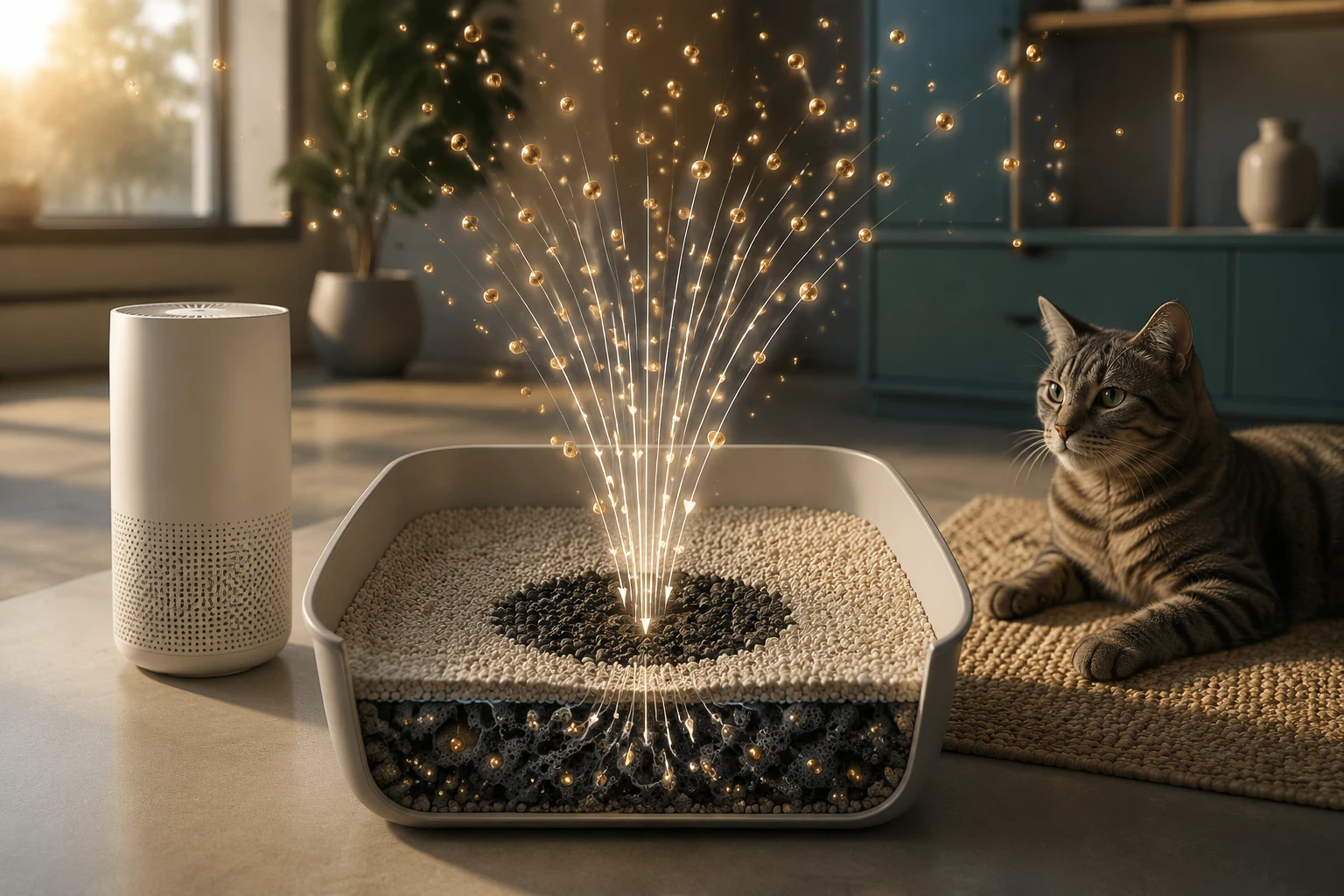
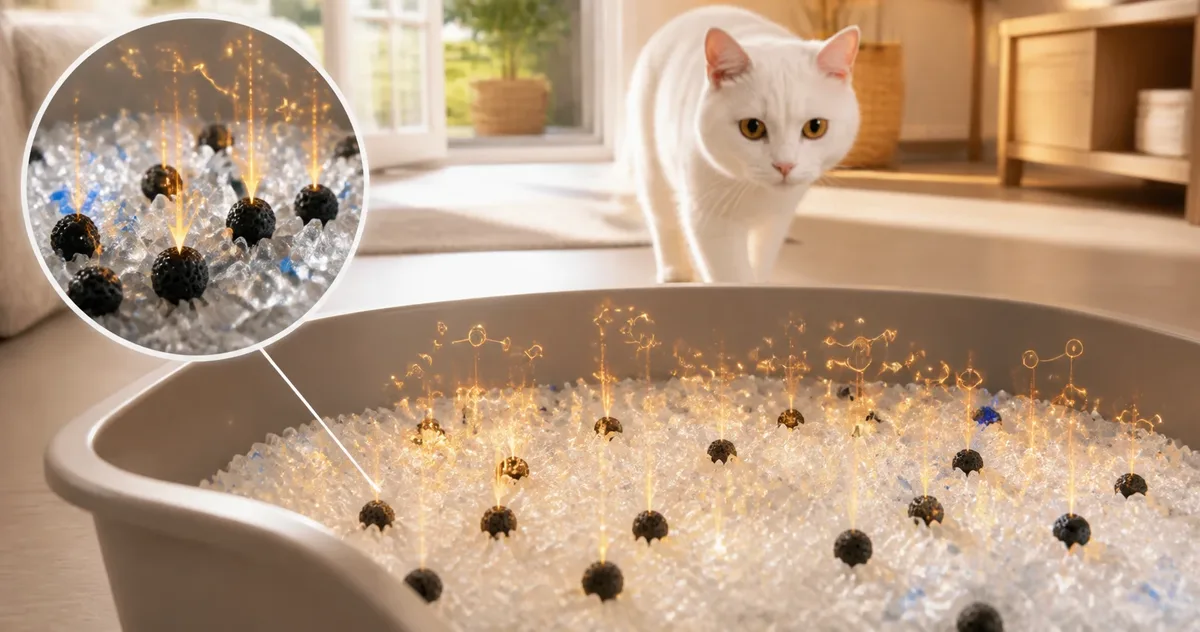
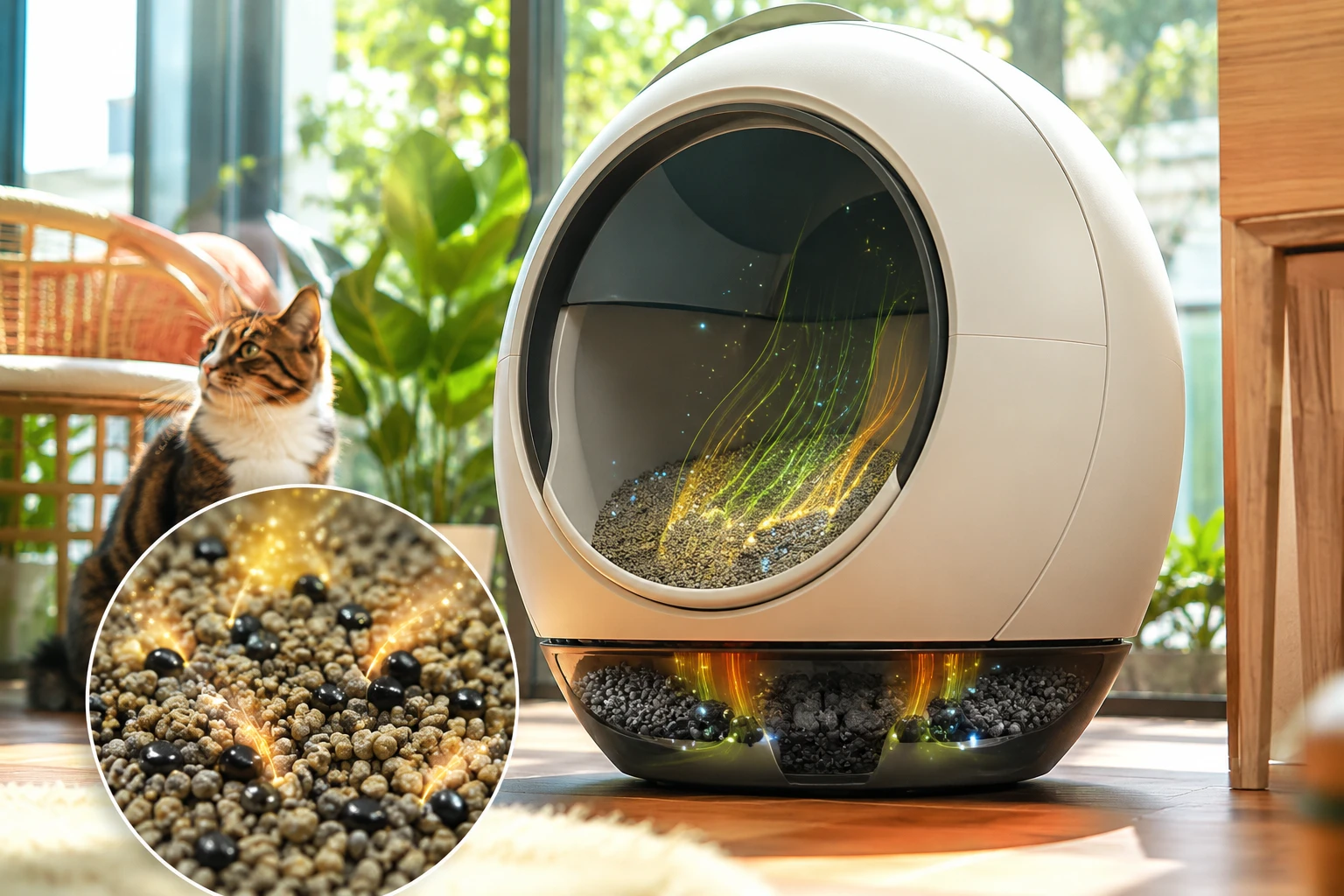
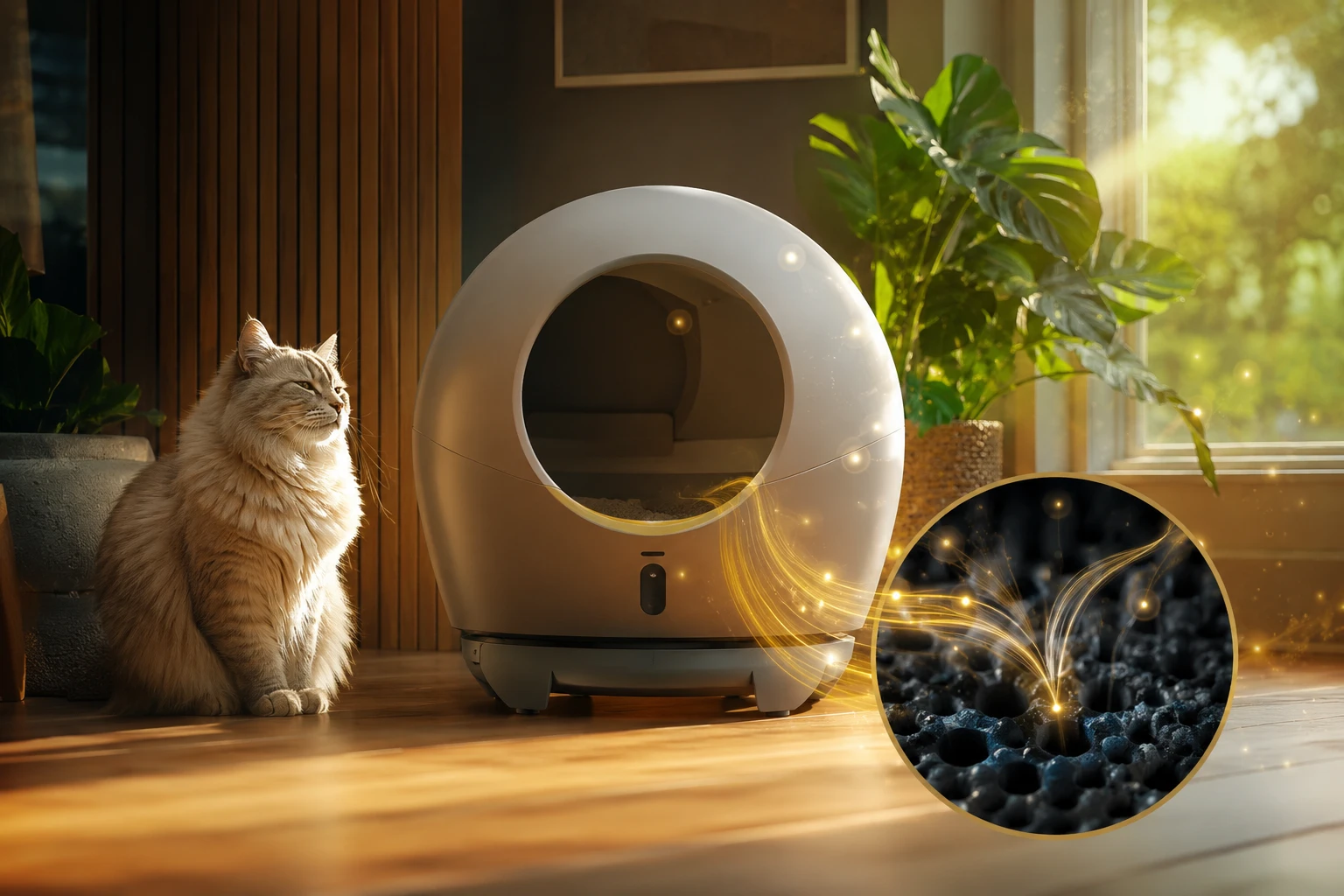
Yes. The two materials do different jobs. Silica gel is strongly associated with water adsorption. Activated carbon is widely used as an adsorbent for gaseous pollutants and odors. The U.S. Environmental Protection Agency also notes that every adsorbent has a finite capacity, which is why more is not the same as forever.
For Purrify, use 2-3 tablespoons of Purrify granules per litter box. Sprinkle on fresh litter, mix gently. Top up whenever the box starts giving off a smell again - no fixed schedule. Keep scooping solids and replace the crystal litter when it is wet, saturated or due under its own instructions.
The combination is especially logical when you like the dry feel of crystals but notice odor before the liquid capacity seems exhausted. It is not a way to stretch a saturated bed. If urine is pooling, start fresh.
The final verdict
Crystal litter does control odor, but indirectly and within limits. It earns its reputation by managing moisture well. It loses that reputation when saturation, uneven use or skipped scooping leaves odor-producing material in the box.
Judge it by the box, not the calendar: remove solids daily, follow the stirring directions, watch for dampness at the bottom and change the bed when it stops recovering. If the crystals stay pleasantly dry but the room still picks up an odor, activated carbon can add a separate odor-adsorption layer without changing the litter type your cat already accepts.
Frequently asked questions
Why does crystal litter smell even when it looks dry?
Is crystal litter better than clumping litter for odor?
How do I know crystal litter is saturated?
Can Purrify be mixed with crystal litter?
Sources
- Renewable and Sustainable Energy Reviews: inorganic sorbents for water-vapor adsorption, including the porous structure and water adsorption of silica gel.
- Journal of Feline Medicine and Surgery: control of felinine-derived malodor in cat litter, on an important volatile odorant from cat urine.
- Merck Veterinary Manual: providing a litter box for a cat, including daily scooping and litter preferences.
- U.S. EPA: activated carbon adsorbers, on adsorption of gaseous pollutants and finite adsorbent capacity.