
Skip to main contentSkip to productsSkip to testimonials
PurrifyPurrify
Products
For Retailers
Learn
BlogFun & Games
About
Get a free sample
Purrify - Premium Activated Carbon Cat Litter Additive - Return to Home PagePurrify - Premium Activated Carbon Cat Litter Additive - Return to Home Page

Love your cat, lose the smell. Water-filter grade activated carbon eliminates ammonia odors - no perfumes, just science. Try FREE (just pay shipping). Made in Canada, ships across North America.

Products

  • Get Purrify Near You
  • Buy Online
  • Free Sample
  • Standard 50g
  • Large Pack
  • Compare Sizes

Learn

  • How It Works
  • FAQ
  • All Tools
  • Cat Litter Guide
  • Ammonia Science
  • Safety Information
  • Glossary
  • Odor Solutions
  • Science
  • Ammonia Control

Company

  • About Us
  • Blog
  • Fun & Games
  • Case Studies
  • About Purrify
  • Team
  • Editorial Policy
  • Testing Policy
  • Referral Program
  • Returns Policy
  • Documents
  • For Retailers
  • B2B Inquiry
  • Affiliate Program
  • Contact
  • Shipping & Returns

Locations

  • All Locations
  • Canada Wide
  • Montreal
  • United States
  • Stores in Quebec

Resources

  • Odor Control Litter Guide
  • Water & Carbon Science
  • PFAS Canada
  • Comparison Lab
  • Comparison Lab Methodology
  • Ammonia Health Risks
  • Litter Box Smell Elimination
  • Multiple Cats Odor Control
  • Natural Cat Litter Additive
  • Senior Cat Litter Solutions
  • How to Neutralize Ammonia
  • Contact Support
  • Retailer Get Started
  • Retailer Reorder
  • Free Trial
Privacy PolicyTerms of ServiceSitemap

© 2026 Purrify | All Rights Reserved

BlogScience & EducationWinter Litter Odor Playbook: Zero Smell | Purrify
Science & Education

Winter Litter Odor Playbook: Zero Smell | Purrify

When windows stay shut all winter, ammonia levels spike 3x faster than in summer. This seasonal playbook covers humidity control, activated carbon dosing, and airflow micro-habits that keep your home smelling clean - even in the coldest months.

PPurrify Research Lab·June 3, 2026·Updated June 3, 2026·12 min read
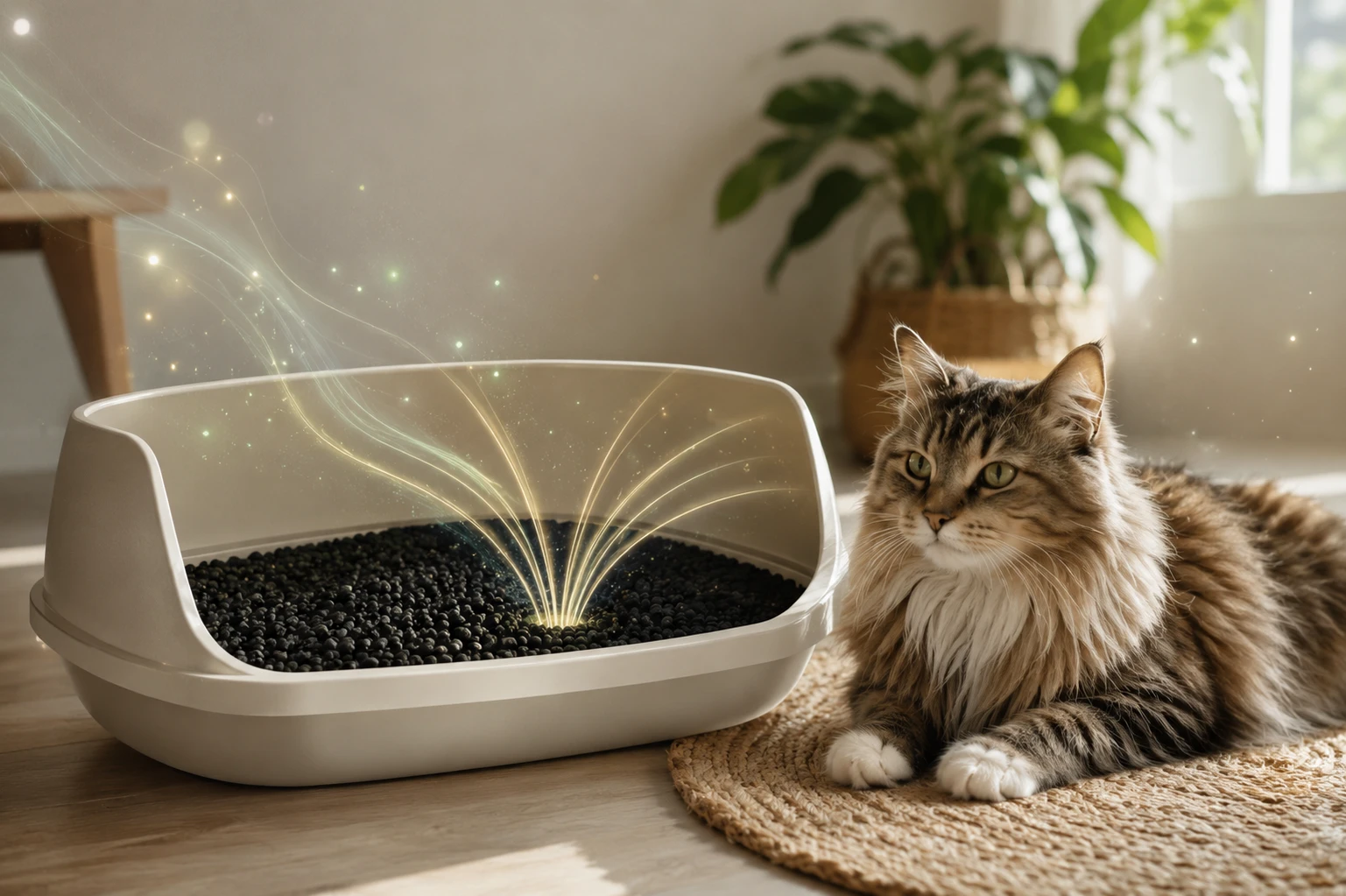
Cat litter deodorizer - activated carbon granules keeping litter box fresh

On this page

  1. Why Cat Litter Smells Worse in Winter
  2. The Ammonia Spike: What the Numbers Say
  3. Humidity Control: The Hidden Lever
  4. Three Humidity Fixes You Can Implement This Week
  5. Activated Carbon Dosing for Winter
  6. Winter Dosing Protocol by Household Size
  7. Airflow Micro-Habits That Actually Work
  8. Five Airflow Micro-Habits for Cold-Climate Apartments
  9. Your Winter Litter Odor Checklist
  10. Weekly Tasks
Free Sample

FREE Sample (Just Pay S&H)

Get FREE Sample

Why Cat Litter Smells Worse in Winter

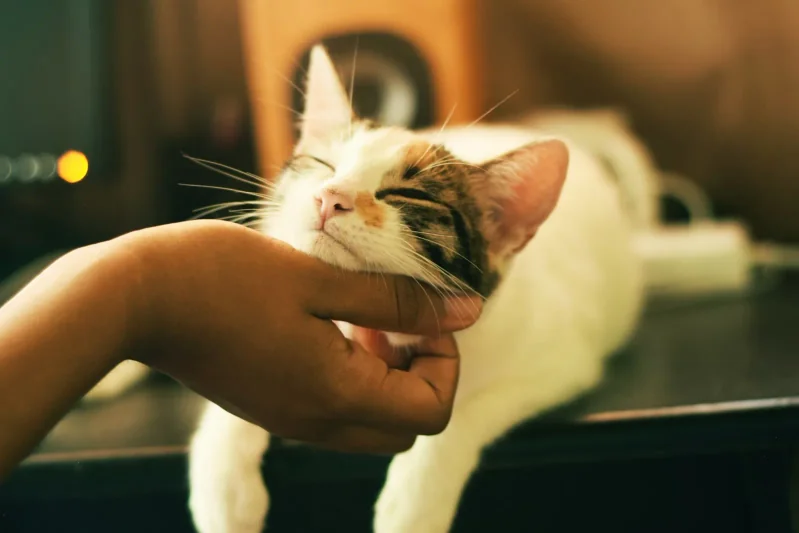
Cat litter deodorizer - activated carbon granules keeping litter box fresh

Winter air quality challenges make litter box odor management critical for indoor cat owners | Photo by Kote Puerto on Unsplash

Here is a fact that stops most cat owners cold: when your windows stay shut for winter, ammonia from a single litter box can spike to concentrations 3 times higher than what you would measure on a breezy July afternoon. You did not suddenly get a smellier cat. You lost your ventilation buffer - and that changes everything about how you need to manage cat litter smell in winter.

If you live in a cold-climate apartment, you already know the feeling. October arrives, the windows close, and within two weeks the entryway has a new permanent resident: that sharp, eye-watering ammonia edge that no amount of scented candles can fully mask. The problem is not your cleaning routine. The problem is physics, and the solution is a targeted seasonal strategy.

This playbook covers exactly that - the science behind why cat litter odor gets worse with closed windows, the three environmental levers you can actually control (humidity, carbon dosing, and airflow), and a printable checklist you can put on your fridge today. By the end, you will have a concrete winter protocol that keeps ammonia levels manageable without cracking a window in January.

For a deeper look at what ammonia and VOCs actually do inside your home, the Science of Cat Litter Ammonia and VOCs page is worth bookmarking alongside this guide.

The Ammonia Spike: What the Numbers Say

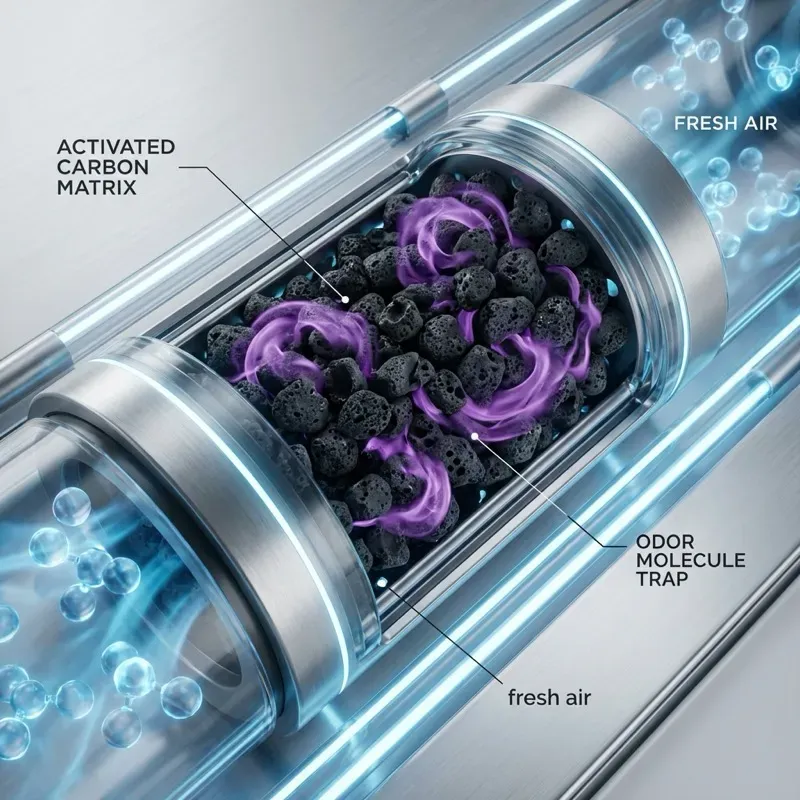
cat litter odor closed windows - scientific view of ammonia molecules and indoor air quality data

Indoor ammonia concentrations from litter boxes can reach uncomfortable levels when ventilation is restricted in winter | Photo on Unsplash

Let us put some numbers to the problem so you understand what you are actually managing.

The EPA notes that indoor air pollutant levels - including biological compounds like ammonia - can be 2 to 5 times higher than outdoor levels in poorly ventilated spaces. A single cat produces roughly 2 grams of urea per day in urine. Urea-splitting bacteria in litter convert that urea into ammonia within hours. In a well-ventilated summer home, that ammonia disperses before it accumulates. In a sealed winter apartment, it does not.

The threshold at which most humans begin to detect ammonia by smell is approximately 5 parts per million (ppm). At 25 ppm, the smell becomes distinctly unpleasant. Studies on indoor air quality in multi-pet households have recorded ammonia readings above 20 ppm near litter boxes in winter conditions - well into the range that causes eye and throat irritation with prolonged exposure.

Three compounding factors make winter uniquely bad:

  • Zero passive ventilation - Sealed windows eliminate the air exchange that dilutes ammonia in warmer months.
  • Forced-air heating - HVAC systems circulate litter box air throughout every room in the home, spreading odor rather than containing it.
  • Low indoor humidity - Heating drops relative humidity to 20 to 30% RH, which accelerates the evaporation of volatile compounds from litter surfaces - essentially turning your heating system into an odor amplifier.

Understanding these three factors is the foundation of the entire winter playbook. Each one has a specific countermeasure, and together they form a system that keeps your home under that 5 ppm detection threshold even on the coldest days.

If you want to understand the chemistry in more detail, our guide on how to fix ammonia smell in cat litter walks through the bacterial breakdown process step by step.

Humidity Control: The Hidden Lever

Most cat owners focus entirely on the litter box itself - the litter type, the scooping frequency, the deodorizer. Very few think about the air around the litter box. That is a significant missed opportunity, especially in winter.

Here is the mechanism: ammonia is a gas that exists in equilibrium between its dissolved form (in liquid urine) and its free gaseous form (in the air above the litter). When relative humidity drops - as it does dramatically when you run forced-air heat - that equilibrium shifts toward the gaseous form. More ammonia enters the air. More ammonia reaches your nose.

The practical target is to keep indoor relative humidity between 40% and 50% RH. Below 40%, ammonia off-gassing accelerates. Above 55%, you risk mold growth and bacterial proliferation in the litter itself, which creates a different set of odor problems. A $15 to $25 digital hygrometer placed near the litter box area gives you real-time data to work with.

Three Humidity Fixes You Can Implement This Week

  1. Add a small ultrasonic humidifier - A 1 to 2 liter ultrasonic humidifier in the room with the litter box can raise local RH by 10 to 15 percentage points. Run it on a timer during peak heating hours (typically 6 AM to 9 AM and 5 PM to 10 PM).
  2. Move the litter box away from heating vents - Direct airflow from a heating vent positioned above or beside a litter box can reduce local humidity at the litter surface by an additional 5 to 10 percentage points. Relocating the box even 3 feet away makes a measurable difference.
  3. Use a covered litter box with a carbon filter insert - A covered box creates a microclimate around the litter that retains slightly more moisture and concentrates odor for the carbon filter to capture before it escapes into the room.

These adjustments do not replace good litter hygiene or an effective deodorizer - they amplify the effectiveness of everything else you are doing. Think of humidity control as the foundation layer of your winter odor strategy.

Activated Carbon Dosing for Winter

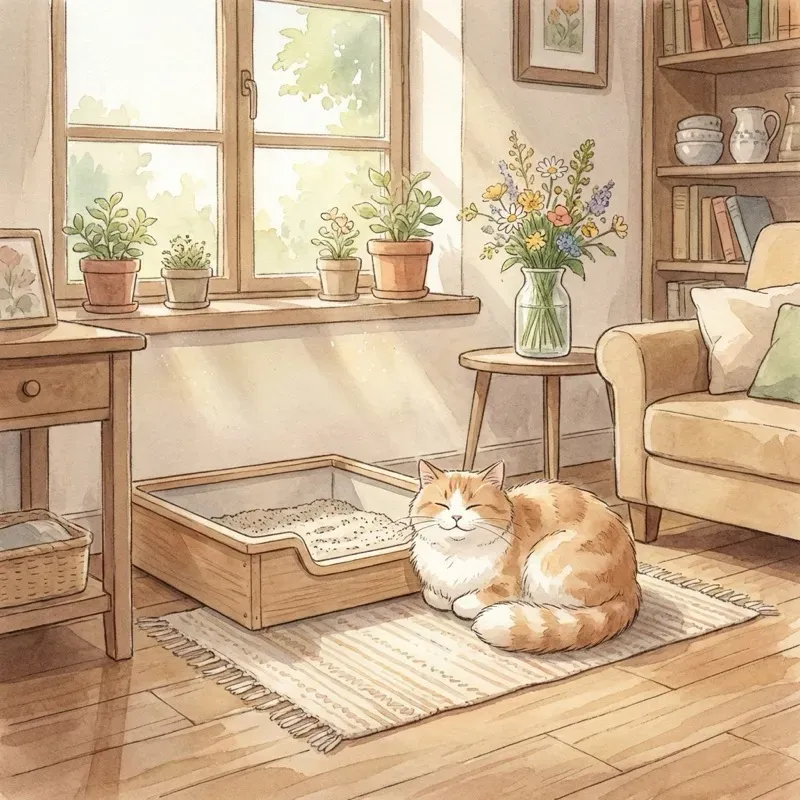
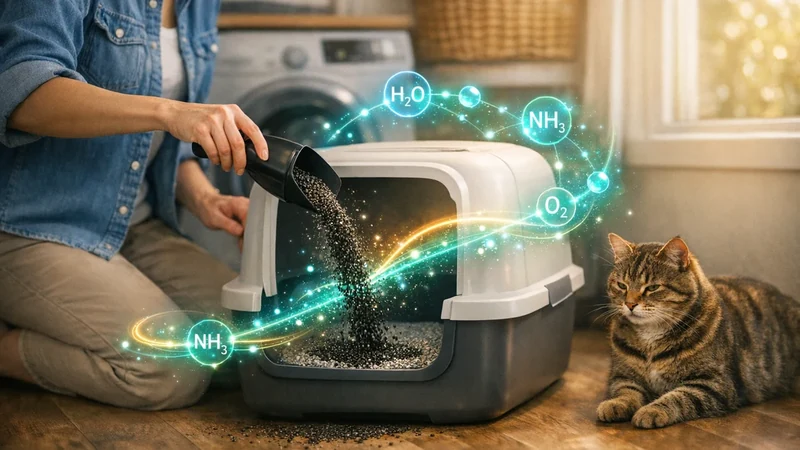
winter litter odor fixes - cat owner adding activated carbon deodorizer to litter box in clean home

Consistent activated carbon dosing every 5 days is the core of an effective winter litter odor protocol | Photo on Unsplash

Activated carbon is the workhorse of this entire system - and in winter, it needs to work harder than in summer. Here is why the dosing interval matters so much when windows are closed.

Activated carbon works through adsorption: ammonia molecules, hydrogen sulfide, and other VOCs physically bind to the enormous internal surface area of each carbon granule. A single gram of high-quality activated carbon may have an internal surface area of 500 to 1,500 square meters - roughly the size of three tennis courts packed into a teaspoon. That capacity is finite, however. Once the binding sites fill up, odor control drops off sharply.

In summer, passive ventilation removes some odor load before it reaches the carbon, extending the effective life of each dose. In winter, the carbon is doing all the heavy lifting with no ventilation assist. That is why the recommended dosing interval shifts from every 7 days in summer to every 5 days in winter for single-cat households.

Winter Dosing Protocol by Household Size

  • 1 cat, 1 box - 1 level scoop every 5 days. Sprinkle evenly over the top of the litter after scooping.
  • 2 cats, 2 boxes - 1 level scoop per box every 4 to 5 days. Stagger the schedule so you are refreshing one box every 2 to 3 days total.
  • 3 or more cats - 1 level scoop per box every 3 to 4 days. Consider adding an extra box (the general guideline is one box per cat plus one extra) to reduce per-box load. See our multiple cats odor control guide for a full multi-cat winter strategy.

The key habit is consistency over quantity. A smaller dose applied on schedule outperforms a large dose applied irregularly. Set a recurring phone reminder titled "litter carbon" every 5 days and treat it like a utility bill - non-negotiable.

For a full explanation of how activated carbon's porous structure traps odor at the molecular level, the How Activated Carbon Eliminates Cat Litter Odor page goes deep on the science. And if you have been relying on baking soda as your winter deodorizer, the activated carbon vs baking soda comparison explains why carbon outperforms baking soda in low-ventilation environments specifically.

Airflow Micro-Habits That Actually Work

You do not need to freeze your apartment to get adequate air movement. What you need are deliberate micro-habits that create localized airflow around the litter box without dropping your indoor temperature.

The goal is simple: prevent ammonia from forming a stagnant concentration cloud around the litter box. Moving air dilutes and disperses odor compounds before they reach detectable levels in your living areas.

Five Airflow Micro-Habits for Cold-Climate Apartments

  1. Run the bathroom exhaust fan for 10 minutes after each observed litter use - If your litter box is in the bathroom, a standard 50 to 110 CFM exhaust fan can exchange the room's air volume every 5 to 8 minutes. This is the single highest-impact airflow habit available to apartment dwellers.
  2. Use a small USB desk fan on low, pointed away from the box - Position a quiet desk fan 3 to 4 feet from the litter box, aimed toward a hallway or doorway. This creates a gentle draw that moves ammonia away from the box area without blowing litter dust around.
  3. Crack an interior door rather than an exterior window - Opening an interior door between the litter room and an adjacent room creates cross-circulation within your heated space. No cold air enters, but stagnant ammonia pockets break up.
  4. Time your scooping with your HVAC cycle - Most forced-air systems run on 15 to 20 minute cycles. Scoop during an active heating cycle so the circulating air carries dispersed odor toward your return air filter rather than letting it settle.
  5. Place an air purifier with a HEPA and activated carbon filter within 6 feet of the litter box - A purifier rated for the room size, running on low continuously, provides a passive odor sink that complements the carbon in the litter itself. Look for units with a dedicated activated carbon stage, not just a HEPA filter alone.

None of these habits requires more than 30 seconds of effort. The compounding effect of all five, practiced consistently, may reduce perceived odor intensity significantly - based on customer feedback from cold-climate apartment dwellers who have adopted this protocol.

For apartment-specific strategies beyond the litter box itself, the apartment cat odor solutions guide covers room layout, furniture placement, and air purifier selection in detail.

Your Winter Litter Odor Checklist

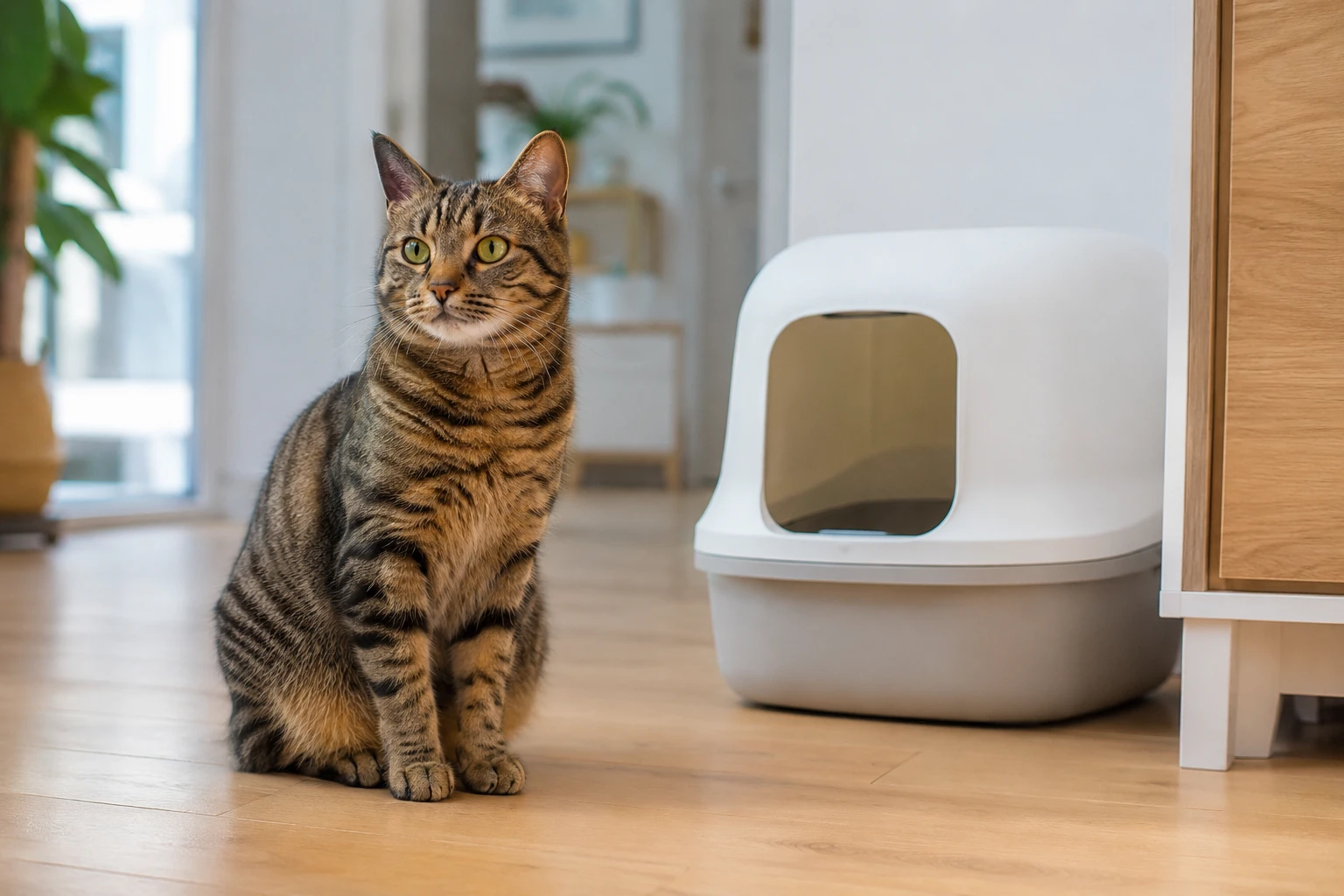
cat litter smell worse in winter success - happy cat owner in fresh clean apartment with no litter odor

A consistent winter litter protocol transforms the closed-window season from a source of stress into a non-issue | Photo by Manja Vitolic on Unsplash

Print this checklist and put it on your fridge or inside the cabinet where you store your litter supplies. Review it at the start of each month from October through March.

Weekly Tasks

  • Scoop litter box once daily minimum (twice daily for multi-cat households)
  • Add 1 level scoop of activated carbon every 5 days (set a phone reminder)
  • Run bathroom exhaust fan for 10 minutes after observed litter use
  • Check hygrometer - maintain 40 to 50% RH near litter box area

Monthly Tasks

  • Full litter replacement - dump, wash box with unscented dish soap, dry completely, refill
  • Check HVAC filter - a clogged filter recirculates odor compounds instead of capturing them
  • Wipe down walls and floor within 2 feet of litter box - ammonia settles on surfaces
  • Assess litter box placement - is it near a heating vent? Relocate if needed

Seasonal Setup (Do Once in October)

  • Place digital hygrometer near litter box area
  • Set up small humidifier on timer for peak heating hours
  • Position desk fan for passive airflow away from box
  • Stock 60 to 90 days of activated carbon deodorizer so you never run out mid-winter
  • Switch to winter dosing schedule (every 5 days instead of every 7)

This checklist is designed to take less than 5 minutes per day in active effort. The rest is passive - the humidifier runs on a timer, the fan runs on low, the carbon works continuously between doses. The system does the work; you just maintain it.

If you want to compare how winter odor dynamics differ from summer, the companion post Why Cat Litter Smells Worse in Summer covers the heat and humidity angle from the opposite direction - useful context for understanding why your strategy needs to shift with the seasons.

And if you have already tried multiple approaches and are still struggling, Tried Everything for Cat Litter Smell? Read This addresses the most common reasons standard fixes fail and what to try next.


Stop Winter Odor Panic - One Scoop Every 5 Days

Activated carbon designed to trap ammonia and VOCs at the molecular level - fragrance-free, safe for cats, and built for the closed-window season. Try Purrify free and see the difference before your next heating bill arrives.

Claim Your Free Trial Kit

Stop masking odors - eliminate them.

Activated carbon physically traps ammonia molecules. Try the science-backed solution free - just pay shipping.

Try It Free

References

  1. Urease-mediated urea hydrolysis and ammonia production - National Institutes of Health (PMC)
  2. OSHA ammonia exposure limits and annotated permissible exposure limits - U.S. Department of Labor (OSHA)
  3. Ammonia toxicological profile and health effects - ATSDR / CDC
  4. EPA guidance on air cleaners, gases, and odors in the home - U.S. Environmental Protection Agency
  5. Activated carbon adsorbers: surface area, pore structure, and adsorption basics - U.S. Environmental Protection Agency
  6. Peer-reviewed study on ammonia removal using activated carbons - PubMed
  7. IUPAC definition of microporous carbon and pores below 2 nm - IUPAC Gold Book
  8. Peer-reviewed analysis of the domestic cat nose and feline olfaction - National Institutes of Health (PMC)
  9. NASA technical report on ISS trace contaminant control using activated charcoal - NASA Technical Reports Server
  10. Activated carbon use in respirator cartridges - CDC / NIOSH

Frequently Asked Questions

Why does my cat litter smell so much worse in winter than in summer?

The short answer is ventilation - or the lack of it. In summer, open windows create a constant exchange of indoor and outdoor air, diluting ammonia and volatile organic compounds (VOCs) before they reach noticeable concentrations. In winter, that air exchange drops to near zero in most apartments and homes. According to EPA indoor air quality guidelines, indoor pollutant levels can be 2 to 5 times higher than outdoor levels when ventilation is restricted. For a litter box, that means ammonia produced by urine-breaking bacteria accumulates in your living space rather than dispersing. Add the fact that forced-air heating systems reduce relative humidity, which paradoxically accelerates ammonia off-gassing from dry litter, and you have a perfect storm. The fix is not to open a window in January - it is to combine an effective odor absorber like activated carbon with deliberate airflow micro-habits and humidity management. Results may vary depending on the number of cats and litter type used.

How often should I add activated carbon to the litter box in winter?

Based on customer feedback and general guidance for winter litter odor fixes, a dosing interval of every 5 days is the sweet spot for most single-cat households during cold months. In summer, every 7 days is often sufficient because passive ventilation helps. In winter, the closed-window environment means odor compounds accumulate faster, so the shorter interval compensates. For multi-cat households - two or more cats sharing one box - consider dosing every 3 to 4 days or adding a second box. The key is consistency: activated carbon works through adsorption, meaning its porous surface gradually fills with trapped molecules. Once saturation approaches, odor control drops off quickly. A simple habit like tying your carbon top-up to a recurring phone reminder every 5 days removes the guesswork entirely. See our step-by-step usage guide for exact scoop measurements by litter box size. Results may vary.

Does indoor heating make cat litter odor worse?

Yes - and this surprises many cat owners. Forced-air heating systems do two things that worsen cat litter odor in cold weather. First, they circulate air throughout the home, which means odor molecules produced near the litter box get distributed to every room rather than staying localized. Second, heating dramatically lowers relative indoor humidity - often to 20 to 30% RH in winter - which accelerates the evaporation of ammonia and other volatile compounds from the litter surface. Think of it like a hair dryer pointed at your litter box all day. Drier air means faster off-gassing. The practical fix is twofold: use a humidifier to keep indoor RH between 40 and 50%, and place the litter box away from direct heating vents. Combining these environmental adjustments with an activated carbon deodorizer addresses both the source and the spread of winter litter box smell. Always consult your vet if you notice changes in your cat's litter box habits.

Can I use a bathroom exhaust fan to help with winter litter odor?

Absolutely - and it is one of the most underused winter litter odor fixes available in any apartment. A bathroom exhaust fan rated at 50 to 110 CFM (cubic feet per minute) can exchange the air in a small bathroom every 5 to 8 minutes. If your litter box is in the bathroom, running the fan for 10 to 15 minutes after each observed litter box use may help reduce ammonia concentration significantly without opening a window. For litter boxes in other rooms, a small USB-powered desk fan positioned to direct air toward a hallway or toward a slightly cracked interior door can create enough movement to prevent stagnant ammonia pockets from forming. The goal is not to eliminate all air movement in the name of warmth - it is to create micro-airflow patterns that dilute odor at the source. Pair this habit with activated carbon dosing every 5 days for best results. Results may vary based on apartment layout and number of cats.

Is activated carbon safe to use around cats in a closed winter environment?

Activated carbon is a naturally derived, fragrance-free material that is widely regarded as safe for use around cats when used as directed. Unlike synthetic fragrance sprays or chemical deodorizers, it works through physical adsorption - trapping odor molecules in its porous structure - rather than releasing additional compounds into the air. This makes it particularly well-suited for closed-window winter environments where you want to reduce airborne compounds rather than add new ones. That said, no product is appropriate for every situation, and we always recommend consulting your veterinarian if your cat has known respiratory sensitivities or if you notice any changes in behavior after introducing a new litter additive. For households with kittens, see our dedicated guide on using deodorizers with kittens for age-specific guidance. Our safety information page also provides detailed ingredient transparency. Results may vary.

Related Articles

How to eliminate cat litter smell with activated carbon - NASA-inspired odor control technology for cat owners

How to Eliminate Cat Litter Smell: The NASA-Inspired Solution That Actually Works

Read more →

Low-dust cat litter options compared for odor control in 2026

Best Cat Litter for Odor Control: 4 Types Compared (2026)

Read more →

How to get rid of cat pee smell in apartment - complete cleaning guide

How to Get Rid of Cat Pee Smell in Apartment (Complete Guide)

Read more →

Fragrance-free litter deodorizer - cat's sensitive nose requires unscented odor control

Fragrance-Free Litter Deodorizer (Why Your Cat Needs One)

Read more →

Safe ways to deodorize a litter box - vet-approved methods

Safe Ways to Deodorize a Litter Box (Vet-Approved Methods)

Read more →

Playful Studio Ghibli style illustration of a cat covered in lavender blossoms - demonstrating the problem of masking odors

Why Your Home Still Smells Like Cat: The Chemistry Behind Persistent Odor (And the Industrial Fix)

Read more →

Why does my house smell like cat litter? Complete fix guide

House Smells Like Cat Litter? 7 Proven Solutions to Control Cat Litter Smell

Read more →

Happy cat owner with fresh-smelling home - litter box odor solved

Why Does My Cat's Litter Box Smell So Bad? The Science Behind the Stink

Read more →

You Might Also Like

Cat litter deodorizer - activated carbon granules keeping litter box fresh
April 15, 202612 min read

Multi-Cat Odor Survival Playbook | Purrify

Happy cat owner with fresh-smelling home - litter box odor solved
January 2, 20268 min read

Why Does My Cat's Litter Box Smell So Bad? The Science Behind the Stink

How to eliminate cat litter smell with activated carbon - NASA-inspired odor control technology for cat owners
December 29, 20258 min read

How to Eliminate Cat Litter Smell: The NASA-Inspired Solution That Actually Works

I Tried Every Litter Deodorizer Method for 90 Days-Here's What Actually Worked
October 6, 20257 min read

I Tried Every Litter Deodorizer Method for 90 Days-Here's What Actually Worked

Cat lounging comfortably in summer heat
January 20, 20257 min read

Why Cat Litter Smells Worse in Summer (And 4 Solutions That Actually Work)

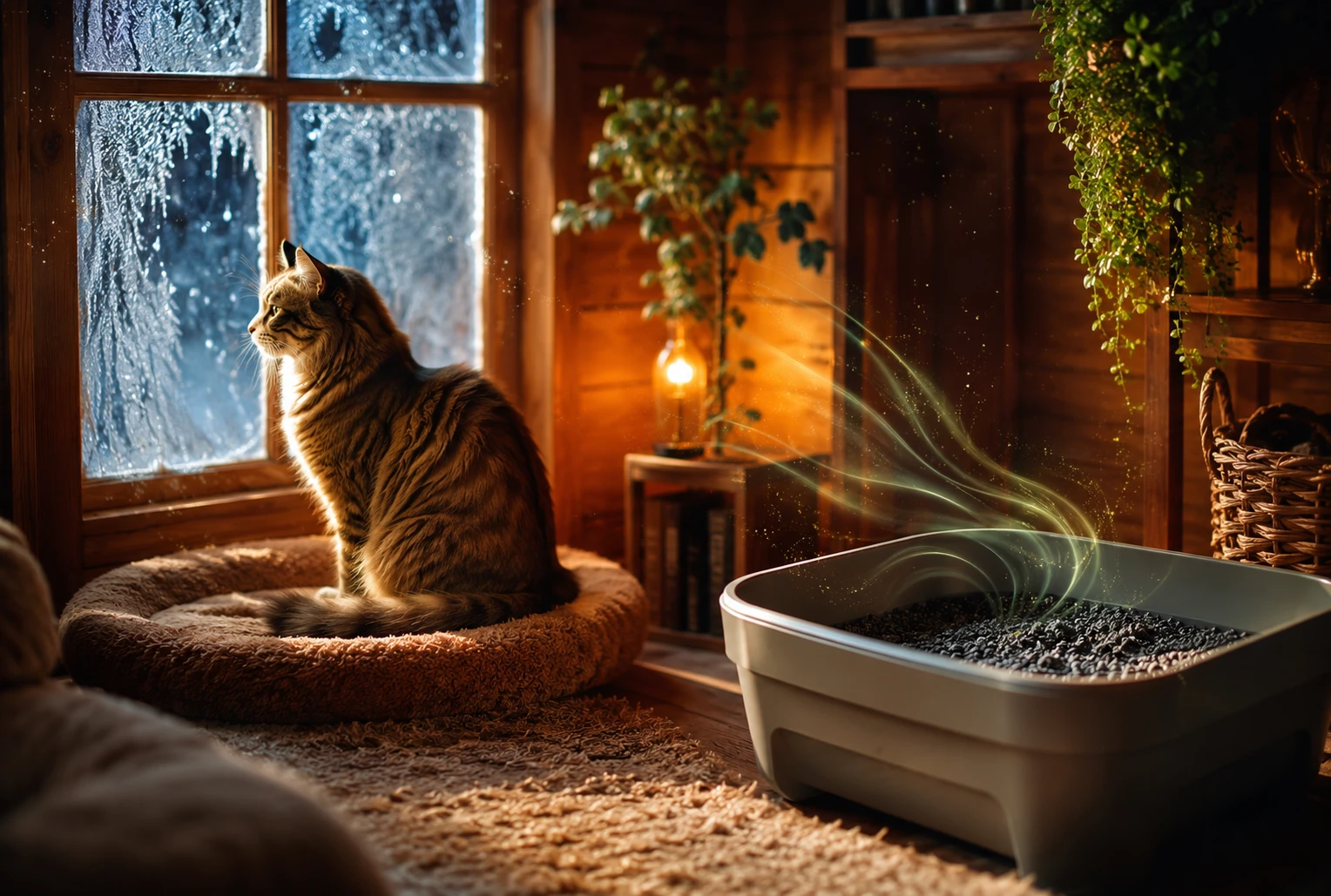
Cat looking out at winter scenery from warm room
January 20, 202512 min read

Why Cat Litter Smells Worse in Winter (And 5 Solutions That Don’t Require Opening Windows)

Related Solutions

Modern apartment with cat - clean, odor-free living space

Apartment Cat Smell

Keep small spaces fresh and odor-free

Curious cat sitting beside a litter box with ammonia wisps rising like little spirits

Ammonia Smell Solutions

Stop sharp ammonia odors at the source

How to neutralize ammonia smell in cat litter box

How to Neutralize Ammonia

Step-by-step guide to ammonia elimination

Clean litter box with cat - complete odor elimination

Litter Box Odor Elimination

Complete guide to litter box freshness

View all solutions
Published June 3, 2026Updated June 3, 202612 min read

Public author

Purrify Research Lab

Organization-level entity for internal testing notes, claim documentation, and evidence synthesis.

Editorial process

This article uses organization-level attribution. Reviewer details appear only when a specific public reviewer entity is attached to the page.

Editorial policyTesting policy
All ArticlesVisit Store